
Host: Dr. Ryan Cole | Guests: Professor Ian Brighthope and Professor Angus Dalgleish
Doctors around the world have raised the alarm about turbo cancers: unusually aggressive tumors and relapses no one saw coming. What will it take to get answers?
In this episode, host Dr. Ryan Cole welcomes two IMA Senior Fellows: Professor Ian Brighthope, an Australian pioneer of integrative medicine, and Professor Angus Dalgleish, an oncologist with more than three decades in cancer immunotherapy. Together, they examine what clinicians are seeing and the research behind their concerns about a possible link to COVID-19 vaccination.
For anyone in remission, few words land harder than “the cancer is back.” In one six-week stretch, oncologist Professor Angus Dalgleish saw it happen to six of his patients, whose stage 4 cancers had been gone for 3 to 18 years. All six had taken a COVID-19 booster before the cancer returned.
Since the COVID-19 mRNA injections rolled out, clinicians in several countries have reported the same pattern, and health authorities have been slow to look. Some won’t even acknowledge it: Australia’s drug regulator says flatly that it doesn’t recognize turbo cancers. Experts like pathologist Dr. Ryan Cole and Professor Dalgleish say the tests that could settle the question are simple and cheap, yet rarely run.
Dr. Cole sits down with Professor Dalgleish and Professor Ian Brighthope, both IMA Senior Fellows, to go through what clinicians are seeing and why they suspect the immune system. If you’re facing cancer now, or caring for someone who is, they also lay out where to start: the foundations that come before any treatment.
Meet the Experts

Professor Ian Brighthope
IMA Senior Fellow, Nutritional and Environmental Medicine. Professor Brighthope founded the Australasian College of Nutritional and Environmental Medicine and served as its president for more than 35 years. His career has focused on bringing nutrition and environmental medicine into patient care. Though retired from clinical practice, he returned to public life over the COVID-19 injections and is pushing for change in how Australia is governed.

Professor Angus Dalgleish
IMA Senior Fellow, Oncology. Professor Dalgleish has spent decades in cancer immunotherapy, with research spanning HIV, immune function, and cancer. Much of his work explores how the immune system recognizes cancer and how that knowledge can improve treatment. He is best known for discovering the CD4 receptor for HIV.
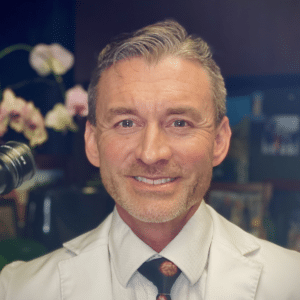
Dr. Ryan Cole
IMA Head of Medical & Scientific Affairs; Senior Fellow, Pathology. Dr. Cole is a board-certified pathologist who has worked in laboratory medicine for 30 years.
What Doctors Are Seeing
What do doctors mean by turbo cancer? Professor Brighthope describes the pattern this way:
“The pattern I’m describing, Ryan, is cancers that are occurring in younger populations, cancers that are occurring unusually in patients who have been in remission, and also cancers that are rapidly progressing and presenting in stages three and four.” — Professor Ian Brighthope
The fastest of these cancers can take a life in two to three months. Dr. Cole credits Swedish breast pathologist Dr. Ute Krüger with coining the term after she saw fast-growing breast cancers following the injections.
Professor Dalgleish shared what UK colorectal surgeon James Royle has seen since late 2020, which Royle calls the biggest change in practice on record:
- Later diagnoses: about 85% of his patients were once diagnosed at stage 1 or 2, when surgery can cure it; now 30% to 60% arrive at stage 3 or 4, too late to operate.
- Younger patients: patients are getting younger, and their tumors spread fast whatever the treatment.
- Two cancers at once: some patients have two primary cancers at the same time, which Professor Dalgleish calls unheard of outside familial polyposis, an inherited condition.
Professor Dalgleish and his colleagues wrote to the BMJ about the relapses, in a letter posted to the journal’s online forum. The BMJ took the letter down after a short time, with no acknowledgment. By then, doctors around the world had read it, and many contacted him to say they were seeing the same.
When he later tried the term turbo cancer in a journal submission, the referees pushed back:
“I tried to use turbo cancer in the communication and the referees shouted down and said this is scaremongering, it doesn’t exist.” — Professor Angus Dalgleish
He settled on hyperprogressive cancer, a term already used in immunotherapy.

Why Immunity Is the First Suspect
To see why the guests suspect the immune system, start with how the body keeps cancer in check. Dr. Cole describes a constant patrol: about 30 billion T-cells circulate through the body, checking every cell every 45 minutes or so and eliminating the ones that aren’t normal.
Professor Dalgleish has spent his career showing that melanoma and many other cancers are held in check by the innate immune system and T-cells, especially a subset called gamma-delta T-cells.
When a long-controlled cancer returns, he usually finds three months of severe depression behind it, from a divorce, a bereavement, or business debt, because depression suppresses T-cells. His six patients reported nothing of the kind, but all had taken their vaccines, including the booster.
“If you suppress these, you lose control of the cancer.” — Professor Angus Dalgleish
Several findings point him toward the booster:
- His lab results: the relapsed patients’ T-cell responses were highly suppressed.
- A Spanish study: a group in Spain published a paper on T-cell exhaustion after the third dose in cancer patients, which he calls definitive.
- An antibody switch: antibody studies reported a shift toward IgG4, the tolerance-promoting type a transplant patient needs.
- Dr. Cole’s lab: he saw suppressed T-cell counts after COVID infection, and more so after the injections.
Professor Dalgleish sums up the combination this way:
“So here we’re giving a vaccine that switches off the T-cell response, switches on tolerizing antibodies, and switches off neutralizing antibodies.” — Professor Angus Dalgleish
Theories That Still Need Testing
Dr. Cole asked both guests to separate what has been shown in patients from what remains theory. Professor Brighthope’s theory starts with the lipid nanoparticle, the fatty particle that carries the mRNA, and where it ends up:
“We were told lies right from the start that it stayed in the deltoid muscle. Well, a lipid nanoparticle will never stay in the deltoid muscle. It goes to every part of the body.” — Professor Ian Brighthope
From there, his theory runs in three steps:
- Distribution: the particles reach the brain, heart, lungs, kidneys, and reproductive organs.
- Spike production: cells use the mRNA to make a synthetic spike protein, which he considers toxic to every cell and blames for blood vessel damage and autoimmunity.
- The genome: the mRNA may be copied into DNA and inserted near genes that suppress or promote cancer. If it is, no one yet knows where it lands.
Professor Dalgleish’s lead comes from immunotherapy. In early trials of drugs such as ipilimumab, nivolumab, and pembrolizumab, a small subset of patients saw their cancers suddenly accelerate, a response called hyperprogression, and he believes those pathways could help explain what he is seeing after boosters. To him, the many ways spike protein and mRNA could switch on cancer-driving pathways and switch off protective ones were a red flag from the start:
“They should have halted everything there and then. Instead, they said, prove it.” — Professor Angus Dalgleish
Why the Answers Aren’t Coming
Are these cancers driven by the infection, the injections, or something in the environment? Dr. Cole asked what findings would tell the difference, and the guests’ answers point to two gaps:
- The tests: cheap and doable, but rarely run
- The reporting: stalled or years behind
The Tests
Professor Brighthope wants a test that tells vaccine spike protein from viral spike protein in tissue and tumors. Professor Dalgleish would go further: measure circulating spike protein routinely, since he says it lingers for three and a half to four years and seems higher in people with cancer, and check every tumor sent for pathology for the vaccine’s spike sequence.
Telling the two apart is simple, in his view, because the vaccine’s mRNA carries a chemical marker, pseudouridine:
“It’s as easy as telling the difference between an elephant and a mouse.” — Professor Angus Dalgleish
In the cases he has managed to get tested, the vaccine material is there. When he proposed wider testing, he was told it was too expensive, and when a funder offered to pay, an NHS director told him he would be denied ethical permission.
Dr. Cole calls these eminently doable tests that aren’t very expensive, and he points out that some have already been done: Kevin McKernan found Pfizer vaccine sequence in colon cancer tissue taken before and after death, and Dr. Peter McCullough and colleagues found vaccine sequence in bladder cancers. When Dr. Cole began developing a spike protein test of his own, the legal attacks against him started.
The Reporting
In Australia, Professor Brighthope says, the drug regulator, the TGA, is open about where it stands:
“They’re quite blunt when they say we don’t recognize turbo cancers.” — Professor Ian Brighthope
The TGA’s position is that the vaccines saved many lives. Since 2022, Australia has relied on cancer projections rather than accurate recording and reporting, though even the projections acknowledge more cancers in younger people, particularly colorectal cancers.
Dr. Cole sees the same lag at the CDC, which is years behind on cancer reporting, and at the NHS, which has stopped much of its reporting. That matters because gene therapies have historically required about 15 years of cancer follow-up, which leaves a five- to ten-year window of tracking still ahead.
What Patients Can Do Now
Professor Brighthope finds these cancers harder to treat, with weaker responses to both standard and complementary therapies. Some of his patients are “hanging on to bare life.” Both guests follow the same order:
- Foundations first: vitamin D, minerals, and metabolic health
- Then targeted therapies: the treatments each guest adds
Foundations First
Professor Dalgleish’s first rule is vitamin D:
“There’s no point going down the cancer treatment pathway if you’ve got a low vitamin D.” — Professor Angus Dalgleish
In his immunotherapy work, once reliable vitamin D testing became available, the pattern was clear: every patient who didn’t respond had low vitamin D, and once supplemented, they started responding. He says the same holds for chemotherapy and surgery, yet more than half of UK cancer doctors don’t mention it.
Professor Brighthope sets specific targets for vitamin D in the blood:
- Against infection: 125 to 130 nmol/L
- For cancer patients: over 200 nmol/L
- Toxic level: around 350 nmol/L, “a long, long way away” from those targets
Some people need 10,000 IU a day to get there, plus magnesium to help activate it. His other first step is the trace elements: copper, zinc, manganese, selenium, boron, and iron.
Dr. Cole adds a metabolic foundation: excess body fat raises interleukin-6 (IL-6), which oncologists first called a cancer growth factor, so getting lean and active brings it down.
Targeted Therapies
For active cancer, Professor Brighthope’s protocol includes:
- High-dose IV vitamin C: daily for two to three weeks, or oral vitamin C up to bowel tolerance when IV isn’t available
- Hyperbaric oxygen: daily, where patients can get it
- A ketogenic diet: low in carbohydrates and free of glutamine
Professor Dalgleish uses three tools of his own:
- An anti-inflammatory: “even as simple as aspirin,” to calm inflammation so T-cell responses work better
- Low-dose naltrexone (LDN): he gives it to all his cancer patients; his lab found it suppresses IL-6, and it costs about $30 a month
- Bromelain and nattokinase: enzymes he uses to help clear spike protein, building on Dr. McCullough’s work
Whatever the treatment, Dr. Cole says, the starting point doesn’t change:
“If you’re going to try to treat the cancer, whether it’s through conventional or off-label methods, you’ve got to get all those basics in order.” — Dr. Ryan Cole
Questions for Your Care Team
Dr. Cole closed with advice for anyone facing cancer: bring your questions to your medical team, but “don’t take their word as gospel truth.” Keep up with screenings, and don’t be afraid to ask your oncologist about changing treatments, adding supplements, or getting your health back to baseline. The discussion is educational and can’t replace your care, he added, but it can open minds to other options. As he put it, “we’re going to continue to fight for options and treatments and answers.”
Related Reading
- Monograph: Cancer Care
- Hub: IMA Cancer Resource Hub
- Treatment Guide: I-RECOVER: Post-Vaccine Treatment
- Guide: Cancer Nutrition Guide: Support Healing with Food, Nutrients, and Lifestyle
- Webinar: Journal of Independent Medicine No. 3: Turbo Cancer Research & More
- Webinar: Debrief from Down Under: The State of Censorship in Australia
- Post: England Hits 1,000 Cancer Diagnoses a Day. The NHS Calls It Progress.
- Post: “A Steam Train Coming Down the Tracks,” Dr. Angus Dalgleish on COVID Boosters and Cancer

More on: cancer | COVID-19 Vaccine | Dr. Angus Dalgleish | Dr. Ian Brighthope | Dr. Ryan Cole | mRNA | Turbo Cancer