
Host: Dr. Joseph Varon | Guest: Dr. Sabine Hazan
Cancer is showing up earlier and more often, and the people reading this already know the list of reasons IMA has spent years documenting: the COVID-19 injections, the toxins in food, water, and air, and the metabolic damage of the modern diet.
This episode adds a driver that hides in plain sight: the gut. Dr. Sabine Hazan’s lab sequenced the stool of 60 adults with and without cancer for a study published this July in Technology in Cancer Research & Treatment, and her answer to what happens in the gut when cancer takes hold is the near disappearance of one microbe that most people have seen on the back of a probiotic bottle.
Dr. Joseph Varon hosts as the two discuss Dr. Hazan’s study and take on several questions, from clinicians and patients alike. Her presentation slides are available to download below.
Meet the Expert

Dr. Sabine Hazan
Gastroenterologist; Founder, ProgenaBiome and Ventura Clinical Trials. Her research lab, ProgenaBiome, sequences the gut microbiome from stool and produced both the COVID-19 severity work and the cancer study in this episode. She has served as principal or sub-investigator in more than 150 clinical trials, her 2020 study detecting SARS-CoV-2 in patient stool now appears in the Journal of Independent Medicine, and she sees patients through her practice.
Immunity Lives in the Gut
Dr. Hazan’s cancer work began with a virus, because her lab was the one that discovered COVID-19 in the schools and picked up the first stool samples, and the spike protein in those samples had already mutated by the time it reached the United States. If a virus changes that fast, then no vaccine built for last season’s version can keep up with it, which is why she turned to the microbiome to ask which microbes let people survive COVID.
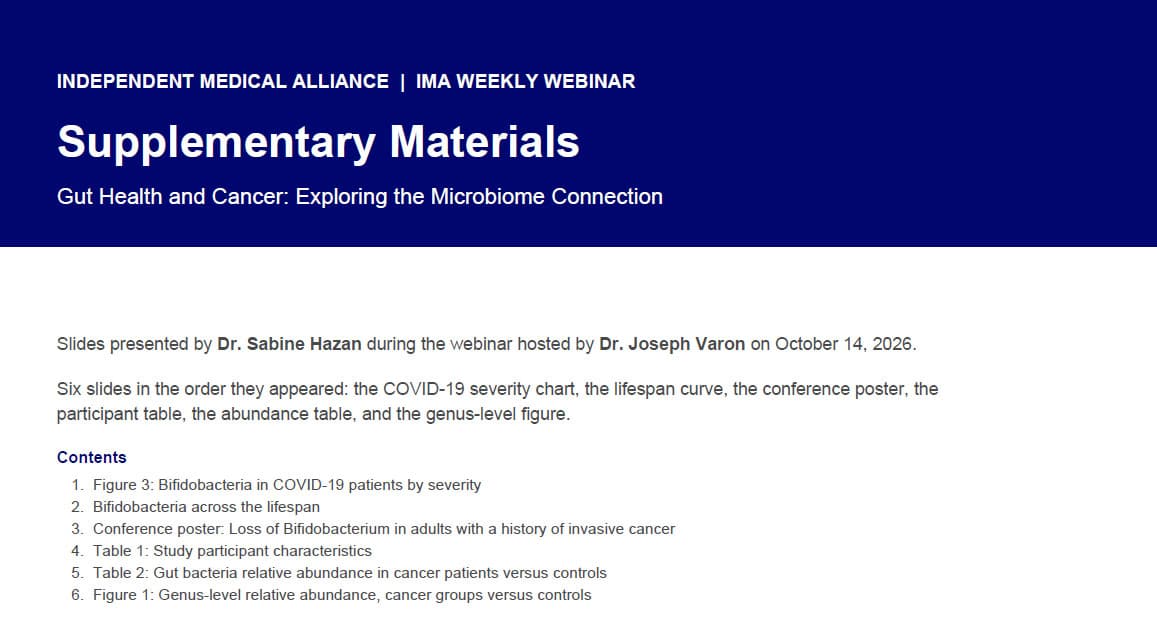
Her lab’s COVID-19 study collected stool from 72 people before the vaccines rolled out and sorted them by how sick each person got. The severe cases had zero Bifidobacterium, while the people who were exposed and never got sick, including patients’ families and her own lab staff, had high levels of it, and Faecalibacterium, another butyrate producer, followed the same pattern.
“Immunity is in the gut. Immunity is your microbes in your gut, in your stools.” — Dr. Sabine Hazan
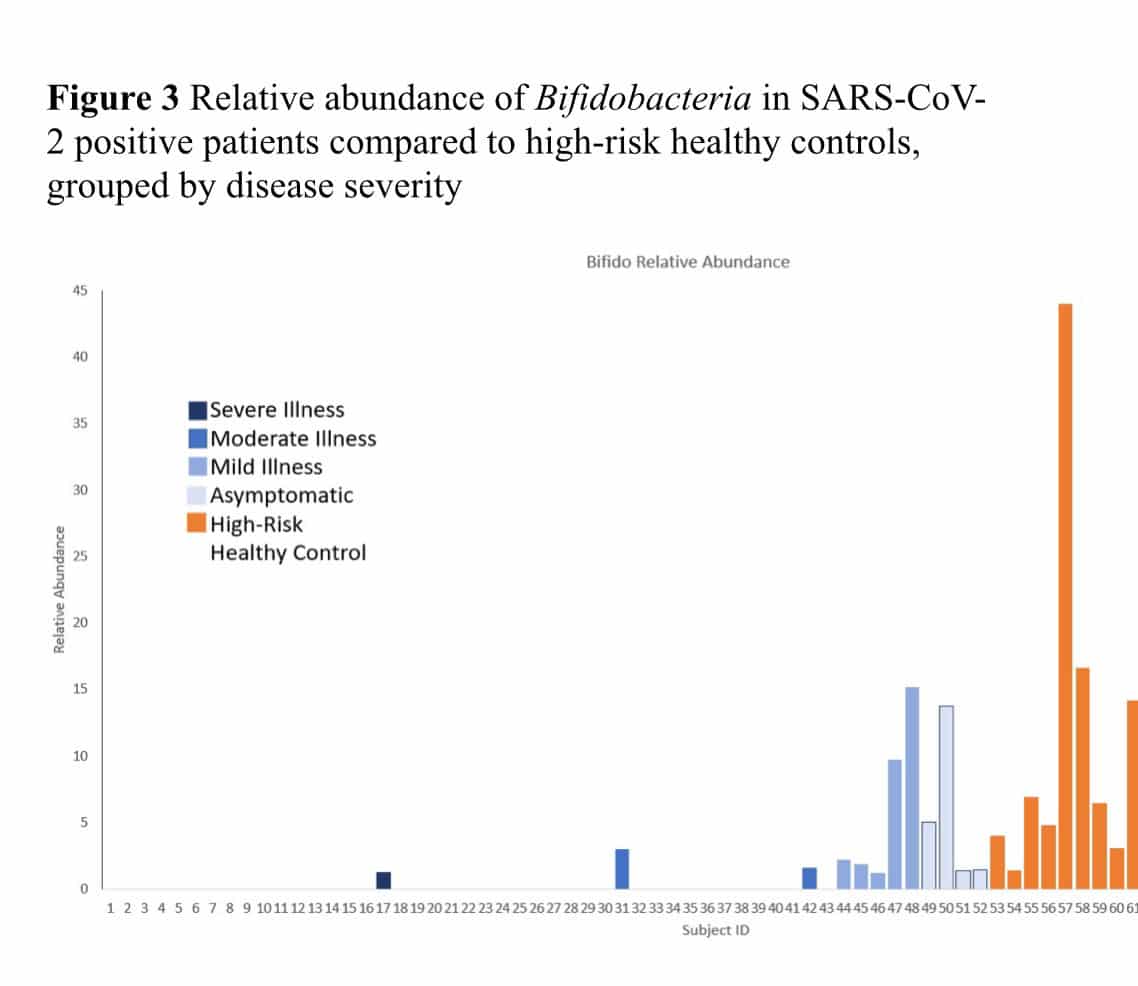
Figure 3 from Dr. Hazan’s COVID-19 study, as shown in her presentation: Bifidobacteria in SARS-CoV-2 patients by disease severity, compared with high-risk healthy controls.
The microbe in that chart, Bifidobacterium, breaks down food, sits at the center of immunity, and is the one nearly every probiotic on the shelf is built around. The slide below traces its arc from 60 to 70 percent of a newborn’s gut down to a sliver in old age, and post-pandemic newborns now start lower, with one study putting adequate levels in only one newborn in four. Her lab sees the same loss in autism, Crohn’s disease, bipolar disorder, anxiety and depression, long COVID, and vaccine injury, and in the vaccine-injured she thinks the infection or the shot itself wiped out what little they had.
Dr. Hazan’s slide on Bifidobacteria across the lifespan, from early life to old age.
Dr. Varon asked why babies are now born with less Bifidobacterium, and Dr. Hazan’s answer was a list of suspects that runs from pregnancy through the first days of life: mothers who had COVID or were vaccinated while pregnant, with spike protein turning up in breast milk; the antibiotic eye ointment and the hepatitis B shot given to newborns; and formula in place of breast milk.
Her advice to worried mothers ran against instinct. A mother who hears this will want to reach for a probiotic, and she thinks that is the wrong move, because in her view supplementing suppresses a baby’s ability to develop its own Bifidobacterium. The healthy newborns she sees are the ones who were not washed for the first day or two, were breastfed, and were then allowed to touch things and get dirty, so her focus is on the mother’s own nutrition, which is what makes the breast milk that builds the baby’s gut.

What Aggressive Cancer Looks Like in the Gut
The study, published this July, asks a simple question: do people with cancer carry a different gut than people without it? To answer it, Dr. Hazan’s lab sequenced stool from 60 adults, all of them American, because microbiomes differ from one population to the next. The groups broke down as 25 with aggressive cancer, meaning invasive disease such as stage-four colon cancer, pancreatic cancer, lymphoma, and glioblastoma; 15 with non-aggressive cancer such as basal cell and thyroid; and 20 healthy controls.
“The key finding of this paper, however, was the loss of bifidobacteria… So in the aggressive cancer patients, they lack bifidobacteria.” — Dr. Sabine Hazan
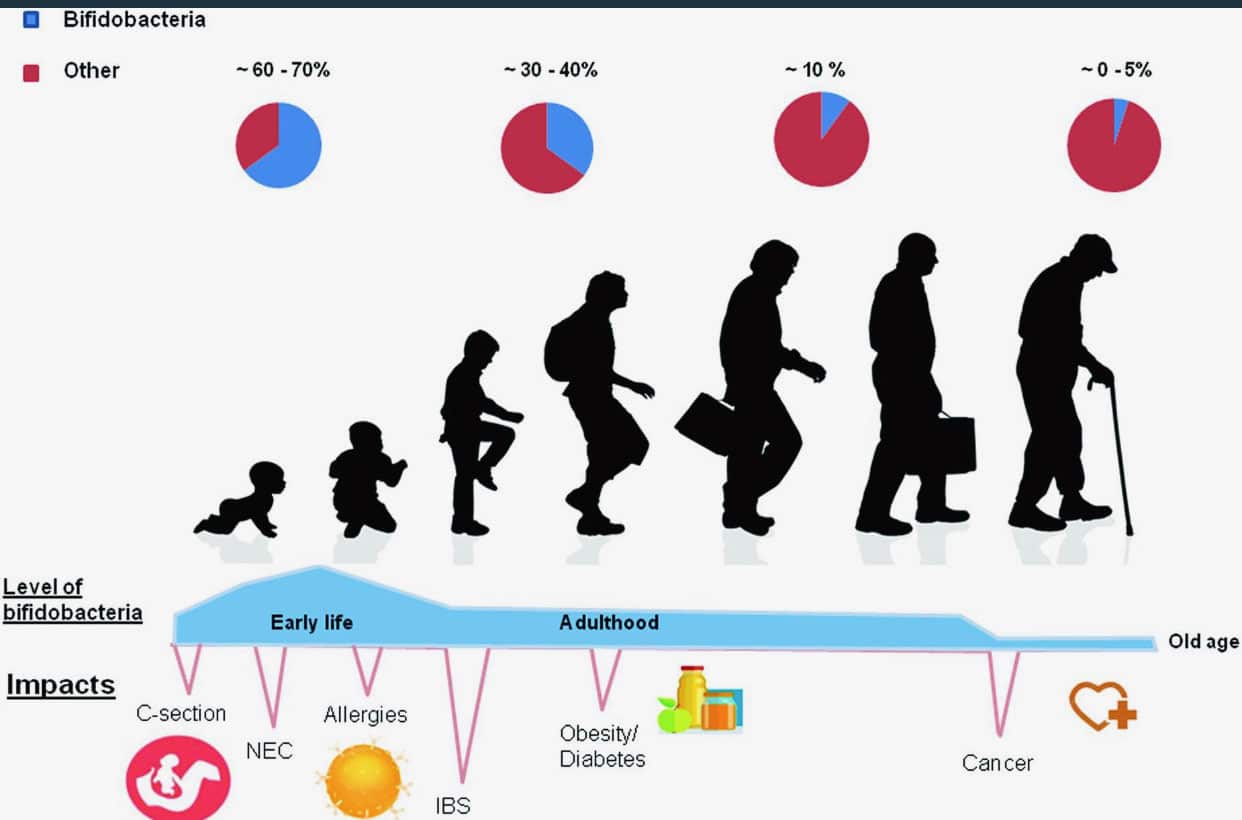
Table 2 of the paper sets the aggressive cancer group against the healthy controls, and the gaps are wide:
- Bifidobacterium: 1.2 percent versus 6.5 percent in controls (p = 0.000002)
- Collinsella: same phylum, 0.5 versus 1.8 percent (p = 0.0006)
- Faecalibacterium: 4.4 versus 6.9 percent (p = 0.015)
- Bacteroides: higher in cancer, 18.1 versus 9.6 percent (p = 0.015); neither good nor bad, but in need of balance
- Non-aggressive cancer: Bifidobacterium 4.2 percent, just short of significance (p = 0.054)
Table 2 from the published study in Technology in Cancer Research & Treatment (July 2026): gut bacteria relative abundance in cancer patients versus controls.
Though the study found clear differences in the ratios of bacteria, it also found something unexpected: the cancer patients had not lost diversity, which is a warning against treating diversity as a stand-in for health, because a gut can hold many species and still be dominated by the wrong ones.
Which Came First, and What It Means for Treatment
The study compared people who already had cancer with people who did not, and a lower count of Bifidobacterium in the cancer group does not tell you whether the gut changed first or the cancer did. Dr. Varon asked the obvious question: did the gut change before the cancer, because of the cancer, because of the chemotherapy many of these patients had received, or because of age and diet? Dr. Hazan answered with an extension of the study in which her lab sampled newly diagnosed aggressive cancers before any chemotherapy had started.
“When you do look at these aggressive cancers that never got chemotherapy and they were picked up from the beginning, they have zero bifidobacteria.” — Dr. Sabine Hazan
Medicine already accepts that microbes can drive cancer, through HPV and cervical cancer, H. pylori and gastric cancer, and Epstein-Barr virus and Burkitt’s lymphoma, and her hypothesis extends the pattern: if the microbes that hold H. pylori in check disappear, then H. pylori has room to grow. She is now planning, with a collaborator, a lab that would map every cancer to a signature microbiome.
Dr. Varon then pressed on treatment: does a depleted gut blunt immunotherapy or chemotherapy? The evidence so far is case-level, including an ovarian cancer patient her lab tracked through chemotherapy, and the trials still need to be done, so her answer in the meantime is to keep both: chemotherapy, immunotherapy, and radiation do their job, and the gut gets sustained through them.
“So yes, we have to kill with the chemo. Yes, we have to kill with the immunotherapy. Yes, we have to deal with the radiation, but then we have to sustain the gut, in my opinion.” — Dr. Sabine Hazan

Tests, Probiotics, and Fecal Transplants
Can you buy a stool test and find out your cancer risk? That was Dr. Varon’s question, and it went to someone who sequences stool for a living. Dr. Hazan’s answer was that the tests on the market do not measure what her lab measures, and she would not spend her own money on one.
The problem is the tests themselves, on three counts:
- No validated normal: the labs compare you to a reference group nobody screened for reflux, polyps, chronic pancreatitis, or anxiety, each of which changes the microbiome
- Shallow sequencing: a cheap test reads last night’s dinner; the yogurt you ate shows up as your baseline
- No approved test: no microbiome test has FDA approval, her own lab remains research-only after 5,000 samples and ten years validating an assay, and she will not hand patients a report because they read it and start killing microbes that were helping them
Probiotics raise the same problem: the right one can help a given patient and the wrong one can hurt, and without knowing what is in that patient’s gut to begin with, choosing one is a guess. The testing that would answer that is still research-grade, so her advice to doctors is to bring interested patients into a research protocol where the microbiome is tested at baseline and then followed. She is also looking at whether antibiotic exposure changes cancer outcomes, and that work is still preliminary.
Fecal transplants drew her sharpest caution, because the patients who want them are immunosuppressed, and her one FDA-cleared case shows both the promise and the risk. A patient near death received Keytruda alongside a transplant from a carefully screened grandson and lived roughly 21 more months, until antibiotics for an infection wiped out everything the transplant had given her.
“I think fecal transplant is a dangerous route at this point, I’ll be honest, because these people are immunosuppressed. So you really need to know what you’re doing.” — Dr. Sabine Hazan
What You Can Do Now
Dr. Varon asked what she tells patients about fiber, fermented foods, sleep, exercise, and the proton pump inhibitors so many people take, and her starting point was blunt: if a diet got you sick, then the diet is where you start, with fermented foods, variety on the plate, and fiber above all.
“Fiber is the bed for the microbes. It’s what allows them to engraft, to stick.” — Dr. Sabine Hazan
Her rule for any product, probiotic or otherwise, is that trust has to be earned with evidence. Companies that want her endorsement are told to show her the data from her own lab, and she tests a product on herself before she gives it to anyone else. Where that kind of data does not exist, the substitute is firsthand knowledge of how the food was produced: she named Joel Salatin’s farm as an example, not because of his reputation but because she has visited it and seen how the animals are raised and fed, and she keeps her own chickens, bees, and greenhouses for the same reason. Her advice to viewers was to ask any company for its data, get to know the people who grow your food, and grow what you can yourself, and to ignore the influencer who says a yogurt fixed everything.
For patients already on ivermectin or mebendazole, she made a direct invitation: her lab wants to sequence that group, because it found ivermectin raised Bifidobacterium within 24 hours and dropped it to zero by 48, and what mebendazole does to the gut is still an open question.
Asked where medicine will be in ten years, she expects doctors to go back to educating patients instead of pill pushing, against a headwind she saw firsthand: a gastroenterology conference where only two sponsors offered natural products and everything else was pharma.
“If we stop looking, and if we censor science, we’ll never know the better way.” — Dr. Sabine Hazan
Related Reading
- Monograph: Cancer Care
- Hub: IMA Cancer Resource Hub
- Guide: Cancer Nutrition Guide
- Guide: Optimal Immunity Handbook: Boost Your Immune System Health with Healthy Habits
- Post: Gut Health: Why Your Microbiome Matters Far Beyond Digestion
- Post: Pioneering Study Proves COVID Survives in the Gut. Why Was It Retracted?
- Peer-Reviewed Study: Gut Microbiome Alterations in Cancer and Non-cancer Adults: A Cross-Sectional Metagenomic Study