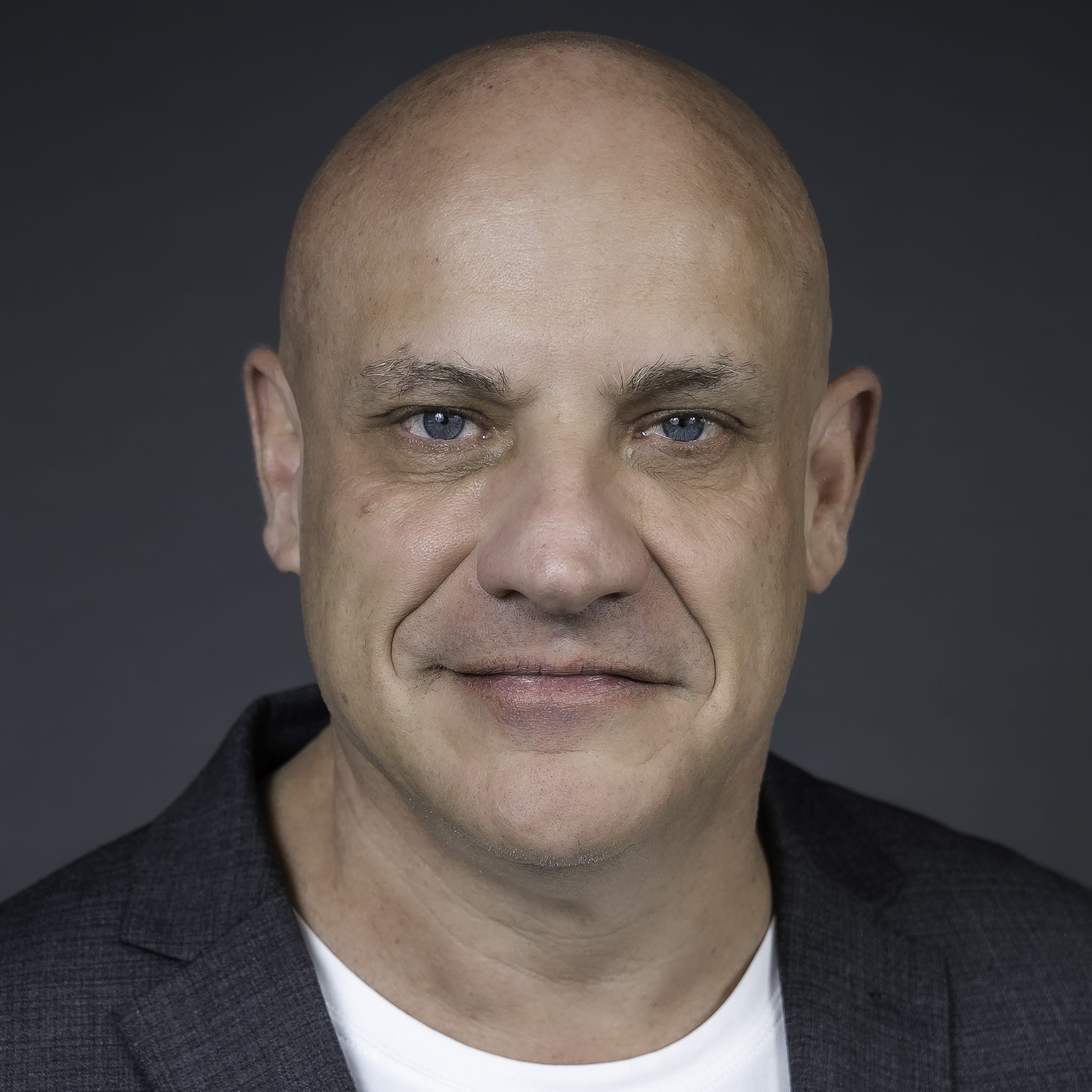

By Dr. Joseph Varon
I went to medical school to learn how to practice medicine, but it took nearly forty years at the bedside, in emergency rooms, intensive care units, clinics, and hospital wards to truly understand what that means. Over those years, I discovered something no textbook, guideline, insurance policy, computer program, or artificial intelligence can fully capture: patients don’t follow the rules in books. They don’t always fit the guidelines, rarely have just one illness at a time, don’t always respond to the first medication on a list, and never get sick on a schedule that matches an insurance company’s process. Practicing medicine means working in the space between evidence and uncertainty, and good doctors spend their careers learning to navigate that space and take responsibility for their decisions.
Over time, something significant changed in American medicine. Doctors stayed responsible for their patients but slowly gave up some control over how to treat them. Now, I can examine a patient, review their history, look at lab results and scans, consider what has worked or failed, talk through options with the patient and family, and decide what care is needed. Yet someone who has never met the patient or family, never listened to their heart, and never looked them in the eye can tell me I can’t move forward because the insurance company won’t pay. Sometimes that person is a doctor, but not always in my field, and more often it’s not even a person but a computer system using set rules from the medical record. No matter how the decision is made, the contradiction is clear: I’m still responsible for the patient, but someone else controls whether my plan can happen. We need to ask a question that should have been raised much sooner: who is actually practicing medicine?
Health insurance was never meant to act as a second medical profession. Its main job was simple: spread out financial risk so that illness or disaster wouldn’t ruin someone financially. There has always been tension between giving care and paying for it, and that will never go away. Resources are limited, fraud happens, unnecessary tests are ordered, doctors can over-treat, hospitals can overcharge, drug companies can set high prices, and patients sometimes ask for treatments that won’t help. Any real talk about prior authorization has to admit these facts. It’s not honest to say every doctor’s order is right, just as it’s not honest to say every insurance denial is justified. Insurers do need to make sure money is spent wisely, but that’s very different from taking over medical decisions.
Prior authorization is a clear example of this change. Before an insurer will pay for certain drugs, tests, procedures, rehab, or other treatments, doctors have to prove ahead of time that the treatment meets the insurer’s rules. On paper, this sounds fair. If a costly magnetic resonance imaging (MRI), new drug, surgery, or special treatment is being considered, it makes sense to check if it’s really needed. But medicine is rarely as neat as the policies suggest. Doctors make decisions based on the real patient in front of them, while authorization is often about whether the patient fits a set pathway. These are not always the same, and that’s where a doctor’s judgment matters most.
A protocol may say that treatment A should precede treatment B, and for most patients that may be appropriate. But what happens when treatment A already failed, when the patient previously experienced a serious adverse reaction, when a comorbidity makes the preferred treatment inappropriate, or when disease is progressing rapidly enough that another week of delay matters? Guidelines are enormously valuable, and throughout my career I have used them, taught them, written protocols based upon them, and participated in research intended to improve them. But a guideline is a map rather than the territory. Evidence-based medicine was never meant to force every patient into the average. Doctors are supposed to use the best evidence and apply it wisely to each unique person. Prior authorization can flip this around by making us prove the patient fits the rule before we can give the care we think is needed. Eight times out of ten the answer becomes at least partially yes. When this happens on such a scale within a healthcare system, it becomes reasonable to ask whether the original barrier was always about medical necessity or whether the friction itself has become part of the mechanism.
Federal investigators have raised precisely this concern. The Department of Health and Human Services Office of Inspector General examined cases in which Medicare Advantage organizations denied prior-authorization requests and found that 13 percent of the denied requests reviewed actually met Medicare coverage rules and likely would have been approved under traditional Medicare. These were not simply disputes about cosmetic procedures or obviously frivolous requests. The services included advanced imaging such as MRI and post-acute care such as inpatient rehabilitation, and investigators found instances in which insurers applied clinical criteria beyond Medicare coverage rules or claimed documentation was inadequate even though independent reviewers concluded that the medical record contained sufficient evidence to establish medical necessity. A denial is therefore not merely an administrative event recorded in a database. It means that something a treating physician believed should happen did not happen, at least not at that moment, and in medicine the difference between today and next week can occasionally be the difference between recovery and irreversible injury.
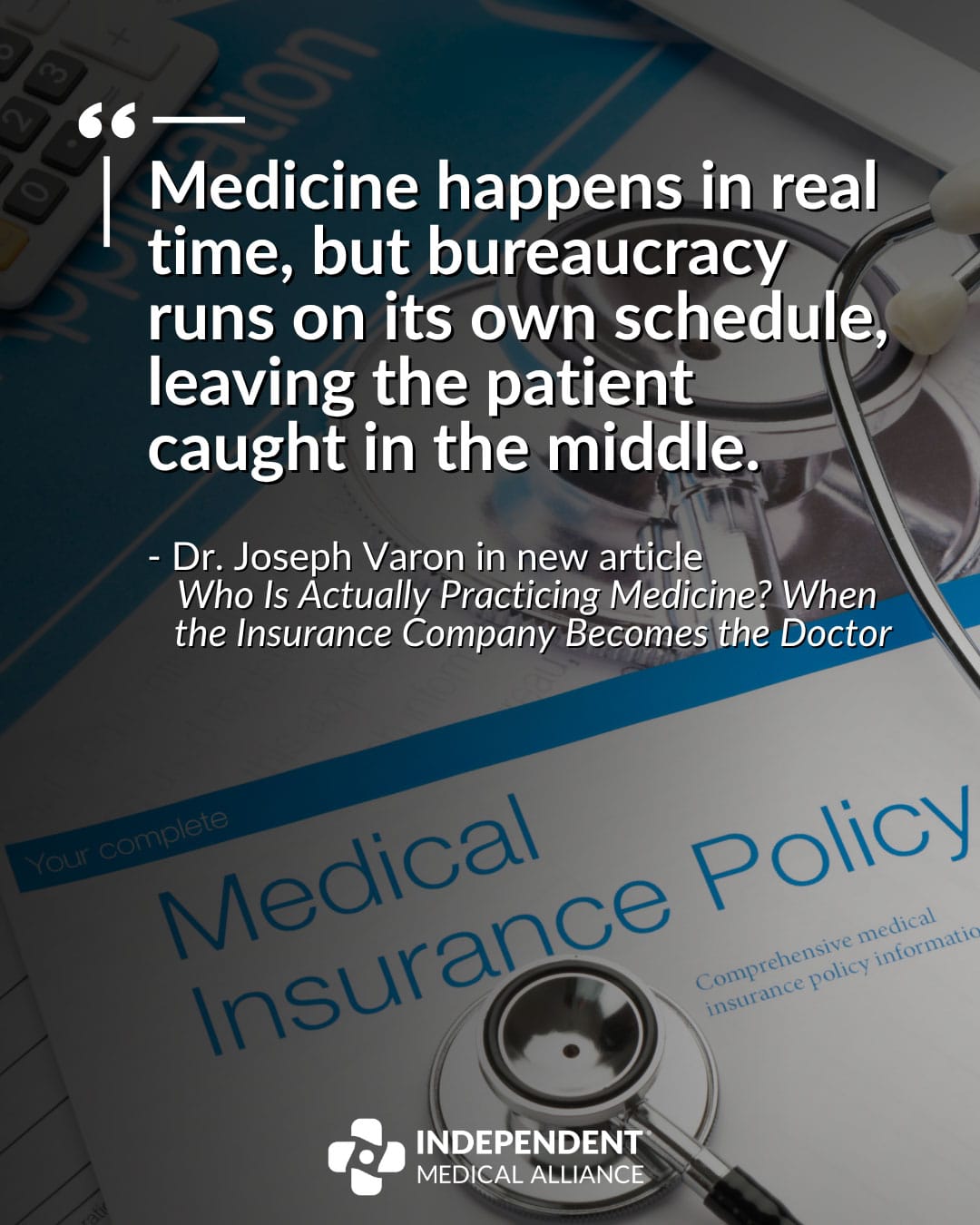
Maybe the patient finally gets the MRI. Maybe rehab is approved in the end. Maybe the medication arrives after many phone calls, emails, another visit, resending records, and the usual peer-to-peer call. On paper, the case is closed, but in reality, time has passed and the illness has moved forward. Cancer doesn’t pause for paperwork, nerve problems don’t wait for appeals, infections don’t care about office hours, and pain doesn’t stop just because a request is in a queue. Medicine happens in real time, but bureaucracy runs on its own schedule, leaving the patient caught in the middle.
The burden on doctors is just huge. The American Medical Association’s 2024 survey found that doctors handle about 39 prior authorizations each week, with doctors and their staff spending around 13 hours on them, and 40 percent of doctors have staff who work only on prior authorization. Think about what those hours mean in a country that says it has too few doctors. That’s time not spent seeing patients, talking with families, reviewing tough cases, teaching, returning calls, or keeping up with new research. We complain about long waits for appointments, trouble hiring doctors in rural areas, overwhelmed primary care, and specialists with long waiting lists, yet we’ve built a system that eats up doctors’ and staff’s time just to prove the care they recommend is needed. One can debate survey methodology and physician perceptions, as we should with any dataset, but numbers of this magnitude cannot simply be dismissed as professional complaining. If nearly every physician encountering the system reports delays and more than one in four reports having witnessed a serious adverse event associated with the process, we should at least be willing to ask whether a mechanism designed to control unnecessary care may itself be creating unnecessary harm.
Nothing shows how odd this system has become better than the so-called “peer-to-peer.” When a treatment or test is denied, the office appeals, and eventually the treating doctor might get to talk to another clinician working for the insurer. We explain the patient’s history, past treatments, test results, other illnesses, what didn’t work, and why we made our decision. Sometimes we get approval, sometimes not. But the term “peer” is misleading, since the person on the other end often doesn’t have the same expertise as the treating doctor. The American Medical Association (AMA) found that only 15 percent of doctors said the reviewer usually had the right qualifications. We’ve built a system where a doctor who knows the patient has to justify their decision to someone with less experience who has never met the patient. Somehow, we’ve decided this counts as real medical oversight.
The bigger issue is that authority and accountability are now separated. When I make a medical decision, my name goes in the record. If I prescribe, operate, discharge, or choose not to order a test, I have to stand by that choice. I can be sued, investigated, questioned by a committee, or called before a board. I have to explain my decisions to patients and families, and I carry the ethical duty that comes with being their doctor. But when a treatment is delayed or denied by utilization management, it’s hard to find who is responsible. The insurer says the request didn’t meet their rules, the reviewer says they followed policy, the committee says it used guidelines, and the tech company says its software just helped. In the end, the patient still doesn’t get the treatment. Defensive medicine exists, fraud exists, and financial incentives can influence physicians just as they influence corporations. Prior authorization can therefore serve a legitimate purpose as a utilization-management and cost-control mechanism. The important question is who should ultimately control an individual patient’s medical decision, according to what standard, with what transparency, and while carrying what responsibility for the consequences.
There’s another line that’s become dangerously blurred. An insurance company can tell a patient that a service isn’t covered by their plan; that’s a financial decision. But it’s very different for an insurer to say a treatment is “not medically necessary”; that’s a medical judgment. When a doctor who has seen the patient says a treatment is needed, and a payer who hasn’t says it isn’t, it’s no longer just about money. Now there are two medical opinions, but only one side has actually met the patient while the other holds the purse strings. Cost and medicine are linked, but cost shouldn’t pretend to be medicine.
Washington clearly recognizes that something is wrong. CMS finalized major reforms in 2024 requiring affected payers to provide specific reasons for prior-authorization denials, publicly report certain prior-authorization metrics, and generally issue decisions within 72 hours for expedited requests and seven calendar days for standard requests, while also moving toward electronic prior-authorization infrastructure and greater interoperability. Congress has considered the Improving Seniors’ Timely Access to Care Act of 2025 in both the Senate and House, legislation intended to establish additional requirements for prior authorization in Medicare Advantage and further standardize and modernize the process. Major health insurers separately announced voluntary commitments in 2025 to reduce and streamline prior authorization, standardize electronic processes, improve continuity when patients change plans, and increase transparency. These are welcome developments, but they also amount to an admission that the existing system has become sufficiently dysfunctional to require regulation, legislation, industry promises, mandatory response times, and new infrastructure to make the process tolerable.
We shouldn’t mistake faster prior authorization for fixing the real problem. A wrong denial sent electronically is still wrong, and a refusal given in 72 hours is still a refusal. Technology can speed things up, but it doesn’t make the decisions better. Artificial intelligence could let bureaucracy work faster and on a bigger scale than ever before. If used well, AI can pull needed information from records, cut out repetitive forms, spot missing paperwork, match requests to coverage, help with submissions, and speed up simple cases. Researchers are already looking at how AI can automate parts of prior authorization and write strong clinical letters. We should see this as an opportunity, not a threat. If the same technology is designed primarily to reduce expenditures by identifying reasons to delay, redirect, or deny expensive care, we may construct the most efficient denial machine in the history of medicine. The computer does not become tired; it does not become uncomfortable after denying the tenth request of the morning; it does not hear desperation in a family member’s voice, and it never has to walk into the patient’s room and explain why treatment did not happen.
That’s why a computer should never have the final say when it disagrees with a doctor’s documented judgment. Automated systems can help organize, screen, recommend, request more information, spot problems, and approve care, but if the final answer is to deny treatment, a qualified human should take responsibility. If a doctor’s decision is going to be overruled for medical reasons, another doctor with the right expertise should review the case, explain the reasoning, and put their name on the decision. A real peer-to-peer review should actually involve a true peer, not just anyone with a medical degree. If a specialist’s requests are ultimately approved almost every time, forcing that physician through the same administrative process for every patient adds cost without meaningful oversight. High reversal rates should similarly trigger examination of the original denial criteria, because a fair authorization system should have incentives to reach the correct decision the first time rather than benefiting from the reality that many patients will never complete an exhausting appeal.
None of these changes means we have to get rid of insurance companies, stop controlling costs, nationalize healthcare, or pretend doctors never make mistakes. You can believe in markets and still oppose secretive corporate control over medical decisions. You can support government healthcare and still see that bureaucracy can get in the way of good care. You can welcome artificial intelligence but insist that machines shouldn’t have unchecked power over patients. You can trust evidence-based medicine and still know that guidelines can’t cover every unique patient. These views aren’t in conflict—they all recognize that each patient is a person, not just a number.
Over my career, I’ve seen medicine change in ways I never could have imagined when I started. Intensive care has gone from basic support to a field that can save people from illnesses that once meant certain death. New tests can now diagnose diseases in minutes that used to need surgery. Medical knowledge has moved from library shelves to our phones, and now artificial intelligence is starting a new wave of change that could be even bigger. But through all these advances, the heart of medicine has stayed the same: a sick person asks for help, and the doctor takes on the responsibility to try to give it.
I don’t want to go back to some imaginary golden age where doctors had all the power and no one questioned them. Medicine is better because doctors are challenged by evidence, colleagues, patients, guidelines, regulators, and systems that catch mistakes. Accountability, stewardship, and scientific standards all matter, but accountability should go both ways. If an insurer overrules a doctor for medical reasons, the insurer should answer for that. If a reviewing doctor says treatment isn’t needed, that doctor should be named and qualified. If an algorithm helps deny care, that should be clear and a person should still be responsible. If a policy keeps causing denials that get overturned, the policy should be reviewed, not force thousands of patients to fight the same fight.
When I’m at a patient’s bedside, I can’t hand off responsibility. I can’t tell a family that a computer made the call, a committee wrote the rule, or someone far away decided the treatment wasn’t needed, so it’s not my problem. Patients expect their doctors to stand up for them, and we have a duty to do just that. But if doctors have to fight the system just to fight for their patients, the healthcare system has lost its way. Insurance companies have an essential role in financing healthcare, regulators have an essential role in protecting the public, and artificial intelligence will increasingly have an extraordinary role in helping us make better decisions, but none should be permitted to sever authority from responsibility quietly.
The doctor-patient relationship has survived huge changes in science, money, politics, and technology because, at its heart, it’s about one person taking responsibility for another in a vulnerable moment. We should modernize medicine, use AI, cut waste, demand evidence, control costs, and hold doctors accountable when needed. But even after all that, we have to remember who is actually practicing medicine. If the doctor is responsible for the outcome, the doctor must have a real say in the treatment. A system where one person has the responsibility and another has the authority isn’t just inefficient, it’s unfair.