
Host: Dr. Ryan Cole | Guests: Dr. Mary Talley Bowden and Dr. Ron Elfenbein
A federal judge issued a 93-page opinion acquitting Dr. Ron Elfenbein of healthcare fraud charges. The American Medical Association filed an amicus brief in his defense, stating that the physician who built Maryland’s largest monoclonal antibody treatment operation during COVID had followed the coding rules the AMA itself publishes. A professional coding expert reviewed hundreds of his charts and found them appropriately billed. The government’s own expert witness contradicted the indictment at trial.
None of that was enough. The government appealed, and Elfenbein now faces a second federal criminal trial, with a maximum sentence of 50 years in prison. The total amount in dispute across five patient charts: approximately $250.
This episode brings together three physicians who have lived this pattern firsthand. Elfenbein tells the full story of his federal case for the first time on the IMA Weekly Show. Dr. Mary Talley Bowden, who was suspended from Houston Methodist for tweeting about vaccine mandates and has since founded the Coalition for Health Freedom, discusses what drives institutional retaliation against outspoken physicians. And host Dr. Ryan Cole, still fighting multi-state medical licensing attacks, raises the question the conversation keeps circling back to: what happens to patients when the system teaches doctors that speaking up isn’t worth the risk?
Meet the Experts

Dr. Ron Elfenbein, MD
Emergency physician; Johns Hopkins Hospital (Chief Resident). Dr. Elfenbein founded First Call Medical Center in Maryland, which performed over 100,000 COVID tests and became the state’s largest private monoclonal antibody treatment center. He is currently the President of the Somerset County Medical Society.
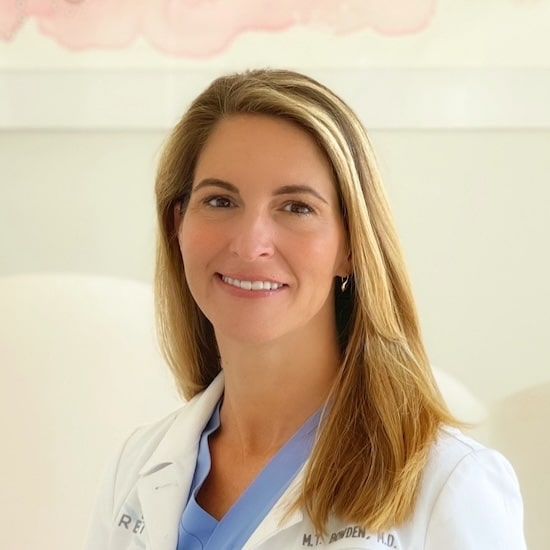
Dr. Mary Talley Bowden, MD
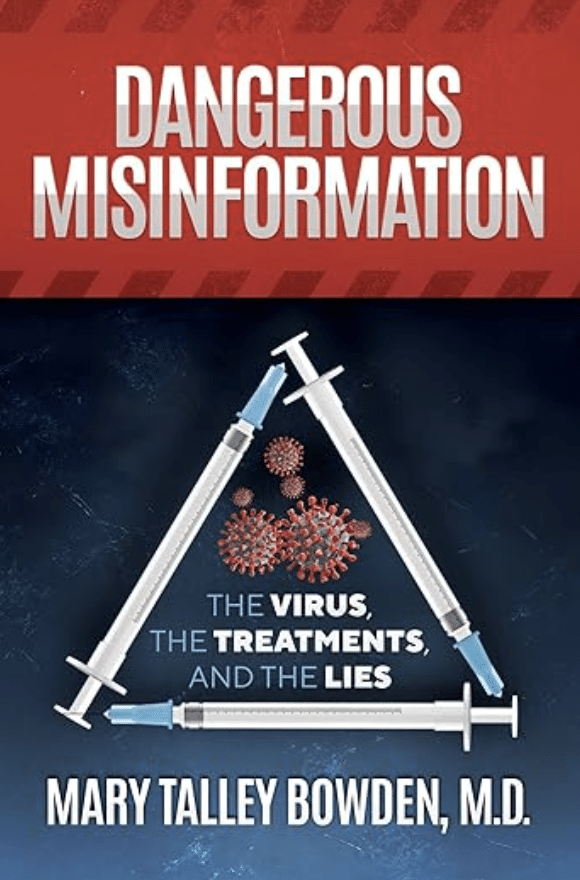
Board-certified otolaryngologist and sleep medicine physician; IMA Senior Fellow. Dr. Bowden completed her residency at Stanford and founded BreatheMD in Houston. She is the founder of the Coalition for Health Freedom and the author of Dangerous Misinformation: The Virus, the Treatments, and the Lies.

Dr. Ryan Cole, MD
IMA Head of Medical & Scientific Affairs; Senior Fellow, Pathology; Founder, Cole Diagnostics. Dr. Cole tested approximately 200,000 patients during the pandemic and treated many directly. He is currently fighting multi-state medical licensing challenges filed by a hospital system CEO in response to his public commentary during COVID.
1. What Elfenbein Built During COVID
When COVID hit, Elfenbein saw what was coming early. He purchased PPE, prepared his urgent care center, and positioned it for large-scale testing. Within months, First Call Medical Center had expanded from one site to eight, with 300 employees serving patients across Anne Arundel, Prince George’s, and Calvert counties in Maryland.
The operation tested over 300,000 people. But of course, testing was only half the story.
When monoclonal antibody therapy became available, Elfenbein taught himself how to run an infusion operation from scratch. As an emergency physician, he had no background in infusions. He studied the literature, sourced the equipment, and built the protocols himself. First Call became the largest private monoclonal antibody provider in Maryland, eventually infusing more than 5,000 patients.
“I’ve never seen anything like the efficacy of that medication in anything I’ve ever dealt with in my entire career in medicine.” — Dr. Ron Elfenbein
The results were extraordinary. The number needed to treat was so low that for roughly every ten patients infused, one life or hospitalization was prevented. The federal government took notice and partnered with Elfenbein to open an infusion site at FedEx Field in Landover, Maryland, in collaboration with HHS and the Maryland Department of Health.
Then the government began controlling distribution. Allocation was centralized, artificial shortages appeared, and an equity-based rationing framework replaced clinical judgment. States like Florida, which had the highest median age in the country during a Delta surge, saw their supply cut. In late 2021, the entire national monoclonal antibody program was shut down based on Omicron prevalence data the government later quietly admitted was wrong: According to Elfenbein, the government had claimed 70% prevalence when the actual figure was 20%.
With that in mind, Elfenbein went on national television and said the decision would cost lives.
Four months later, he was indicted.

2. The Federal Case: $250 and 50 Years
The charges were healthcare fraud. The allegation: Elfenbein’s practice had billed a level-four evaluation and management code when the government believed a level-three was appropriate. The average difference between those two codes is about $50. Across the five patient charts in the indictment, the total disputed amount came to approximately $250.
The maximum sentence: 50 years in federal prison.
According to Elfenbein, no one from the government ever contacted him or his partners to ask about the billing before indicting. They got his name wrong on the charging documents. They never hired a professional coder to review the charts.
At trial, the government’s own expert witness contradicted the indictment, admitting that time spent with patients was irrelevant to coding and that the care was medically necessary.
“They never said why what we did was wrong. They never said how what we did was wrong. And they never said what the appropriate code should have been. They just kept pointing their finger at me and saying, he’s a criminal.” — Dr. Ron Elfenbein
In closing arguments, the prosecution told the jury to set aside the coding rules and use “common sense.” The jury convicted. But the chief judge of the District of Maryland issued a 93-page opinion overturning the verdict, writing that “the government did not carry its burden and no reasonable jury could have so concluded.” He acquitted Elfenbein on all charges.
The AMA then filed an amicus brief in Elfenbein’s defense, joined by the American Association of Physicians and Surgeons. The organization that publishes the ICD-10 and CPT coding manuals stated that Elfenbein had followed the rules.
The government appealed anyway. Elfenbein now faces a second criminal trial. The disputed amount is still $250.

3. A Pattern Across Physicians
Elfenbein’s case is not isolated. During the episode, all three physicians described facing institutional or legal consequences tied to their public commentary during COVID.
Dr. Mary Talley Bowden’s path started with a tweet. She posted “vaccine mandates are wrong” on Twitter at a time when she had virtually no following. Houston Methodist suspended her privileges. CNN, the Washington Post, and NBC picked up the story. Rather than retreat, Bowden leaned in. She had treated over 6,000 COVID patients during the pandemic and wasn’t willing to be silent about what she’d seen.
“My crime was tweeting, vaccine mandates are wrong on Twitter. And back then I had, like I’d get one like. It wasn’t like I had any kind of following.” — Dr. Mary Talley Bowden
That experience led her to found the Coalition for Health Freedom, which brings together health organizations across the country to advocate for medical freedom and patient rights. She has also just released her book, Dangerous Misinformation: The Virus, the Treatments, and the Lies, which details her experience and the broader institutional response to physicians who challenged official narratives.
Host Dr. Ryan Cole described a similar trajectory. A hospital system CEO filed complaints against him in every state where he was licensed, as well as with the College of American Pathology and the American Board of Pathology. All states except Washington dropped the case on First Amendment grounds. The Washington appeals court found that no evidence had been presented against him. Cole described losing his career over the process itself, as insurance companies withdrew coverage based on the complaints alone.
Bowden’s takeaway was blunt: “I think it’s a lesson that you don’t do business with the government. They are not good business partners.”
4. The Chilling Effect on Patients
The consequences extend well beyond the physicians involved. Elfenbein described a friend, a plastic surgeon in Connecticut, who had been seeing Medicare patients at a loss because he wanted to help elderly patients in his community. After Elfenbein’s indictment, the surgeon dropped Medicare entirely. Those patients now have nowhere to go.
That’s the mechanism Elfenbein kept returning to throughout the conversation: the system doesn’t just punish the individual physician. It teaches every other physician watching that speaking up, practicing independently, or questioning government policy carries a risk that no reasonable person would accept.
“The next time there’s a pandemic, you want your doctor to step up and to question the narrative and to say, this doesn’t make sense. But why would anybody put themselves in that position?” — Dr. Ron Elfenbein
Bowden’s advice to physicians was direct: opt out of government contracts, go independent, and build a practice that doesn’t depend on a system that can turn on you without warning. It’s pragmatic counsel, but it leaves behind every patient who depends on Medicare and insurance-based care.
Standing with Physicians Who Show Up
Elfenbein’s case remains active. A U.S. senator, HHS officials, and Department of Justice contacts have reached out, but the case has not been dismissed. Patients who were treated at First Call Medical Center in Maryland can support the effort by contacting Acting Attorney General Todd Blanche or writing to the president. Elfenbein’s legal defense information is available at dropthecase.com.
Related Reading
- Book: Dangerous Misinformation: The Virus, the Treatments, and the Lies
- Website: Drop the Case — Dr. Elfenbein’s Legal Defense
- Webinar: Dr. Kirk Moore and the Ethics of Mandates
- Post: What Covid Policy Did to Doctors Who Refused to Stay Silent
- Webinar: Dr. Mary Talley Bowden on FluMist, Health Freedom, and Her New Book