
Host: Dr. Ryan Cole | Guest: Dr. Mark Cannon
Most people think about oral health in terms of cavities and cleanings. But emerging research suggests the mouth may be shaping far more than your smile, influencing inflammation, immune signaling, gut health, and even chronic disease risk.
Host Dr. Ryan Cole, IMA Head of Medical & Scientific Affairs, is joined by Dr. Mark Cannon for a conversation on the oral microbiome, the living ecosystem of bacteria in your mouth that may be a gateway to whole-body health.
The bacteria in your mouth don’t stay in your mouth. They survive stomach acid, seed the gut, cross into the bloodstream through inflamed gum tissue, and turn up in arterial plaques, tumor microenvironments, and brain tissue. The oral microbiome is not a dental problem. It is a systems-level health indicator, and mainstream medicine has barely begun to take it seriously.
Dr. Mark Cannon has spent decades building the evidence. A Professor Emeritus at Northwestern’s Feinberg School of Medicine and former President of the American Academy for Oral and Systemic Health, Cannon’s published research spans microplastics, cancer, autism, and the gateway microbiomes of the mouth and nose. His conclusion is blunt: what lives in your mouth may be programming your health far beyond it.
What follows is the science, the threats, and the practical steps. Three oral bacteria linked to Alzheimer’s, colorectal cancer, and strokes. The everyday products quietly wrecking the oral ecosystem. And an inexpensive prebiotic that may be one of the simplest interventions in medicine.
Meet the Experts

Mark L. Cannon, DDS, MS
Professor Emeritus, Northwestern University Feinberg School of Medicine; Ann & Robert H. Lurie Children’s Hospital, Chicago. Dr. Cannon is a Diplomate of the American Board of Pediatric Dentistry and former President of the American Academy for Oral and Systemic Health. A Fellow of the Royal College of Medicine, the Academy of Dental Materials, and Sigma Xi, his research focuses on the oral microbiome’s systemic connections, microplastics, xylitol, and cancer biology. He has been twice invited to the Karolinska Institutet, first to the Nobel Forum (2016) and then to the Nobel Assembly (2017).
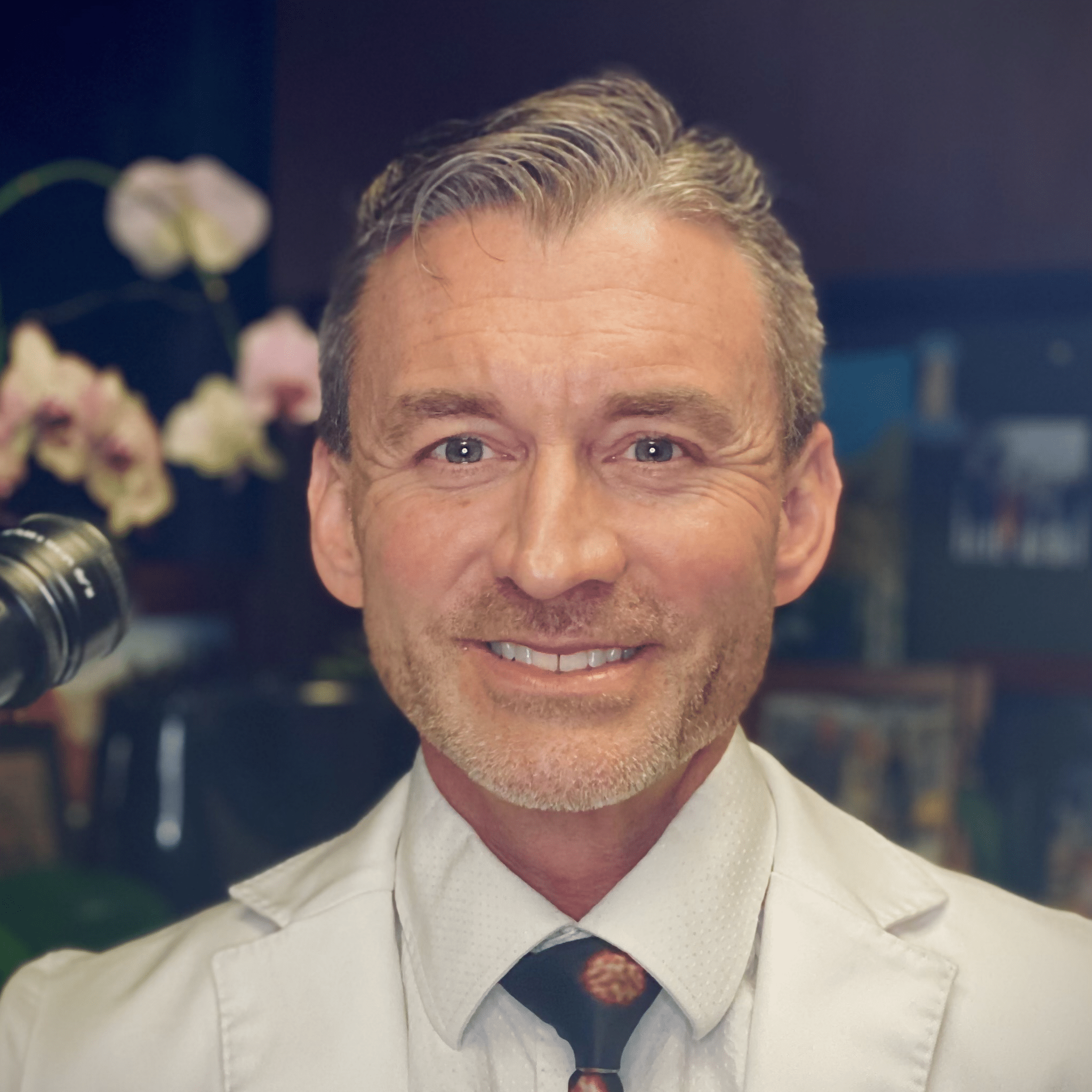
Ryan Cole, MD
IMA Head of Medical & Scientific Affairs; Senior Fellow, Pathology; Founder, Cole Diagnostics. A board-certified anatomic and clinical pathologist, Dr. Cole brings a tissue-level perspective to the oral-systemic connection, particularly the role of bacteria within tumor microenvironments.
1. The Mouth as a Gateway to Systemic Disease
Your oral microbiome is not just bacteria. It includes fungi, viruses, archaea, and bacteriophages: an ecosystem co-evolved with the human body over millions of years. Most of these organisms are symbionts. They process food, convert dietary nitrates into nitric oxide, and signal the immune system. Dr. Cannon calls the mouth a gateway microbiome, and the term is not metaphorical.
When that gateway is compromised, oral bacteria reach the rest of the body two ways: they survive stomach acid and colonize the gut (where they are linked to IBD and Crohn’s disease), and they cross into the bloodstream through inflamed gum tissue. The specific organisms involved are not obscure:
- Porphyromonas gingivalis breaks down tight junctions throughout the body, including the blood-brain barrier and arterial walls. Its protease gingipain has been found in Alzheimer’s brain autopsies and destroys insulin receptors in muscle tissue.
- Fusobacterium nucleatum is implicated in colorectal cancer and stillbirths.
- Streptococcus mutans, the bacterium best known for causing cavities, can invade the endothelial cells lining the heart’s arteries and is associated with oral cancer and strokes.
In one landmark animal study, a single oral lavage of P. gingivalis was enough to alter both the oral and gut microbiome, break tight junctions, and spread to the intestines, liver, and pancreas.
“A one-time lavaging of the mouth with porphyromonas gingivalis caused the oral microbiome to change, the gut microbiome to change, tight junctions to break.” — Dr. Mark Cannon
These are not just lab findings. As Dr. Cole noted, specific cancers carry distinct bacterial microenvironments that can determine whether a therapy succeeds or fails. Women with a history of stillbirth are 86% more likely to develop dementia later in life, a pattern that makes biological sense when the same organisms are implicated in both.
Danish population studies have found that children with heavy cavities by ages two to four carry a higher hazard ratio for cardiovascular disease than cholesterol. Children born during WWII sugar rationing had dramatically lower rates of metabolic and cardiovascular disease for life. The connection between early oral health and lifelong outcomes is not speculative. It is measured.

2. What’s Destroying the Oral Microbiome
The modern environment is degrading the oral microbiome from multiple directions at once. Most of the culprits are things people use every day without a second thought.
The standard American diet shifts the mouth toward dysbiosis. Processed foods, added sugars, and preservatives like calcium propionate (antimicrobial, and common in commercial bread) feed the wrong organisms and starve the right ones. Compared to hunter-gatherer populations, modern humans have lost roughly 20% of their beneficial oral bacteria.
Antimicrobial mouthwashes are arguably worse. The Prego study found that long-term Listerine use actually increases the number of pathogenic bacteria. A San Juan longitudinal study found that regular antimicrobial mouthwash users were more likely to become prediabetic, weighed more, and had average waist sizes over three times larger than non-users. Even prescription chlorhexidine, used for just 10 days, altered the gut microbiome. Nobody tells you this at the checkout counter.
“Long-term use of Listerine actually increases the number of bad bacteria you have.” — Dr. Mark Cannon
Glyphosate, patented as an antibiotic, is present in oatmeal, hummus, and many bread products. It kills beneficial oral bacteria on contact. Dr. Cannon pointed to a telling casualty: the Rothia genus, which breaks down gluten in the mouth. Wipe out Rothia, and you lose your first line of gluten processing. That may partly explain the surge in gluten sensitivity in populations eating glyphosate-treated grains.
Microplastics from dental composites, orthodontic materials, and oral-care products are a newer threat. Dr. Cannon’s peer-reviewed research found that human dental calculus harbors at least 26 types of microplastics, and that the periodontal environment may serve as a retention niche rather than a passive conduit.
3. Xylitol: The Prebiotic That Rebalances the Mouth
Xylitol is a naturally occurring sugar alcohol. The human liver produces roughly 15 grams daily via the pentose phosphate pathway, and it occurs naturally in berries, plums, mushrooms, and other plants. Dentistry has used it for decades to prevent cavities. The research now goes much further.
Pathogenic bacteria like S. mutans, P. gingivalis, and F. nucleatum cannot metabolize xylitol. They take it up, waste energy trying to process it, and lose their ability to form protective biofilm. The result is a shift toward balance without the collateral damage of antimicrobial rinses.
The published evidence spans several domains:
- Maternal health: The P-PAX trial in Malawi (10,000 pregnancies) found that xylitol chewing gum, costing 8 to 10 cents per day, reduced miscarriages, low birth weight, and infant mortality. Mothers also transmitted fewer pathogens to their infants.
- Autism: In a study by Dr. Cannon, 30 children with severe ASD received xylitol then probiotics. Nine of 30 showed improved verbal skills. The oral microbiome of the ASD children was significantly different from both neurotypical and “Blue Zone” controls from Colombia.
- Cancer: In syngeneic mouse models, xylitol reduced tumor glutathione, leaving cancer cells more vulnerable to the immune system’s reactive oxygen species.
- Remineralization: Xylitol carries calcium, is anti-inflammatory, and can arrest active cavities.
A note on a widely misread headline: the Cleveland Clinic study that linked xylitol to cardiovascular risk measured endogenous xylitol in patients who already had cardiometabolic disease. The paper itself stated the findings had no connection to dietary or dental-use xylitol.
“Xylitol inhibits the bacteria that produces gum disease too. Porphyromonas gingivalis, fusobacterium nucleatum, xylitol inhibits both of those.” — Dr. Mark Cannon

4. What You Can Do Today
None of this requires a prescription. Dr. Cannon’s recommendations start with the basics and build from there.
- Airway first: Sleep apnea and chronic mouth breathing change the oral microbiome. Oral appliances have a higher success rate than CPAP for many patients.
- Diet: Cut processed foods, added sugars, and preservatives. Calcium propionate in bread is antimicrobial. Feed the microbiome whole, unprocessed foods.
- Xylitol: Available as gum, toothpaste, mouthwash, floss, and nasal spray. Inexpensive and widely accessible. Aim for consistent daily exposure.
- Probiotics: Dr. Cannon recommended Lactobacillus reuteri, noting over 1,200 published articles and 200 clinical trials behind it. NHANES data on more than 50,000 individuals showed probiotic and synbiotic users had half the hazard ratio for cardiovascular disease.
- Ditch the antimicrobial rinses: Listerine, chlorhexidine, and alcohol-based mouthwashes kill the good with the bad. Xylitol-based rinses are the alternative.
One frontier to watch: saliva omics. Saliva contains over 15,000 biomarkers and can screen for more than 200 diseases. Dr. Cannon argues it is more stable and information-rich than blood for diagnostics. The science is there. The regulatory barriers are what remain.
“Treat your microbiome like it’s your own.” — Dr. Mark Cannon
The Front Door to Systemic Health
The tools are simple. The evidence is published. And the stakes—from Alzheimer’s to cancer to a child’s lifelong metabolic trajectory—are too high for oral health to stay in a dental silo. The mouth is where systemic health begins.
Related Reading
- Webinar: Dental Myths Debunked: The Real Story Behind Oral Health
- Peer-Reviewed Study: Micro/Nanoplastics and Periodontitis: An Environmental Microbiology Perspective on Oral Retention and Systemic Risk
- Peer-Reviewed Study: Effects of Xylitol on Tumor Progression in Syngeneic Mice Cancer Models
- Peer-Reviewed Study: Analysis of Osmotic Pump-Administered Xylitol in a Syngeneic Mouse Melanoma Model
- Peer-Reviewed Study: Salivary Transcriptome and Mitochondrial Analysis of Autism Spectrum Disorder Children
- Peer-Reviewed Study: Whole-Genome Deep Sequencing of the Healthy Adult Nasal Microbiome
- Peer-Reviewed Study: Whole Genome Deep Sequencing of the Oral Microbiome in Epidermolysis Bullosa