
Soon after your baby is born, you will probably be asked whether you want the vitamin K shot. The conversation may be brief: newborns are low in vitamin K, and the shot helps prevent a rare but dangerous bleeding problem. That explanation matters, but parents are not always told what the injection contains, whether every baby faces the same risk, or what options exist if they have concerns. Those questions deserve clear answers:
- Why is vitamin K given at birth?
- Are all babies at the same risk?
- Can my baby be tested first?
- What is in the shot?
- Is there an alternative?
IMA Senior Fellow in Pediatrics Dr. Katherine Welch has this conversation with families almost every week. She makes two points clear: vitamin K deficiency bleeding is rare, but real, and the shot works. She also believes parents deserve to know that the injection contains more than vitamin K and that an oral option exists. She is not telling every family to refuse the shot. Her goal is to help parents understand the differences and make a plan before delivery.
What Dr. Welch Recommends
Dr. Welch recommends oral vitamin K1 on a specific three-dose schedule for families who want vitamin K protection but do not want either of the injectable products used in the United States. Her concern is not vitamin K itself. It is the inactive ingredients in those products. Depending on the formulation, these include a castor oil derivative, benzyl alcohol, aluminum, or polysorbate 80.
She is also clear that the shot works. It begins protecting promptly, requires only one dose, and some families in her practice choose it. But for parents who prefer the oral option, she recommends:
- 2 milligrams at about four hours after birth
- 2 milligrams on day four
- 2 milligrams at week four
This is a specific protocol: the product must contain vitamin K1, and every dose must be given on time. Because the first is due only a few hours after birth, parents should discuss the plan with their pediatrician or midwife and obtain the product before delivery.
Some parents decline both options. Dr. Welch respects that choice, but she does not describe it as risk-free. Giving no vitamin K carries the greatest risk, especially when a baby has additional risk factors.
Why Newborns Are Offered Vitamin K
Vitamin K helps the liver activate proteins that allow blood to clot. Newborns begin life with low stores because very little crosses the placenta and breast milk contains only a small amount. A test at birth would mostly confirm that expected low level; it would not identify which healthy-looking baby might bleed several weeks later.
The condition doctors are trying to prevent is vitamin K deficiency bleeding, or VKDB. It is classified by when it begins:
- Early: within the first 24 hours
- Classical: from day two through day seven
- Late: roughly two to 12 weeks
Early and classical bleeding may be visible around the umbilical cord or a circumcision site. Late bleeding can occur in the gastrointestinal tract or inside the skull, sometimes with little warning.
“It’s not bleeding out; it’s bleeding in, and it’s usually undetectable.” — Dr. Katherine Welch
Every newborn begins with low vitamin K, but some circumstances raise additional concerns:
- Medications during pregnancy, including certain antibiotics and anti-seizure drugs that can reduce vitamin K.
- Prematurity, a difficult delivery, or newborn illness. A small study of preterm infants found laboratory evidence of low vitamin K after discharge among exclusively breastfed babies who had received the shot.
- Liver disease or cholestasis. These conditions can impair clotting and make oral vitamin K harder to absorb. Research involving infants with biliary atresia shows why an unrecognized bile-duct disorder can change how well oral vitamin K works.
Delayed cord clamping does not replace vitamin K. No one knows for certain why the normal newborn level starts so low. Dr. Welch found theories involving placental blood flow and rapid cell division, but neither has been proven. As she puts it, low vitamin K at birth is “not a bug but a feature” of the way God designed our bodies.
What Is in the Shot?
The vitamin K shot contains inactive ingredients. The two US products differ, so ask which one your hospital carries:
- Castor oil derivative, benzyl alcohol, and aluminum: The label says its small amount of benzyl alcohol has not been shown to cause harm when used as directed, but it also warns about benzyl alcohol toxicity and prolonged exposure to injected aluminum. Dr. Welch calls benzyl alcohol a neurotoxin and does not believe it belongs in a newborn injection. The castor oil derivative has been implicated in serious allergy-like reactions. She acknowledges that the aluminum amount is smaller than some people claim, but says she does not agree with putting aluminum into the body.
- Polysorbate 80: The other formulation avoids benzyl alcohol and the castor oil derivative. Because polysorbate 80 is used in drug-delivery research to help compounds cross the blood-brain barrier, Dr. Welch questions its use in a newborn injection.
- Route: One label prefers an under-the-skin injection when possible, although most hospitals give the newborn dose into the muscle and may not offer another route.
- Other concerns: Dr. Welch discusses increased jaundice, more need for light treatment, and rare severe allergic reactions. She has observed eczema and food allergies in some children after the shot, but calls this a practice observation, not an established study finding.
“They’ll say, ‘Oh, this amount is so small.’ Well, I don’t think any amount is a good amount.” — Dr. Katherine Welch
Dr. Welch also discusses Konakion MM, a European formulation without the castor oil derivative, benzyl alcohol, or polysorbate 80. She says it provides similar protection and uses ingredients she considers more compatible with the body. It is not commercially available in the United States.
How the Oral Alternative Works
Oral vitamin K is not routinely stocked or discussed in many US hospitals, and Dr. Welch says families who ask about it may be discouraged. It is not a one-time substitute for the shot:
- Why the doses repeat: The injection leaves a supply of vitamin K in muscle and fat, while oral vitamin K is absorbed less reliably and must be repeated.
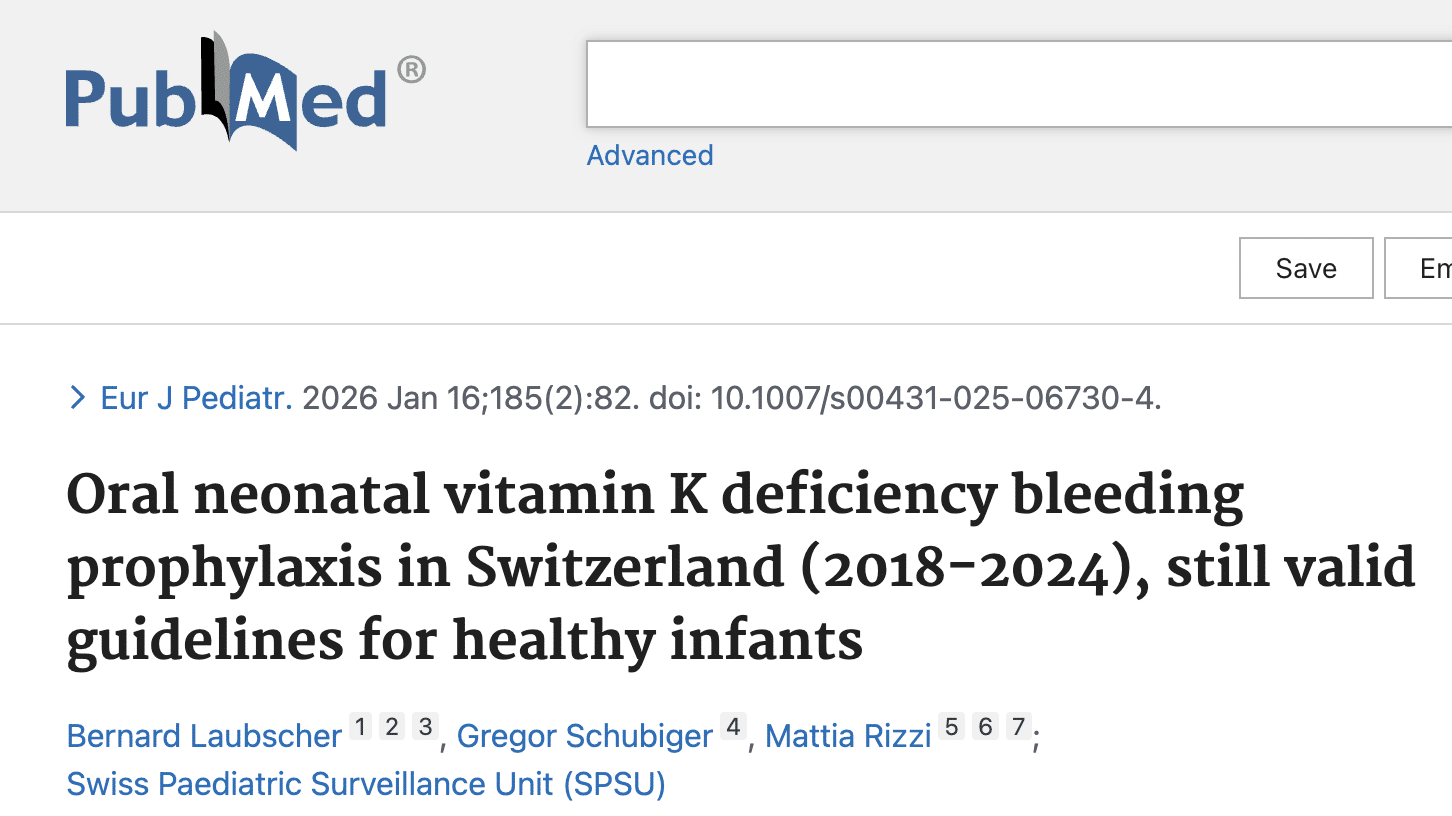
- Why there are three doses: Switzerland’s original two-dose regimen reduced late VKDB but did not eliminate it, particularly among babies with liver or bile-duct disease. A third dose at week four was added in 2003. In 2018–2024 surveillance, nine cases were reported among 505,708 births. All nine babies were exclusively breastfed and had an additional risk factor: refusal of preventive vitamin K, unrecognized cholestasis, or both. Researchers concluded that the schedule remains effective for healthy babies when followed correctly.
- Getting it in the United States: The Swiss product is not sold here, so parents need a clinician’s help choosing an appropriate vitamin K1 preparation.
- Limits and special circumstances: A 2021 review found no randomized trial directly comparing oral and injected vitamin K for late VKDB, but European surveillance found no significant difference when the complete oral regimen was followed. If a baby is premature, becomes ill, or develops a condition affecting absorption or clotting, the family should reconsider the plan with a clinician.
For a healthy baby, the real difference between the two routes is follow-through. The shot is finished at birth. The drops ask parents to keep a schedule for a month. Dr. Welch’s families use phone reminders, and she has no patience for the suggestion that they cannot manage it.
“If you really are concerned about bleeding in your baby, I think you’ll remember. My parents are very smart.” — Dr. Katherine Welch
Can Maternal Diet Replace Vitamin K?
Dr. Welch encourages mothers to eat well, but ordinary dietary changes have not been shown to raise vitamin K in breast milk enough to replace giving it directly to the baby. This is not a failure of breastfeeding or something a mother has done wrong.
The review Dr. Welch cites summarizes a study in which mothers took 5 milligrams of vitamin K1 each day, an amount requiring supplementation. Vitamin K rose substantially in breast milk and the infants’ blood. The study measured vitamin levels rather than bleeding outcomes, and the infants had received vitamin K at birth. Dr. Welch found no controlled trial showing that maternal diet or supplements protect a baby from VKDB as effectively as giving the baby vitamin K directly. Formula contains added vitamin K, but feeding method does not erase other risk factors.
Make a Plan Before Birth
Parents should not have to learn about these options while recovering from delivery. If possible, discuss vitamin K with your doctor, midwife, and hospital before your due date. Ask:
- Does anything increase my baby’s bleeding risk?
- Which injectable product does the hospital use, and can I read its current label?
- If I choose oral vitamin K1, which preparation should I obtain, who will give the first dose, and what should we do if a dose is missed?
- How would our choice affect circumcision?
Dr. Welch says the hospitals she works with require the shot before a circumcision performed during the birth admission. Some clinicians perform circumcision after the first week and before one month, with or without preventive vitamin K. Ask both the hospital and the individual clinician about their policies in advance.
Families in Dr. Welch’s practice make different choices. What matters is understanding what each choice offers, what it requires, and whether your baby’s circumstances change the decision. She encourages parents to keep asking questions and to find a clinician who will answer them thoughtfully.
“Smart moms ask, and they ask really good questions, and they’re not afraid to ask questions. And I hope you find a doctor that will answer your questions.” — Dr. Katherine Welch
Research and Sources
Studies and product labels cited in this article, for parents and clinicians who want to read the evidence directly:
- Swiss national surveillance, 2018–2024: nine bleeding cases in more than 500,000 births on the three-dose oral schedule, all in exclusively breastfed infants whose parents refused prophylaxis or who had undiagnosed cholestasis. The authors conclude the schedule remains valid for healthy infants when followed.
- Switzerland’s original two-dose experience: the regimen that preceded the current schedule, later expanded to three doses after late bleeding continued in babies with liver disease.
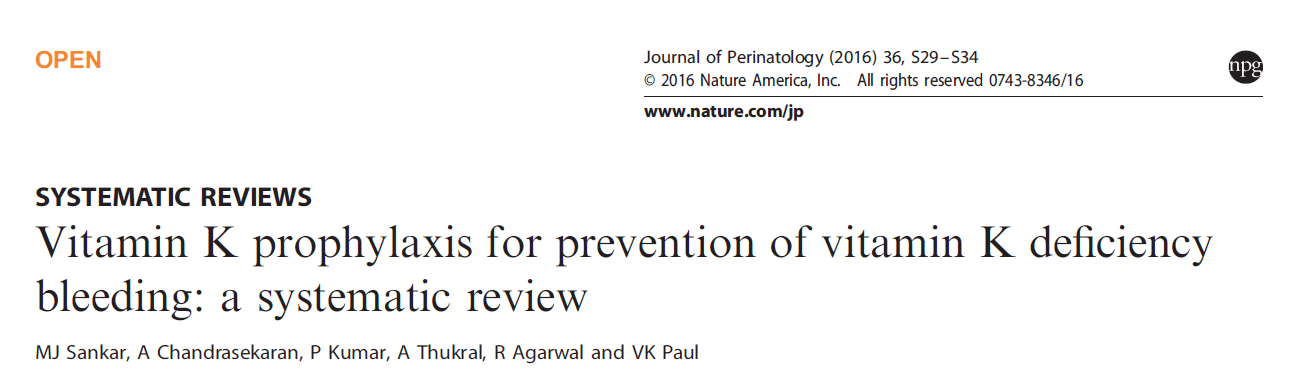
- Review of vitamin K prophylaxis in newborns: finds no randomized trial comparing oral and intramuscular routes, and no significant difference in surveillance data when the oral regimen is completed; notes the oral route is not appropriate for biliary atresia.
- Are breast-fed infants vitamin K deficient?: Greer’s review of why breastfed babies run low and what maternal supplementation does to breast-milk vitamin K.
- Late vitamin K deficiency bleeding in infancy: a recent review of the late form and how to prevent it.
- Exclusively breastmilk-fed preterm infants: subclinical vitamin K deficiency after discharge despite the shot at birth.
- Prophylactic dosing of vitamin K to prevent bleeding: the special risk in infants with biliary atresia.
- Phytonadione injectable emulsion label (castor oil and benzyl alcohol formulation): FDA prescribing information, including the boxed warning, benzyl alcohol and aluminum warnings, and route guidance.
- Phytonadione injection label (polysorbate 80 prefilled syringe): FDA prescribing information for the benzyl alcohol-free formulation.
Related Reading
- Hub: Smart Moms Ask Resource Center
- Video: Vitamin K Shots and Informed Consent: What Parents Should Know
- Webinar: Raising Healthy Kids: Food, Mood & Health Solutions
- Webinar: Parents’ Healthcare Bill of Rights: Taking Back the Classroom and the Lunchroom
- Video: The Child’s Heart: Pediatric Cardiology and the Future of Healing