Fatigue after COVID vaccination is real, measurable, and increasingly understood. This new review by IMA researchers highlights the biological mechanisms that may explain why.
Since the dawn of COVID and the widespread rollout of the COVID-19 injections, chronic fatigue has surged in parallel. Millions have reported persistent exhaustion, exercise intolerance, and physical depletion long after recovery or vaccination. Yet despite the consistency of these reported symptoms, the condition remains under-researched and neglected.
This new article, co-authored by IMA Director of Research Matthew Halma and IMA Co-Founder and Chief Medical Officer Dr. Joseph Varon, adds critical weight to the evidence. Alongside recent studies published in Advances in Virology, Heliyon, and Frontiers in Medicine, it contributes to a growing body of research linking patient-reported fatigue to measurable biological dysfunction. Together, these studies mark a pivotal year for research into Post-Acute COVID-19 Vaccination Syndrome (PACVS), a condition increasingly defined by both symptoms and science.
Fatigue is one of the most common (and most misunderstood) symptoms reported by patients with PACVS. But this isn’t just about feeling tired. It’s about a cellular-level energy collapse that leaves patients unable to perform basic activities without profound exhaustion.
This new review by Halma and Varon sheds light on why. Published in the Biomedicine & Pharmacotherapy the article highlights research that used 31P-magnetic resonance spectroscopy (MRS) to peer inside muscle cells and found what many patients already knew: the energy just isn’t there.
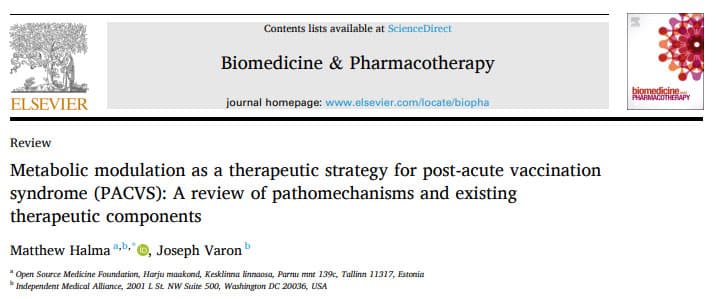
Metabolic modulation as a therapeutic strategy for post-acute vaccination syndrome (PACVS): A review of pathomechanisms and existing therapeutic components – by Matthew Halma, Joseph Varon
About the Study
Fatigue has been one of the most common and frustrating symptoms reported by people with PACVS. But until now, it has been hard to explain exactly why it happens. This study offers new clarity. It shows that patients reach their lactate threshold earlier and burn fat less efficiently during physical activity, both signs that their energy systems are under stress. These changes were directly linked to symptom severity and reduced exercise tolerance.
The takeaway? Fatigue in PACVS is not subjective. It’s measurable, biologically grounded, and increasingly understood.
Muscle Memory: What Mitochondrial Dysfunction Means
Mitochondria are the body’s energy producers. When they falter, muscles struggle to sustain activity and recover properly.
In this study, PACVS patients showed a lower lactate threshold, reduced fat oxidation, and diminished ATP production: clear signs of impaired energy metabolism. These disruptions align closely with patient reports of post-exertional crashes, cognitive fog, and a body that doesn’t bounce back.
One long COVID study offers a helpful visual model for how these mechanisms may function. The figure below illustrates contributing factors such as oxygen shortages, metabolic deconditioning, altered nervous system signaling, immune activation, and central fatigue. Together, they help make sense of what PACVS patients are experiencing.
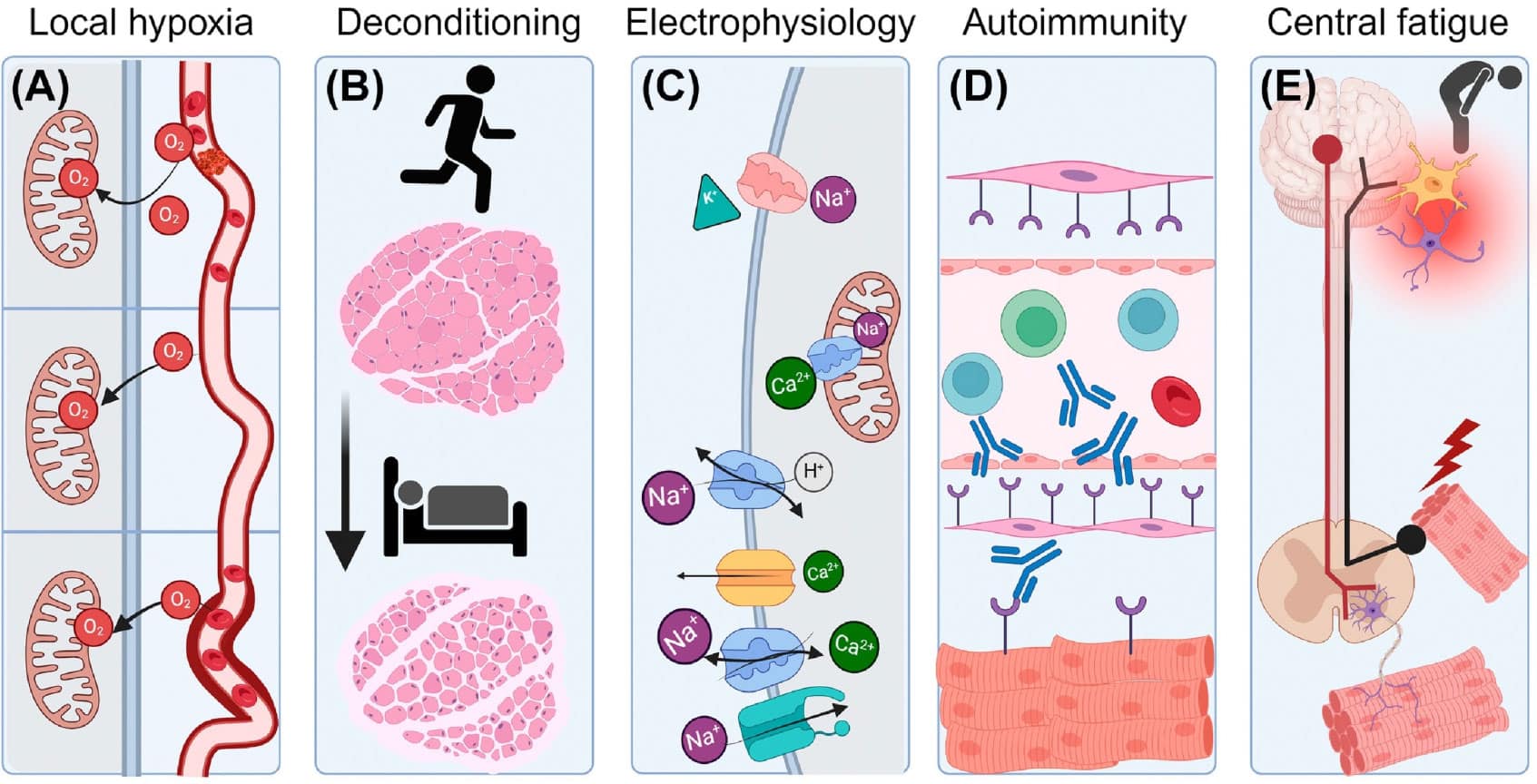
Adapted from references [26] and [27] under a Creative Commons Attribution Non-Commercial No Derivatives License 4.0.
Why This Changes the Game
By compiling evidence of mitochondrial dysfunction, this review points to a physiological target linked to the symptoms patients have long described.
That opens the door to focused therapeutics:
- Mitochondrial support (e.g. CoQ10, L-carnitine, creatine, D-ribose, nicotinamide riboside, alpha-lipoic acid, and B-complex vitamins)
- Targeted rehabilitation focused on restoring energy pathways
- Biomarker tracking to monitor response
It also helps shift the conversation—from asking if the condition is real to understanding what drives it.
“The persistence of impaired muscle energetics suggests a need for targeted rehabilitation strategies aimed at restoring mitochondrial function.” — Study authors
IMA’s Mission: From Science to Care
This paper aligns with IMA’s commitment to accelerating recognition, diagnosis, and treatment for Post-Acute COVID-19 Vaccination Syndrome (PACVS). It complements recent research on:
- New Study Proves COVID Injections Not “One Size Fits All”
- New Research Defines Post-Vaccine Syndrome
- IMA Study on Post-Acute COVID Vaccine Syndrome Published in Frontiers in Medicine
It’s not just about proving Post-Acute COVID-19 Vaccination Syndrome (PACVS) exists—we’ve done that. It’s about building the path forward.
What Comes Next
As 2025 closes, momentum is building. We’re inviting clinicians and researchers to help move this conversation from the margins to the mainstream: