
A major new review published in Oncotarget examines the temporal relationship between COVID-19 vaccination and cancer—and the reaction to its publication tells its own story. IMA Chief Scientific Officer Dr. Paul Marik breaks down the findings, the cyberattack on the journal, and what it all means.
The Study
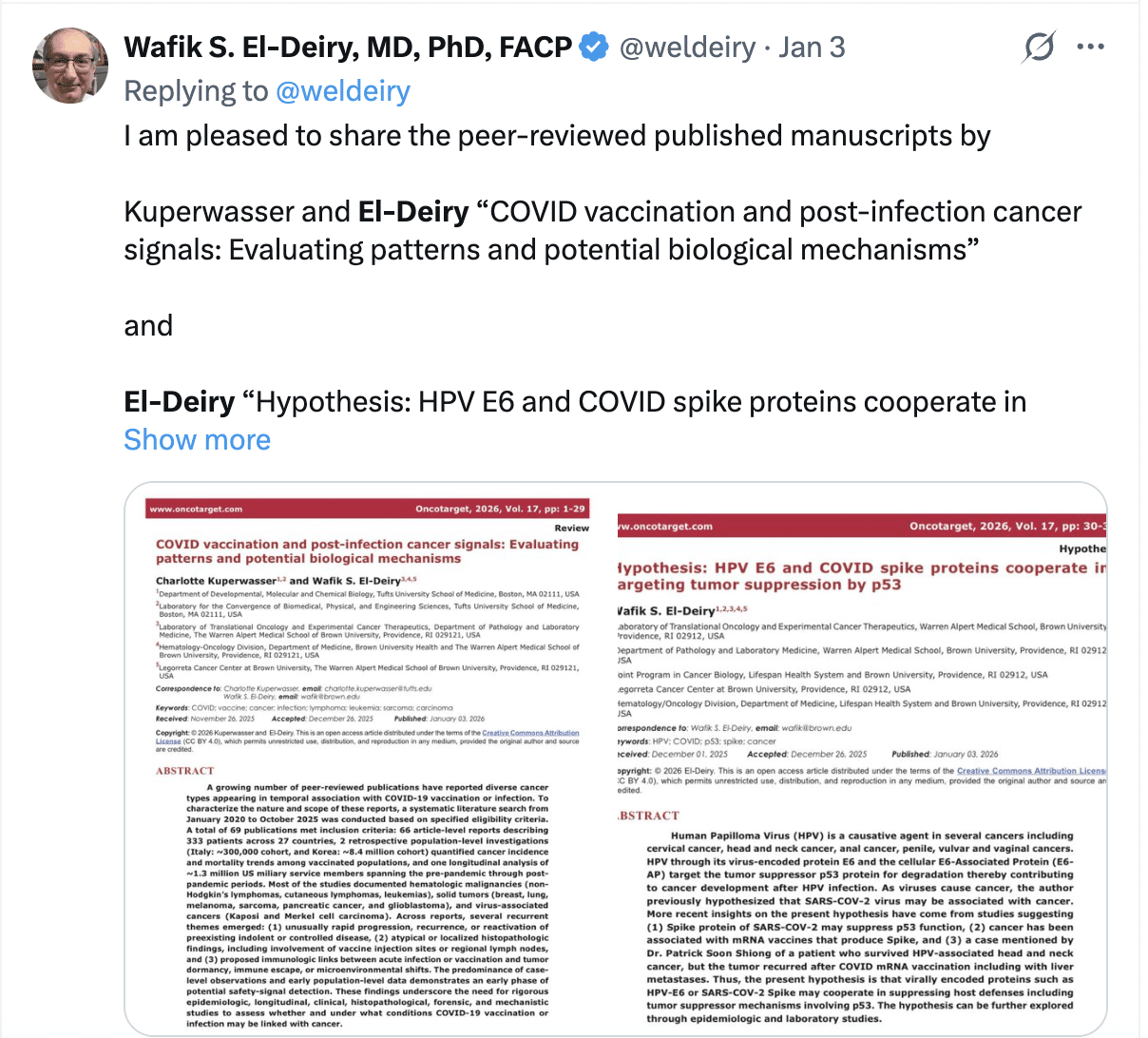
The paper in question is titled “COVID vaccination and post-infection cancer signals: Evaluating patterns and potential biological mechanisms” by Charlotte Kuperwasser and Wafik S. El-Deiry. The authors come from both Tufts University and Brown University.

As Dr. Marik explains:
“This paper was looking at—basically a narrative hypothesis-generating review—looking at the temporal association between COVID-19 vaccination and SARS infection, and epidemiological data on cancer. So they performed a review from January 2020 to April 2025 across multiple databases and web sources to collect reports of cancer appearing after COVID-19 vaccination and infection.”
The Findings
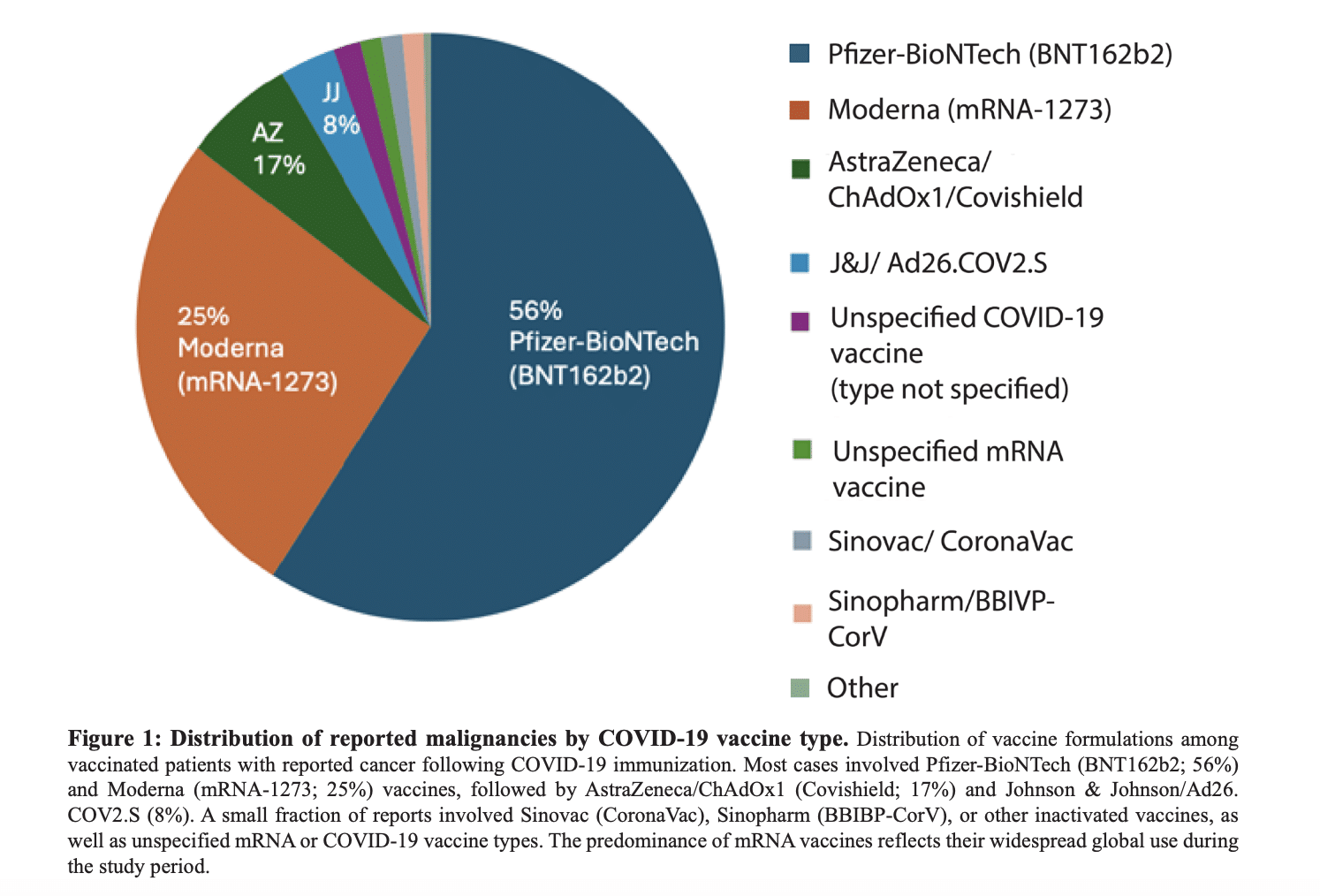
The researchers identified 69 publications including 66 article-level clinical reports describing 333 patients across 27 countries, plus two large population-level cohort studies.
And here’s a critical point that Dr. Marik emphasizes:
“They were looking for infection—post-infection and post-vaccination. It just so happened that 87 or 89 percent of the cancers were post-vaccination. So that’s important. The people are going to spin this as a consequence of SARS-CoV-2 infection, whereas indeed it was—the vast majority of cases were post-vaccination.”
Cancer Types Observed
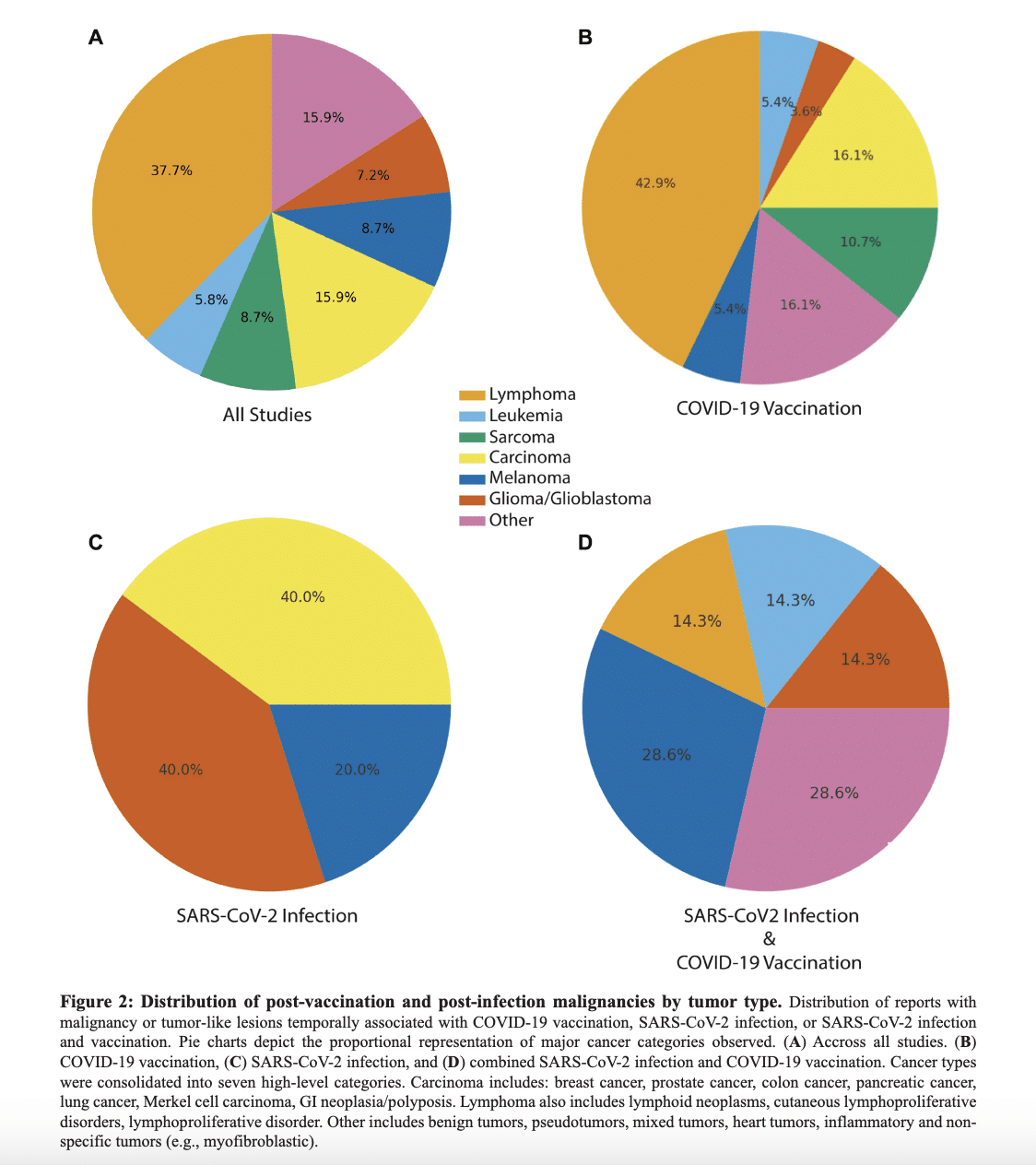
Out of these 333 cases, the cancer types included:
Hematological malignancies: Non-Hodgkin’s lymphoma, cutaneous lymphoma, leukemias
Solid tumors: Breast, lung, melanoma, sarcoma, pancreatic cancer, glioblastoma
Dr. Marik notes: “Surprisingly, there were many cases of pancreatic cancer, predominantly in the solid tumors.”
The Pattern
The study found a specific pattern associated with these tumors—one consistent with what has been reported elsewhere in the medical literature on so-called “turbo cancers”:
- Rapid progression of tumors
- Recurrence or reawakening of previously indolent or controlled cancers
- Tumors occurring close to the injection site
- Clustering within weeks to months of vaccination
As Dr. Marik puts it:
“And there was a certain pattern associated with these tumors. And this has been reported before in studies on so-called ‘turbo cancers.’ In our paper on turbo cancers, we similarly reported a similar pattern.”
📄 Related IMA Research: COVID-19 mRNA-Induced “Turbo Cancers” (Marik & Hope) – Journal of Independent Medicine
The Korean Study
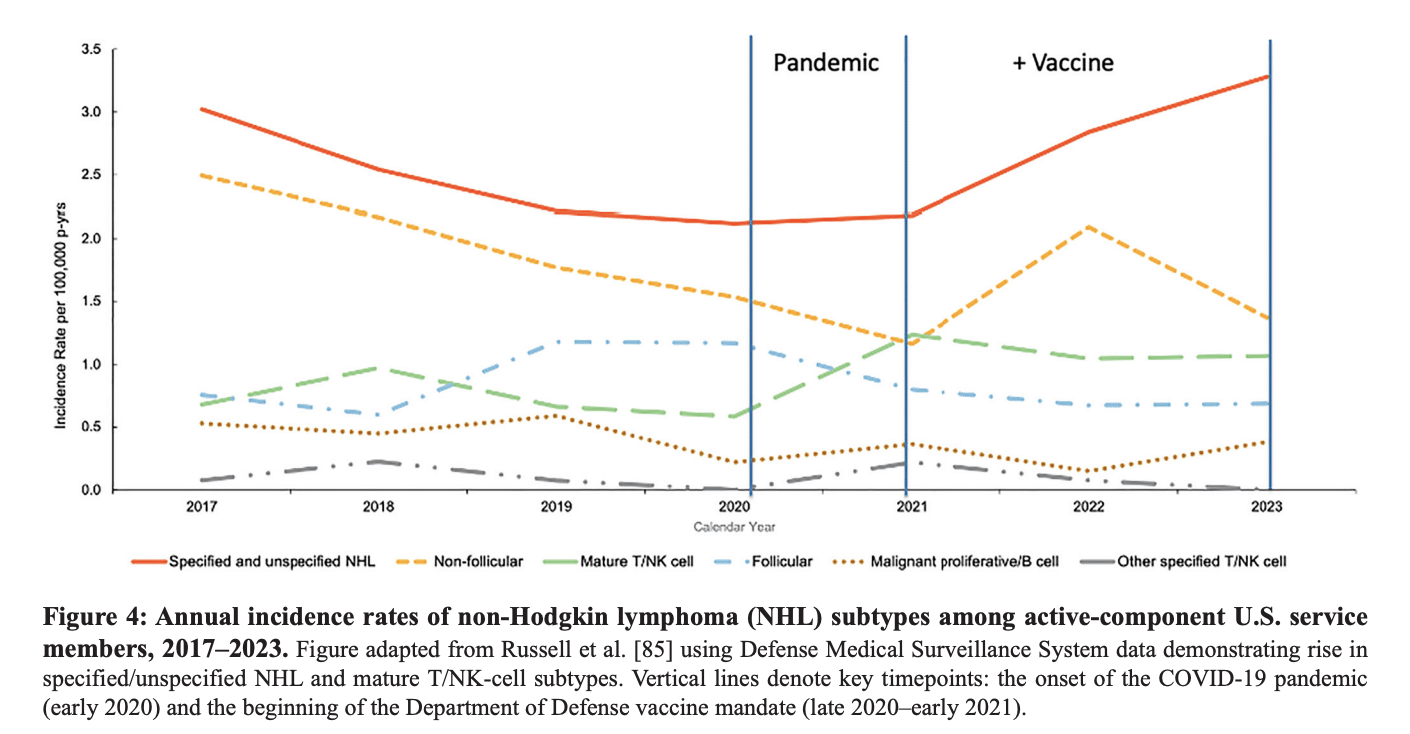
This temporal clustering becomes particularly significant when you consider the supporting population-level data. Dr. Marik references a large Korean study:
“This becomes important because in the Korean study, which looked at over 8 million patients—or 8 million citizens, vaccinated versus non-vaccinated—they looked at the hazard ratio of cancer in the first year. And the biggest criticism of oncologists is cancer doesn’t happen in a year… the lead time is years. Which is obviously not correct for cancers associated with the vaccine, because in this study, as in multiple other studies, there was a clustering within weeks to months after the vaccine.”
📄 Read the Korean Study – Biomarker Research
The Proposed Mechanism
The study also outlines a proposed biological mechanism for how mRNA vaccination could potentially trigger tumor hyperprogression.
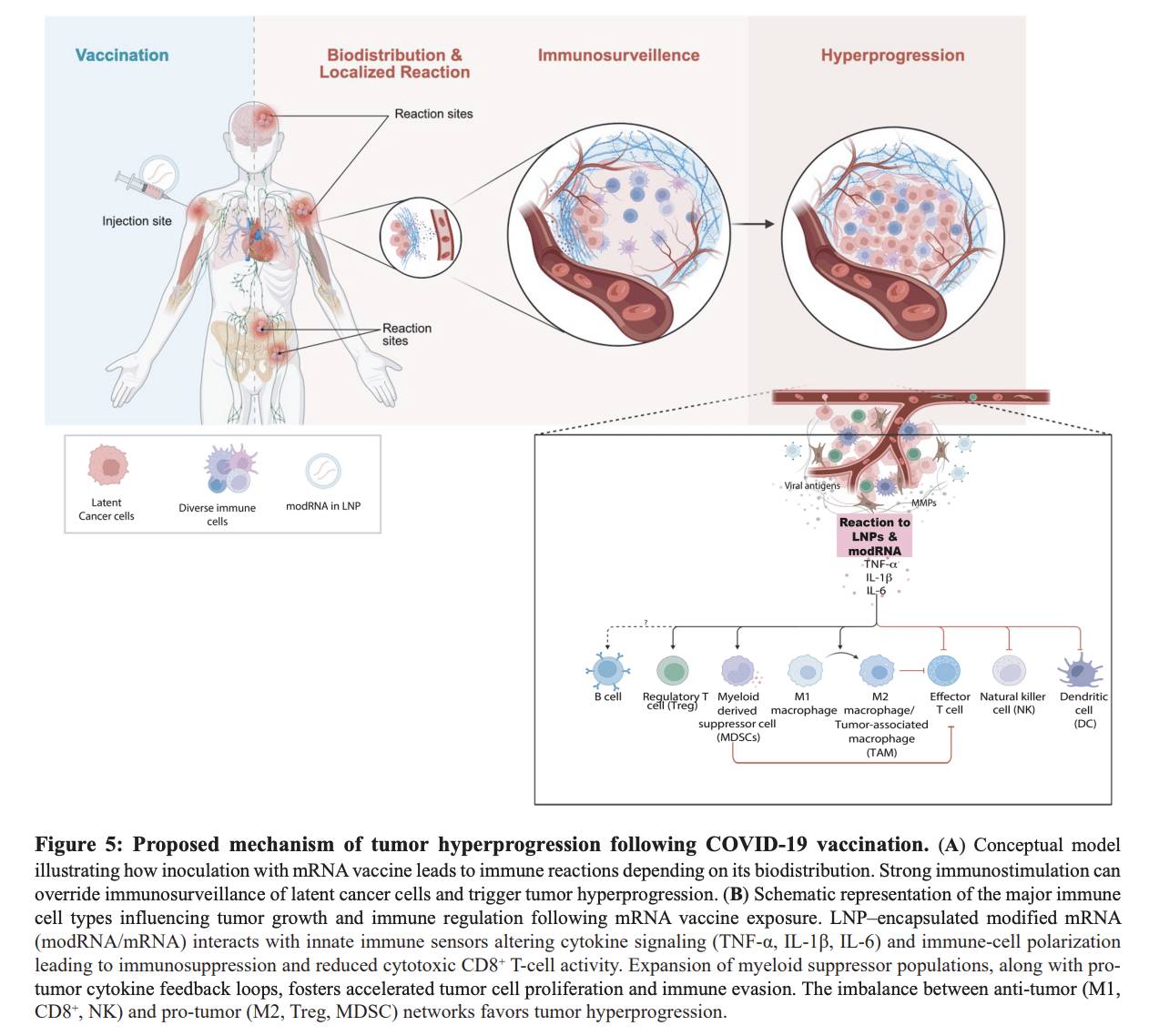
The conceptual model illustrates how inoculation with mRNA vaccine leads to immune reactions depending on biodistribution. Strong immunostimulation can override immunosurveillance of latent cancer cells and trigger tumor hyperprogression.
LNP-encapsulated modified mRNA interacts with innate immune sensors, altering cytokine signaling (TNF-α, IL-1β, IL-6) and immune-cell polarization—leading to immunosuppression and reduced cytotoxic CD8+ T-cell activity. The expansion of myeloid suppressor populations, along with pro-tumor cytokine feedback loops, fosters accelerated tumor cell proliferation and immune evasion.
The Cyberattack
What happened when this paper was published? Dr. Marik doesn’t mince words:
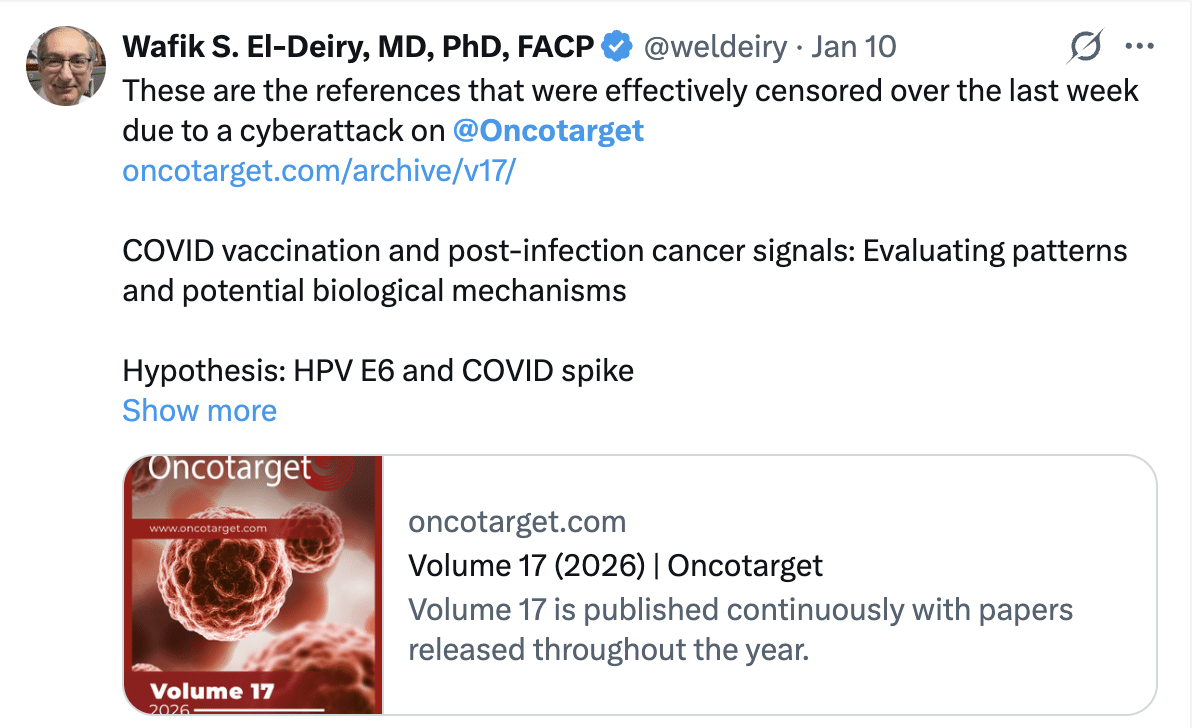
“Well, as would be expected, Big Pharma wasn’t happy. So some unknown agent tried to shut down the journal. There was a cyberattack on the journal and they successfully shut down the journal due to the cyberattack. So apparently the FBI have been involved.”
The Social Media Firestorm
Beyond the cyberattack, there was a concerted effort targeting the researchers personally:
“And then it generated an enormous firestorm in social media attacking both the authors, but particularly Dr. El-Deiry, attacking him personally, his competence, and basically undermining his integrity. And he did fight back.”
The Streisand Effect
The attempt to suppress the research had the opposite of its intended effect:
“So it seemed like there was a concerted, organized, well-orchestrated attempt to shut down the journal, shut down the paper, and prevent the paper being distributed. But in fact, it’s had the opposite effect. Because of all the publicity and because of all the attention on social media, this paper has now been widely distributed across the world. The attempt to hide the data has now completely backfired, and the results of this paper—which have obviously been reproduced multiple times and are obviously accurate—have been distributed.”
The Pfizer Job Offer
Perhaps the most surreal detail in this entire saga: Dr. El-Deiry received a recruitment message from Pfizer.
“What is even more interesting is the second author, who is one of the oncologists being communicating, Dr. Wafik El-Deiry, he actually got a job offer from Pfizer. Can you imagine such a thing? So preposterous. He writes a paper highly critical of their vaccine and the enormous toxicity resulting from their vaccine, and Pfizer has the audacity to sincerely offer him a job. You couldn’t make this up.”
Dr. El-Deiry shared the full recruitment message publicly and declined: “It is ironic to get a message from a Pfizer recruiter on January 5, 2026. However, I am not interested in moving to a role at Pfizer.”
🔗 View Dr. El-Deiry’s response on X
The Bigger Picture
As Dr. Marik concludes:
“And so this is another example of when true science results in data that’s inconvenient to Big Pharma, and Big Pharma tries to shut them down.”
IMA Cancer Research & Resources
Cancers following mRNA vaccination is a topic IMA has been researching extensively. For more, read our recently published research and visit our Cancer Resource Hub.
📄 COVID-19 mRNA-Induced “Turbo Cancers” – Our peer-reviewed paper available in the Journal of Independent Medicine
🏥 IMA Cancer Resource Hub – Science-backed information, practical tools, and community support for patients and healthcare professionals navigating cancer care