
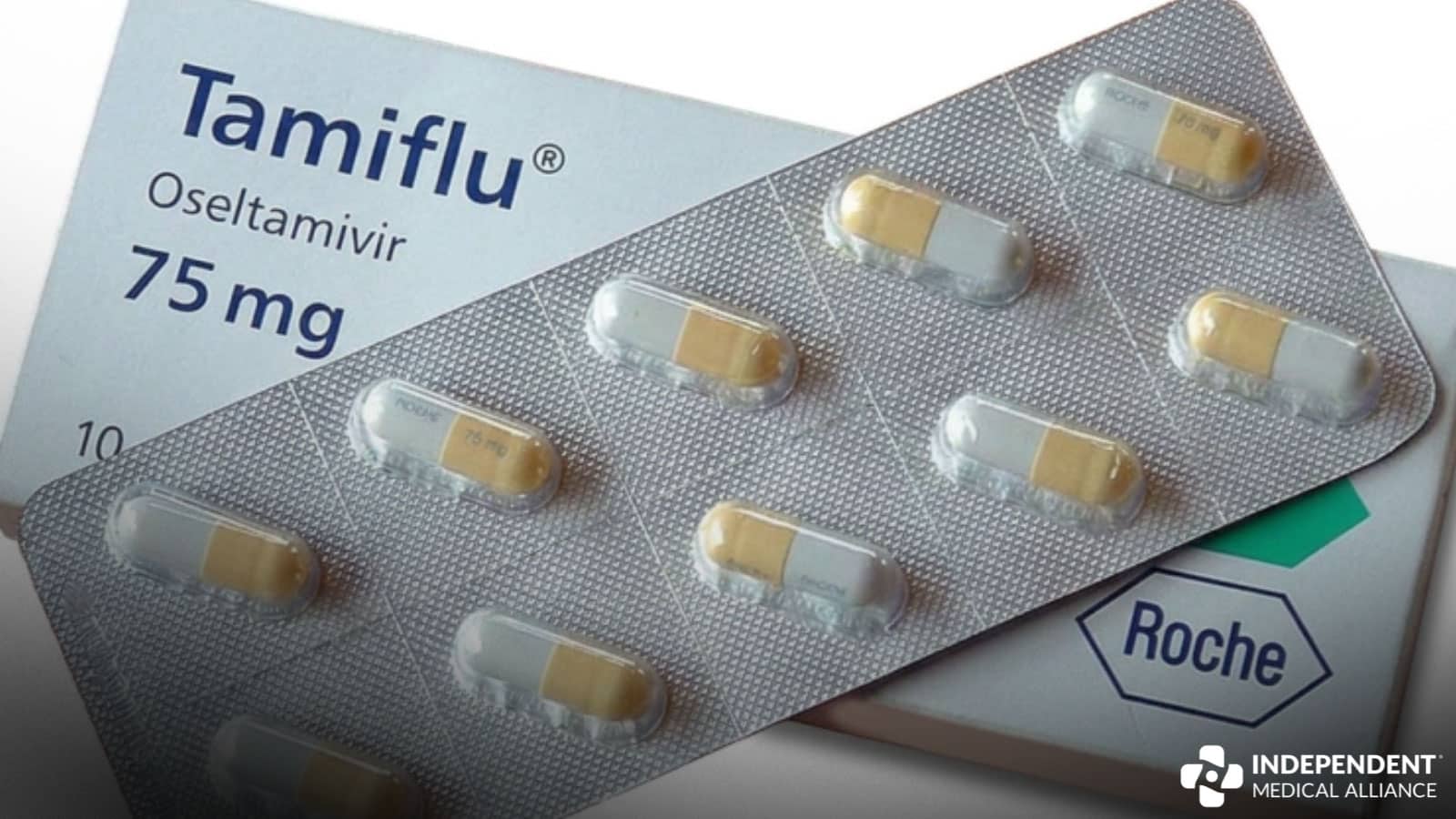
Approved more than two decades ago and generating roughly $20 billion in sales, Tamiflu never underwent rigorous randomized trials in the sickest patients until now; results show potential increased mortality
The Independent Medical Alliance (IMA), the nation’s largest coalition of independent doctors and healthcare professionals, today called attention to recent findings from the REMAP-CAP trial showing that oseltamivir (Tamiflu) appears to offer no benefit, and may increase the risk of death, for critically ill adults with influenza.
“This is a clear reminder that science is not always settled, and ongoing discussion and sharing of observations among doctors should always be encouraged,” said IMA President and Chief Medical Officer Dr. Joseph Varon. “Tamiflu has been on the market for more than 25 years and has generated $20 billion in sales. Yet until now, we never had a proper randomized trial in the patients who are the sickest. The results suggest the drug may actually be hurting them.”
For years, guidelines recommended oseltamivir for hospitalized and critically ill patients based largely on data from less severe illness, observational studies, and extrapolation. That approach left a major evidence gap.
“When a widely used drug reaches this level of sales without ever being rigorously tested in the patients who need it most, something has gone wrong,” Varon said. “Americans have seen this pattern before. The only way to restore trust is full transparency, which includes open data, honest and free-flowing discussion of uncertainty, and a willingness to change course when better evidence arrives.”
“That’s why the censorship during COVID produced such catastrophic harm,” continued Varon. “When evidence showed that a regimen that included ivermectin was a better treatment, doctors were silenced and punished for straying from the accepted narrative. The Tamiflu case offers yet another example of how discussion and sharing of observations is essential to good medicine.”
In the international REMAP-CAP trial, critically ill patients with confirmed influenza were randomly assigned to receive oseltamivir or no antiviral treatment. At 90 days, mortality was roughly 19 to 20 percent higher in the groups that received the drug, compared with about 14 percent among those who did not. The probability that the drug caused harm was found to be approximately 98 percent.