
Host: Dr. Ryan Cole | Guests: Dr. Joseph Varon, Chris Ekrem
This week, Dr. Ryan Cole will lead a powerful conversation about courage in modern healthcare.
Joining him for the discussion are IMA President Dr. Joseph Varon and Chris Ekrem, former hospital CEO and executive healthcare leader.
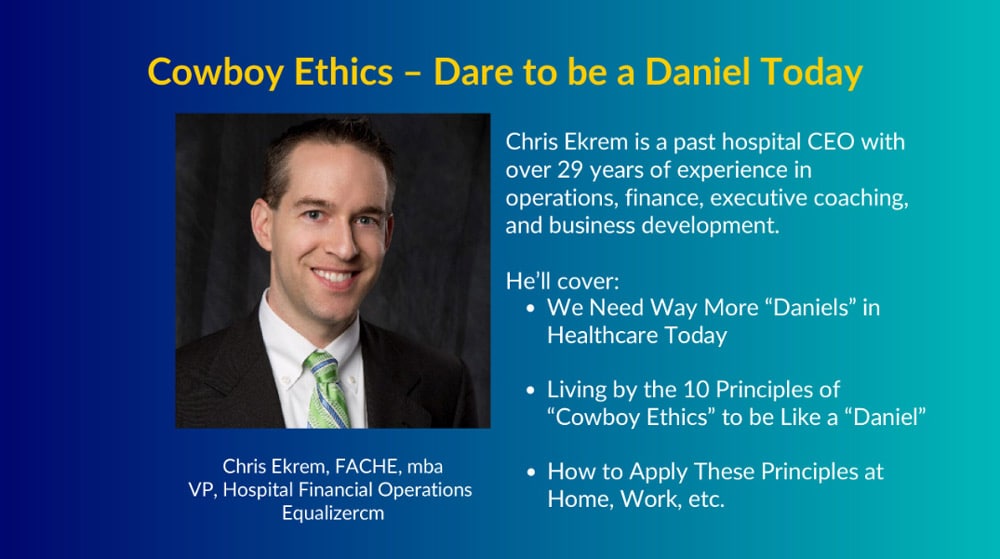
Chris will introduce the idea of “Cowboy Ethics” in leadership, principles like finishing what you start, riding for the brand, and always doing what is right. He will also explore what it means to be a “Daniel” in healthcare today and why our system needs more of them.
“What does it take to lead with principle when your job’s on the line, when your reputation’s at risk, when your institutional pressure tells you to stay quiet?” asks Dr. Ryan Cole.
It’s a question that should have been rhetorical. But the last several years proved otherwise. During COVID, hospitals barred families from saying goodbye to dying loved ones. Physicians were threatened with losing their licenses for prescribing medications that were working. Medical boards targeted doctors who questioned protocols that weren’t. Journals, associations, and regulatory agencies all fell in line. What was missing wasn’t information… it was courage.
In this conversation, our host Dr. Ryan Cole, IMA President Dr. Joseph Varon, and former hospital CEO Chris Ekrem explore what it means to stand firm when the cost is real—and why healthcare needs more people willing to pay it.
Meet the Experts
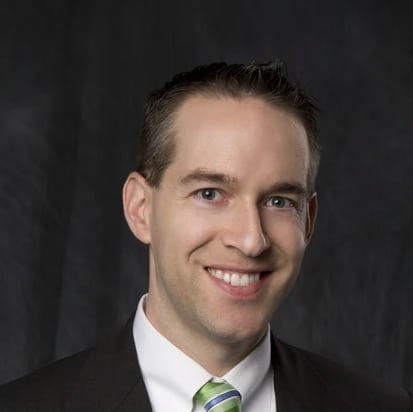
Chris Ekrem
Former hospital CEO with over 29 years of experience in healthcare operations, finance, executive coaching, and business development. He has led turnaround projects at critical access hospitals and academic medical centers across Kansas, Texas, and Oklahoma. Chris is passionate about rural healthcare and mentors early-career professionals. He introduces the “Cowboy Ethics” framework as a lens for principled leadership.
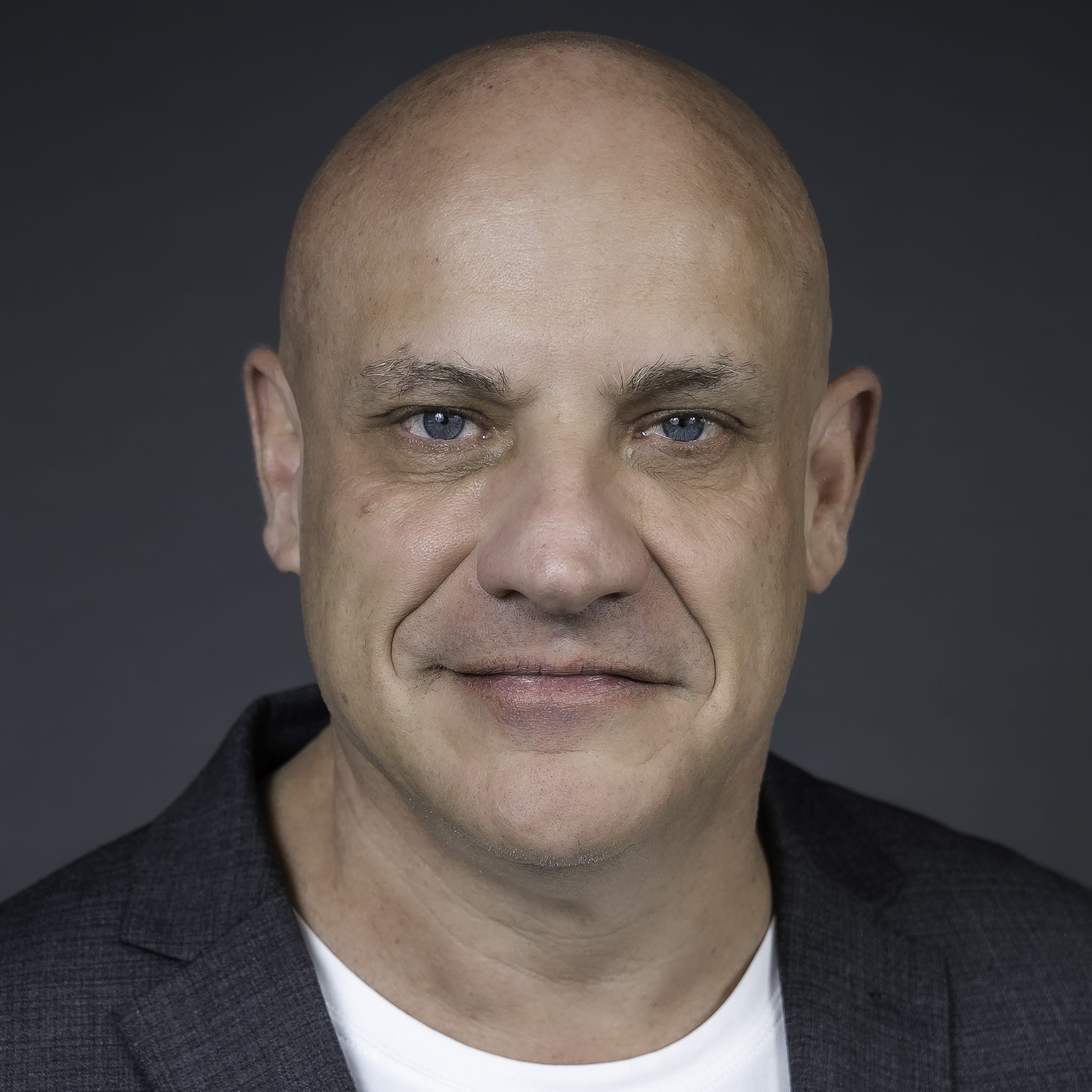
Dr. Joseph Varon
IMA President and Chief Medical Officer. During the COVID pandemic, Varon was called before the Texas Medical Board for using hydroxychloroquine in his patients. His response: “Because it works.” Earlier in his career, he left a position as chief of intensive care at MD Anderson Cancer Center after three years, unwilling to practice under institutional constraints that conflicted with patient-first care.
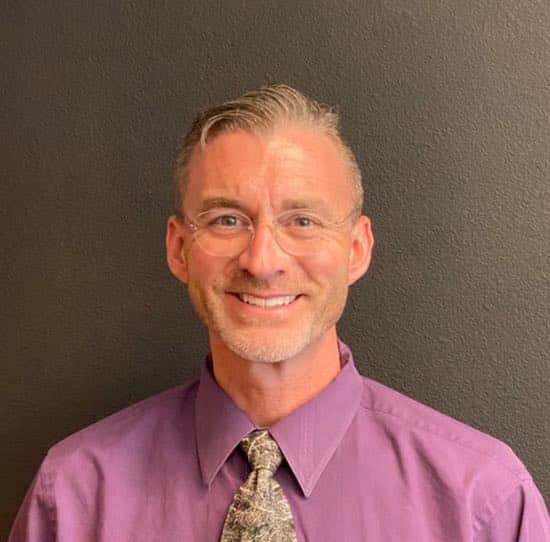
Dr. Ryan Cole
Board-certified pathologist and the host of this week’s show. He recently took on an expanded leadership role with IMA, and has been active in state-level legislation—including an Idaho bill establishing a moratorium on mRNA products for pregnant women and children under 18, which passed the Senate healthcare committee during the week of this recording. Cole has faced significant professional consequences for challenging mainstream COVID treatment narratives and advocating for early treatment protocols.
1. Dare to Be a Daniel
Chris Ekrem grounds the conversation in the biblical story of Daniel (Daniel 6). Daniel was a leader of such integrity that his rivals couldn’t find a single fault in him—so they engineered a law designed to trap him. When Daniel learned about the order, he didn’t hesitate, negotiate, or stall. He went home and did exactly what he’d always done.
“What it means, dare to be a Daniel, is you stand up for what’s right, knowing the consequences could be fatal, maim you, hurt you, financially ruin you—whatever it is, you’re going to do the right thing no matter what.” — Chris Ekrem
Chris connects Daniel’s example to a framework from the book Cowboy Ethics: What Wall Street Can Learn from the Code of the West by James P. Owen. The 10 principles:
- Live each day with courage
- Take pride in your work
- Always finish what you start
- Do what has to be done
- Be tough, but fair
- When you make a promise, keep it
- Ride for the brand
- Talk less and say more
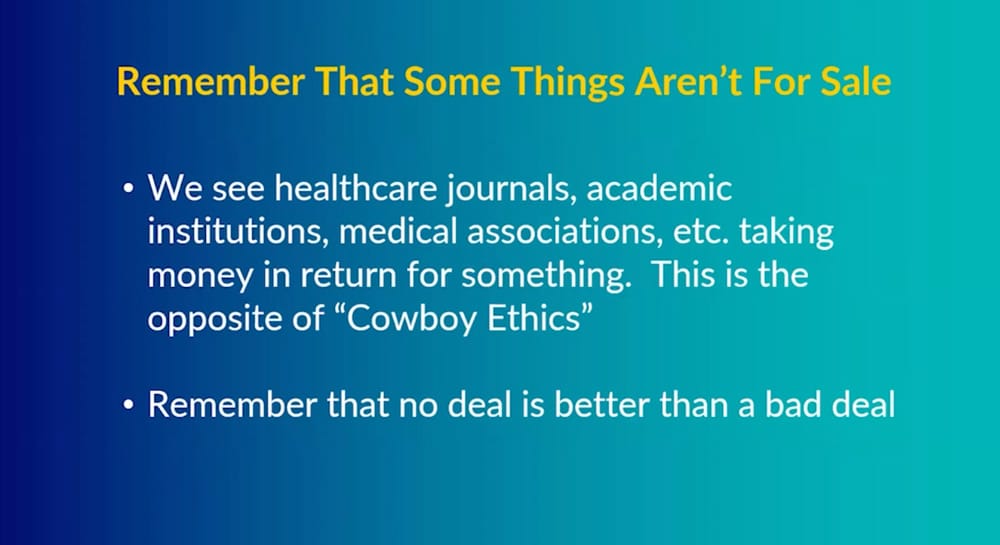
- Remember that some things aren’t for sale
- Know where to draw the line
“If everybody in healthcare right now adhered to those 10 principles, can you imagine what life would be like for all of us—as a physician or CEO or a housekeeper?” — Chris Ekrem
The principles aren’t abstract. “When you make a promise, keep it” is just another way of saying accountability. “Ride for the brand” means the patient is the brand. And “remember that some things aren’t for sale” speaks directly to what’s gone wrong in healthcare journals, academic institutions, and medical associations that accept industry funding in exchange for influence.
2. The Cost of Doing What’s Right
Each panelist has paid a price for standing on principle.
Dr. Varon was hauled before the Texas Medical Board for treating COVID patients with hydroxychloroquine. His defense was simple: the data supported it, and it was working. Not all of his colleagues were as fortunate.
“Every life you save is a world that you have saved. The countless nights of working, losing friends, losing family, losing people that do not want to talk to you anymore, just because you were thinking in a different way.” — Dr. Joseph Varon
Chris faced a different kind of test. As a hospital executive, he uncovered fraud committed by someone senior to him. When confronted—”Are you sure you want to do that?”—he didn’t flinch. It cost him his job.
“At the end of the day, I’m not just responsible to God, but I need to be able to sleep well knowing that I did the right thing.” — Chris Ekrem
The most personal moment came when Chris described losing his grandmother during the pandemic. His family was forced to say goodbye on Zoom. No visitors were allowed. Even more, no funerals were allowed in Minnesota. The hospital followed its policy rather than its conscience.
“Instead of being worried about the patient, all they worried about were policies… A lot of organizations, it’s policies over patients.” — Chris Ekrem
Dr. Cole echoed the experience from both the clinical and legislative side, noting that the pattern runs deep: institutions do what’s expedient, not what’s empathetic.
3. When Compromise Becomes Corruption
The conversation turns to where the ethical line is… and when institutions cross it.
Dr. Varon offers a concrete example from his own practice. The diagnosis “malignant hypertension” was formally retired in 1984 by the National Committee for the diagnosis and treatment of hypertension. Yet hospitals still push physicians to use the outdated term in their notes. That’s because Medicare reimburses at a higher rate for that code. Varon refused to recode his patients for billing purposes.
“Anytime you are getting any profit for doing something that is unethical, doesn’t matter what it is—whether you are modifying the medical record to reflect a diagnosis that doesn’t exist—that’s when you cross the line.” — Dr. Joseph Varon
Chris frames the broader issue through what he calls the problem of situational ethics: the tendency to rationalize small compromises until they become systemic. “You okay with murder in moderation?” he asks. The point isn’t that every decision is life-or-death. It’s that deal breakers should be defined before you’re under pressure, not during.
The panel wrestles with whether broken institutional trust can even be repaired. Chris points to the CDC, FDA, and major medical associations, all organizations that told the public ivermectin was “horse paste” while evidence from places like Uttar Pradesh showed otherwise. Dr. Varon is blunter: “Once a cheater, always a cheater.” His answer is to build parallel systems. That’s exactly why IMA launched its own Journal of Independent Medicine.
“We didn’t want to be kept hostage by big pharma or anybody else that was interested in, ‘we’re going to give you money so you can publish our data.'” — Dr. Joseph Varon
What Comes Next?
Chris closes with an observation that cuts through the circularity of the trust debate: courage is contagious. More contagious than weakness. When people see someone stand up, it gives others permission to do the same.
Dr. Cole ties the conversation to IMA’s own Ethics and Values Declaration. Leadership is easy when things are calm. It’s when the lions are circling that principles matter most.
“Healthcare won’t regain trust through policy alone. It’s through people willing to stand firm.” — Dr. Ryan Cole
During the webinar, Dr. Varon also shared highlights from a recent trip to Japan, where he and his spouse met Nobel Prize-winning Professor Omura — the scientist behind the discovery of ivermectin. IMA presented Professor Omura with an award on behalf of the organization, a reflection of the Alliance’s growing international network.