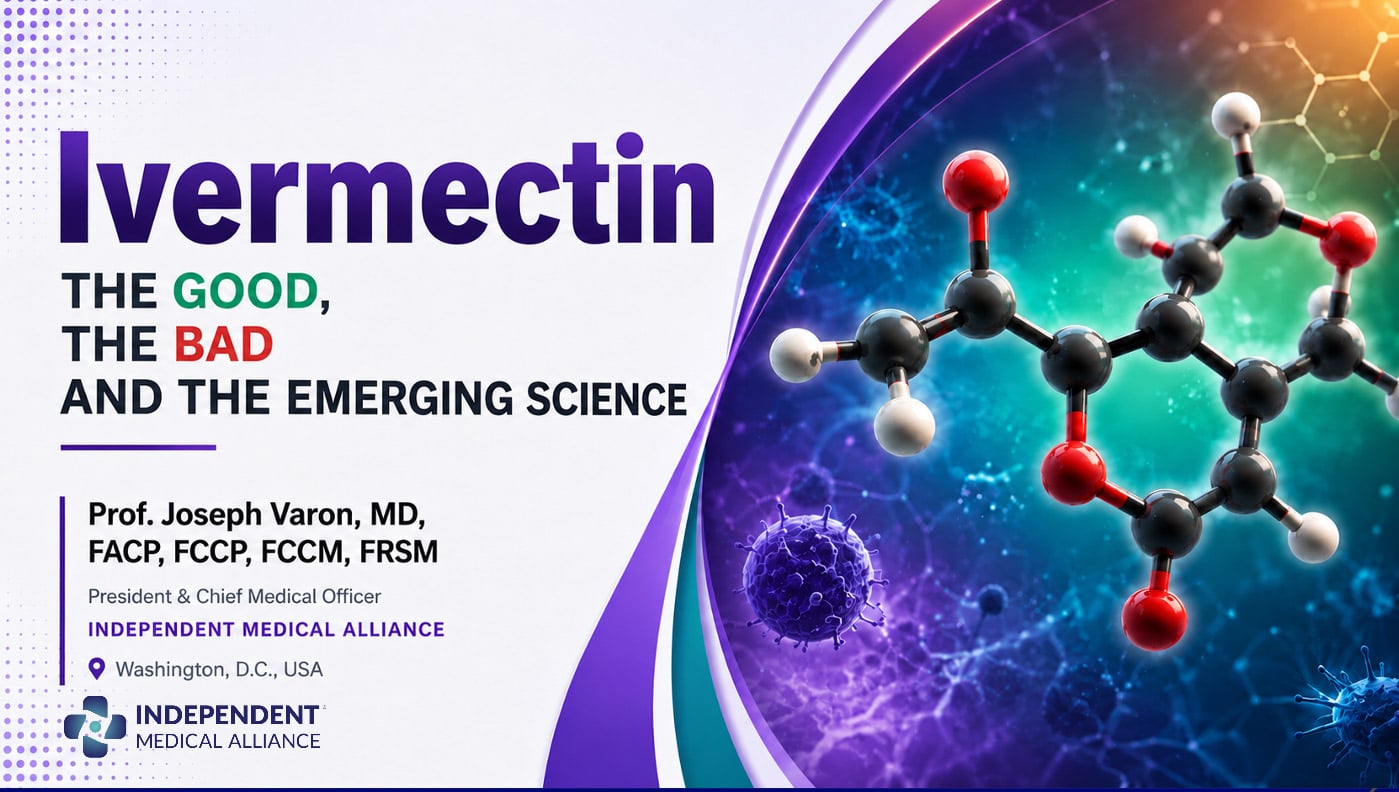
Host: Dr. Ryan Cole | Guest: Dr. Joseph Varon
What is ivermectin, what has it historically been used for, and why does it remain one of the most debated medications in medicine today?
On this week’s show, Dr. Ryan Cole is joined by Dr. Joseph Varon for “Ivermectin: The Good, The Bad, and the Emerging Science.” Dr. Varon will walk through ivermectin’s history, its established role as an antiparasitic medication, and the broader mechanisms physicians and researchers continue to study.
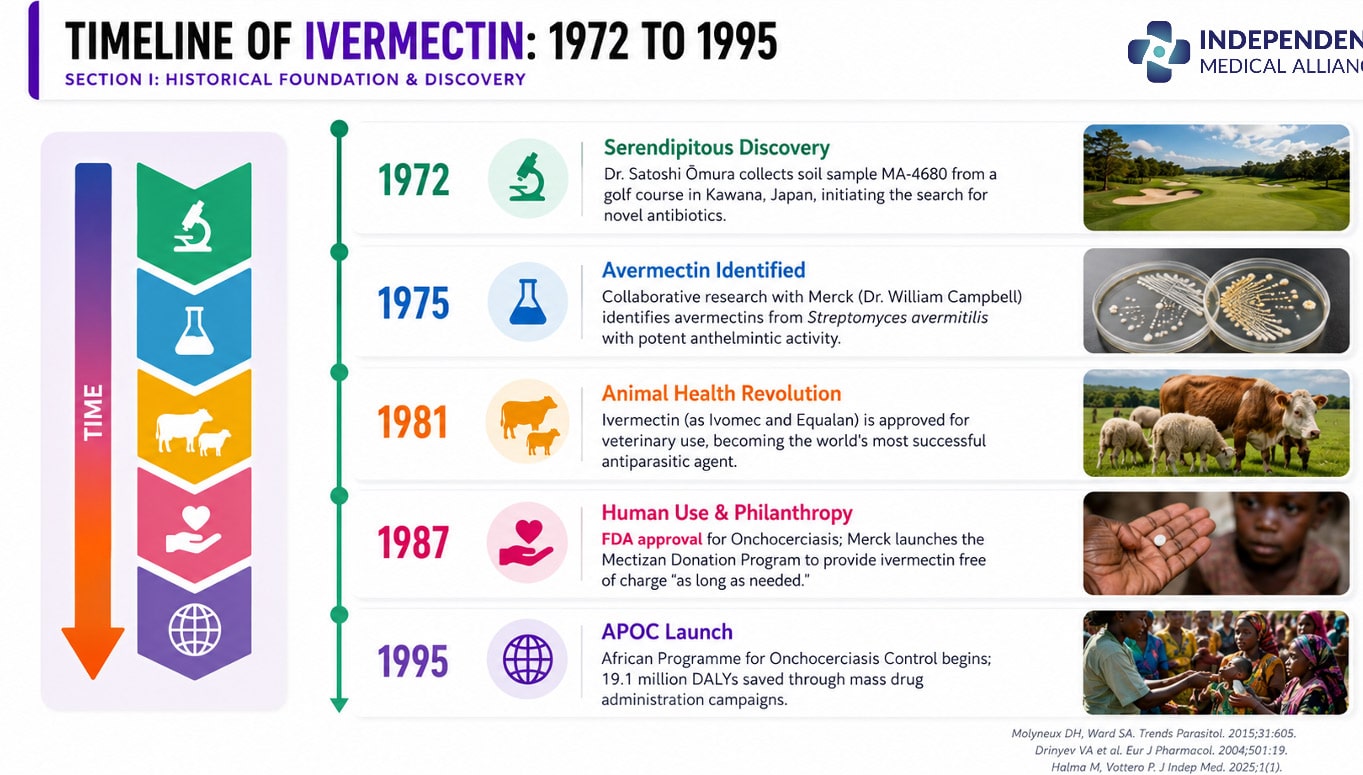
In 1972, a Japanese microbiologist named Satoshi Omura collected a soil sample near a golf course outside Tokyo. What he found inside it, a rare bacterium called Streptomyces avermitilis, would eventually yield a compound responsible for treating hundreds of millions of people, earn the Nobel Prize in Physiology or Medicine, and become one of the most politically charged medications of the 21st century. For many in IMA’s community, ivermectin was the reason they found this organization in the first place.
On this week’s IMA Weekly Show, Dr. Joseph Varon presented the full scope of ivermectin’s story. Drawing on peer-reviewed literature and decades of clinical experience, Dr. Varon walked through the drug’s origins, its multi-target biological mechanisms, the evidence from COVID-19, and the emerging data in oncology and beyond. Dr. Ryan Cole hosted the conversation and brought his own clinical perspective as a board-certified pathologist who has prescribed and studied ivermectin extensively.
In Memory of Warner Mendenhall
The show opened with a tribute to Warner Mendenhall, founder of Freedom Council and a longtime friend and partner of the IMA, who passed away after a courageous battle with colon cancer. Warner stood with patients, physicians, families, and whistleblowers when few others were willing to fight. His legacy of moral courage and dedication to justice in medicine lives on through the community he helped build.
Meet the Experts

Joseph Varon, MD, FCCM, FCCP
Professor of Medicine; President and Chief Medical Officer, IMA. One of the most published physicians in medicine, Dr. Varon has been at the forefront of ivermectin research since the early days of the pandemic. He has personally visited Prof. Satoshi Omura’s laboratory and presented him with an IMA award for his contributions to humanity.

Ryan Cole, MD
IMA Head of Medical & Scientific Affairs; Senior Fellow, Pathology; Founder, Cole Diagnostics. Dr. Cole is a board-certified pathologist whose clinical and diagnostic experience with ivermectin spans the pandemic era and beyond.
1. From a Golf Course to a Nobel Prize
The story begins in 1972, when Professor Satoshi Omura collected a soil sample near a golf course roughly 80 kilometers from Tokyo. Inside it, he found Streptomyces avermitilis, a rare bacterium that produced a compound capable of killing parasites at just 0.003% concentration.
Omura partnered with parasitologist Dr. William Campbell to refine the compound into a stable human formulation. The result was ivermectin. By 1987, the FDA had approved it for human use, and Merck launched a donation program that would ultimately deliver 1.3 billion doses to endemic regions between 1987 and 2013.
The impact was staggering. Between 1995 and 2010, ivermectin prevented an estimated 19.1 million cases of river blindness across Africa and Latin America. Half a million people who would have been permanently visually impaired were spared. In 2015, Omura and Campbell were awarded the Nobel Prize in Physiology or Medicine.
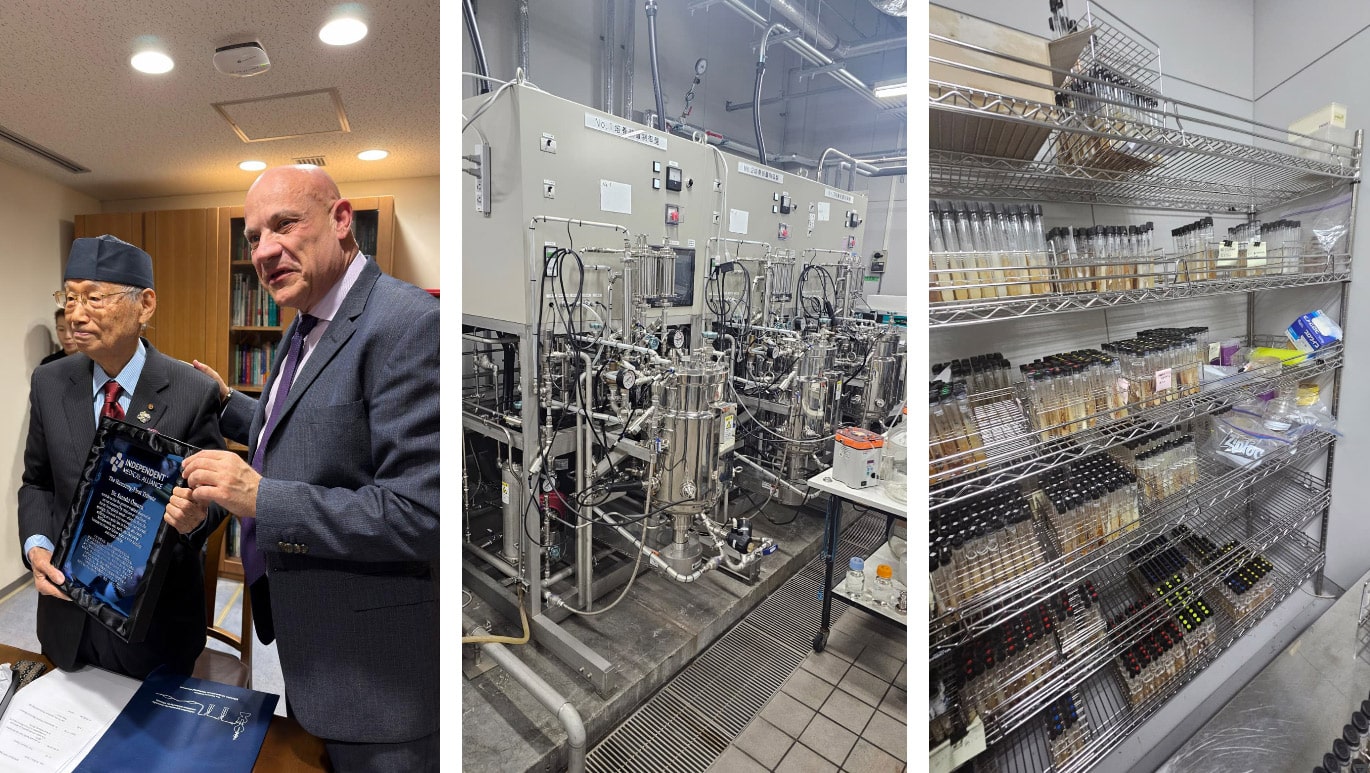
Dr. Varon, who visited Omura’s laboratory and presented him with an IMA award, noted that the 93-year-old researcher still goes to work every day and donates all of his ivermectin royalties to charity, hospitals, and medical schools.
“Using it so much during COVID, it taught us so much it’s not even funny.” — Dr. Joseph Varon
2. A Molecular Swiss Army Knife
Dr. Varon described ivermectin as a “molecular Swiss Army knife,” and the mechanisms support the label. The drug operates across multiple biological pathways simultaneously:
- Anti-inflammatory: Inhibits NF-κB, which Dr. Varon calls “the terrorist factor” that hijacks the cell nucleus, and downregulates the STAT3 signaling pathway, a key driver of cytokine storms
- Receptor activity: Acts on GABA and nicotinic receptors in humans, not just in parasites
- Anti-mitotic: Arrests cell division at the G2M phase, which is central to its emerging role in cancer
- Hemostatic balance: Modulates the clotting cascade, helping maintain equilibrium between clot formation and prevention
The drug’s FDA-approved applications include river blindness, scabies (204 million cases worldwide), lymphatic filariasis, strongyloidosis, and pediculosis. But one of the most striking findings comes from off-label observation: populations taking prophylactic ivermectin for parasitic infections showed a 35% reduction in malaria transmission, because mosquitoes that bite treated individuals absorb the drug and die.

3. COVID, Controversy, and the Data That Survived
IMA was born, in part, from the clinical experience physicians gained with ivermectin during COVID-19. Dr. Varon’s own hospital recorded a 4% mortality rate when the national average ran between 25% and 40%. The ICON study showed 15% mortality in the ivermectin group compared to 25% for standard of care.
Early meta-analyses supported those findings. But large-scale randomized controlled trials produced divergent results. Dr. Varon pointed to fundamental methodological problems: wrong dosing, wrong timing, and a wave of retractions that undermined the evidence base.
Physicians who prescribed ivermectin faced medical board investigations. Patients who asked for it were turned away by pharmacies. A Nobel Prize-winning drug, safely distributed more than a billion times, was publicly rebranded as horse medicine. Dr. Varon, who was called before the Texas Medical Board more than once, shared a revealing anecdote from the height of the pandemic.
“I had a congressperson come to my office with COVID and told me, ‘Go ahead and you give me that stuff, the one that starts with the I.’ But if anybody asks, you tell them that you gave me Flax.” — Dr. Joseph Varon
The antiviral mechanisms are now well-documented. Ivermectin binds to the spike protein, inhibits nuclear transport pathways, and modulates the inflammatory cascade that drove severe COVID outcomes. Dr. Cole added that in vitro antiviral activity against coronaviruses and other RNA viruses had been demonstrated as early as 2012 by Wagstaff et al. at Monash University.
4. The Oncology Frontier
The first published description of ivermectin’s anti-tumor activity appeared in 2004, two decades before most physicians were even aware of the possibility. Dr. Varon presented evidence showing that ivermectin targets at least 10 distinct cancer pathways. Its mechanisms are anti-mitotic (it arrests cell division), pro-apoptotic (it triggers cancer cell suicide), and synergistic with conventional chemotherapy.
The clinical observations are accumulating. Dr. Varon shared a case from his own practice: a 34-year-old woman with left breast cancer who refused surgery, chemotherapy, and radiation. She requested only ivermectin and cannabis. Eight months later, her PET scan showed significant tumor reduction.
Dr. Varon was transparent about the limits of the case. He could not isolate which variable drove the improvement. But the broader pattern across multiple cancer types, he noted, was consistent.
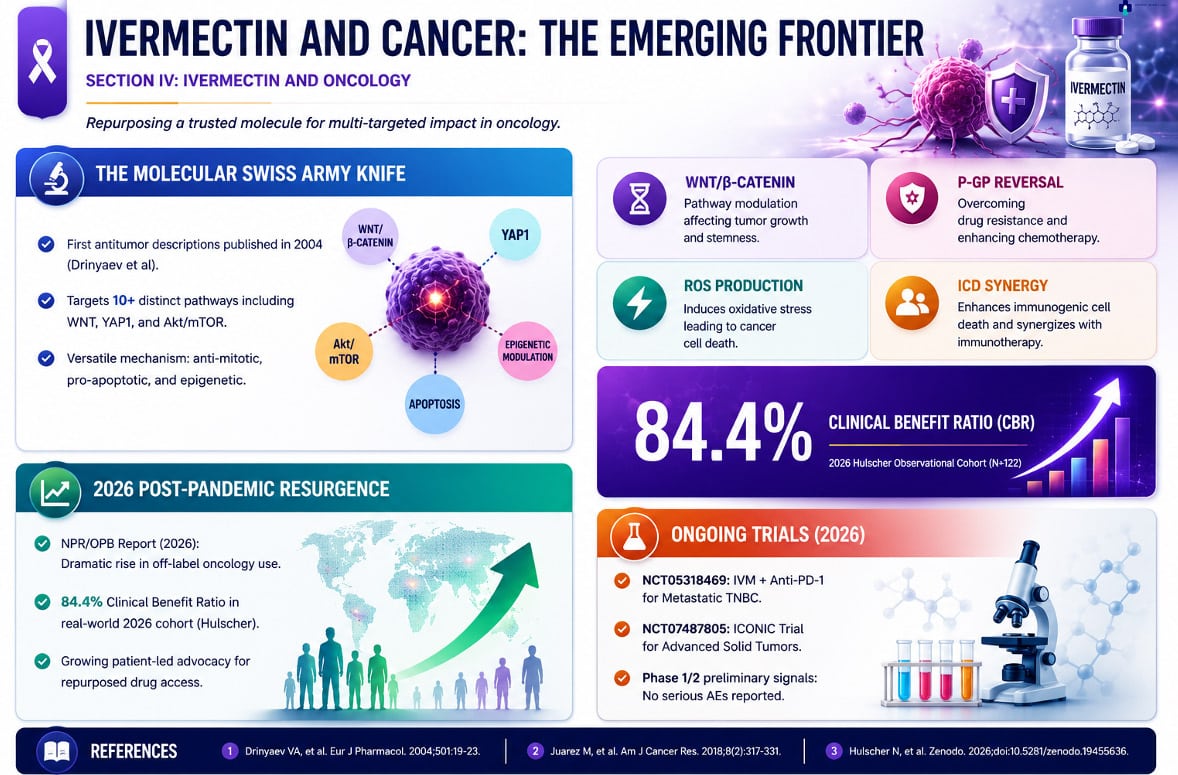
Other observations ranged across cancer types. In glioblastoma, high-dose ivermectin enhanced survival by more than 200% over conventional therapy, according to Dr. Varon. A colleague with T-cell lymphoma saw his cancer cells drop from over 90% to under 2% after starting high-dose ivermectin following a failed bone marrow transplant. Both physicians emphasized that ivermectin works best as an adjunctive therapy alongside other treatments, not as a standalone.
The strongest recent evidence comes from a 2026 observational cohort by Holstier, which followed 122 cancer patients across multiple cancer types. 85% reported clinical benefit, and 48% showed tumor regression or no evidence of disease. IMA’s Cancer Care monograph, authored by Dr. Paul Marik, covers the broader metabolic approach to cancer treatment in detail and is freely available on the IMA website.
“If I had cancer, I’d be doing ivermectin. Absolutely.” — Dr. Ryan Cole
5. Safety, Practical Guidance, and What Comes Next
Ivermectin has been administered more than 4 billion times worldwide, and Dr. Varon noted there is not a single documented death attributed to the drug. For context, Dr. Cole pointed out that thousands of people die annually from aspirin and over-the-counter anti-inflammatories like naproxen and ibuprofen.
The drug is FDA category C for pregnancy. The WHO’s 2026 guidance recommends avoiding it during the first trimester, with risk-benefit analysis for endemic areas after that. Large-scale inadvertent exposures during mass drug campaigns in Africa showed no evidence of major malformations. Drug interactions are also minimal; the primary concern is warfarin, which may require monitoring of prothrombin time, and Dr. Varon recommends caution when liver function tests exceed three times the normal range.
Practically, absorption matters. Ivermectin is lipophilic: it needs fat to be absorbed effectively for systemic conditions. Dr. Varon takes his with a spoon of olive oil. Dr. Cole added that taking it on an empty stomach keeps it in the gut, which is fine for parasites but not for conditions requiring systemic distribution. Both physicians cautioned against veterinary formulations, which have inconsistent dosing and are not regulated for impurities.
Several emerging applications are generating clinical interest:
- Alcohol use disorder: Ivermectin binds to the same receptors as alcohol, with pilot studies showing reduced cravings
- ALS: Patients on ivermectin during COVID showed unexpected neurological improvement; research points to dampening of neural excitotoxicity
- Post-vaccination syndrome: A key component of IMA’s I-RECOVER protocol, ivermectin binds and sequesters the spike protein, addressing brain fog and dysautonomia
“This medication is safer than an aspirin.” — Dr. Joseph Varon
Looking Ahead
Ivermectin’s story started in the soil and continues to grow. For patients exploring options their oncologists may not offer, for families navigating post-vaccination symptoms, and for physicians willing to follow the evidence wherever it leads, the data presented here is a starting point. IMA’s treatment protocols, Cancer Resource Hub, and ivermectin resource page are freely available at imahealth.org.
Related Reading
- Hub: The Remarkable Story of Ivermectin
- Monograph: Cancer Care: Repurposed Drugs & Metabolic Interventions
- Hub: IMA Cancer Resource Hub
- Protocol: I-RECOVER: Long COVID Treatment
- Post: In Memory of Warner Mendenhall
- Academy: IMA Academy