
Independent medicine is only as strong as the researchers it trains. At CHEST 2026, the next generation takes its place alongside IMA President Dr. Joseph Varon.
At CHEST 2026 in Phoenix, physicians and researchers gathered to exchange findings, challenge assumptions, and learn from one another. Among them was a group of medical students and young investigators working with Independent Medical Alliance (IMA) President and Chief Medical Officer Dr. Joseph Varon. They were not simply attending the conference. They were presenting research, answering questions, and taking part in the scientific conversation.
For Dr. Varon, who also moderated 16 research posters in a single day, bringing students to CHEST is an extension of his work as a physician and educator. Preparing an abstract is only the beginning. Presenting it to experienced specialists requires young investigators to defend their methods, recognize limitations, and communicate why their findings matter.
IMA-affiliated investigators presented several studies at CHEST 2026, including poster presentations and rapid-fire talks. Their participation reflects a commitment to giving emerging researchers meaningful opportunities to contribute.
“I bring students to CHEST because medical education cannot end at the classroom or hospital door. I want them to question, discover, and experience what it means to contribute to medicine. After more than four decades as a physician, helping the next generation find its voice is one of the most rewarding things I can do.” — Dr. Joseph Varon
New Research on Influenza, Sarcoidosis, and Critical Care
The projects examined questions relevant to patients hospitalized with influenza, sarcoidosis, and other serious conditions. Using large national hospital datasets, the investigators studied patterns in complications, treatment, hospital stays, and outcomes. These analyses can identify important associations, although they cannot, by themselves, establish cause and effect.
Behind every measure of length of stay or need for mechanical ventilation is a patient and a family. The research asks practical questions: Which hospitalized patients experience worse outcomes? What factors accompany respiratory failure? And where might further investigation help clinicians make better decisions?
The studies:
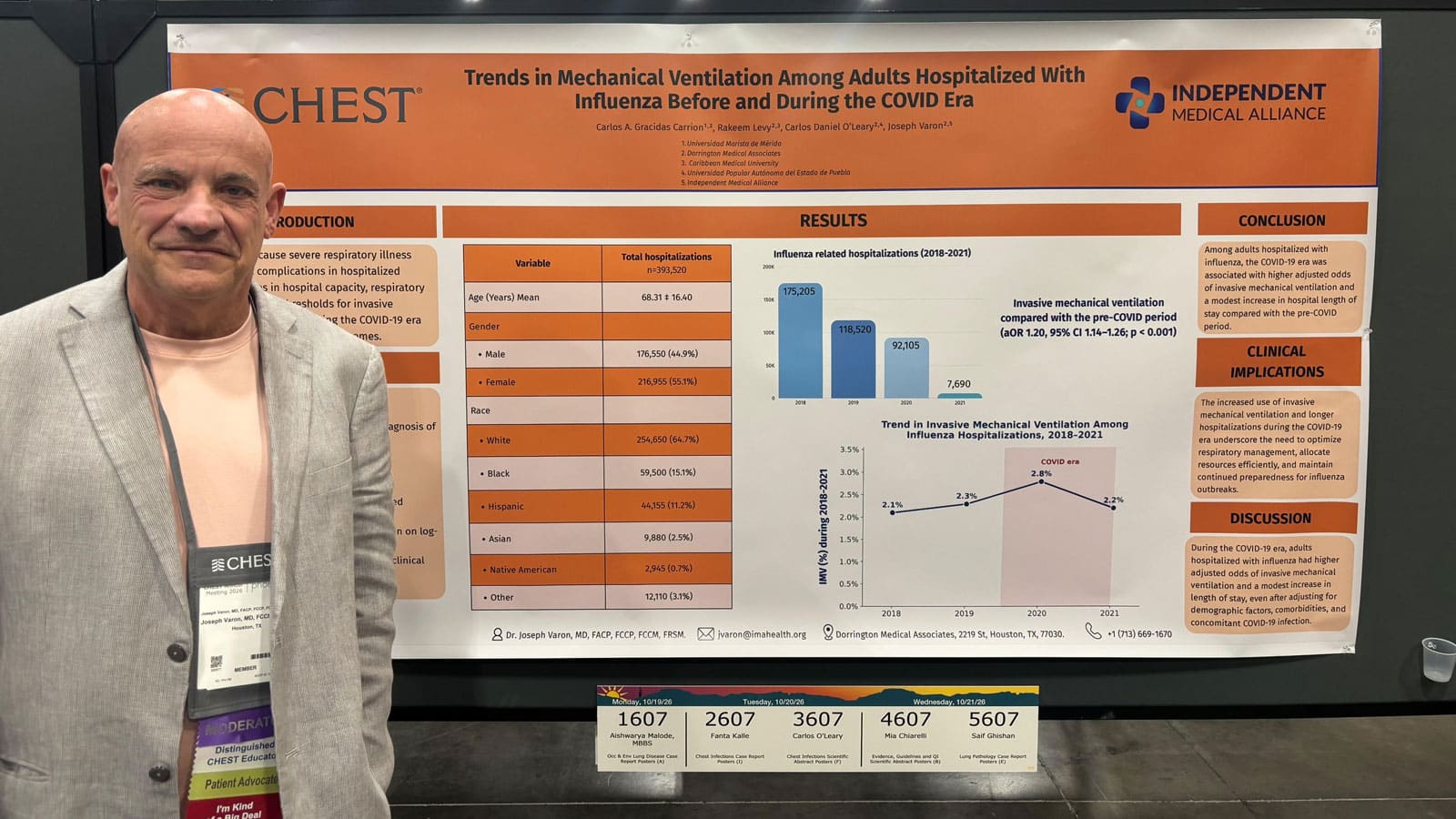
- Influenza and mechanical ventilation: Investigators compared mechanical ventilation use and hospital length of stay among patients hospitalized with influenza before and during the COVID-19 era. Abstract: Trends in Mechanical Ventilation and Length of Stay Among Adults Hospitalized With Influenza Before and During the COVID-19 Era
- Respiratory failure in influenza: Another analysis examined factors associated with respiratory failure and mechanical ventilation among hospitalized influenza patients. Abstract: Predictors of Acute Respiratory Failure and Mechanical Ventilation Among Adults Hospitalized With Influenza in the United States
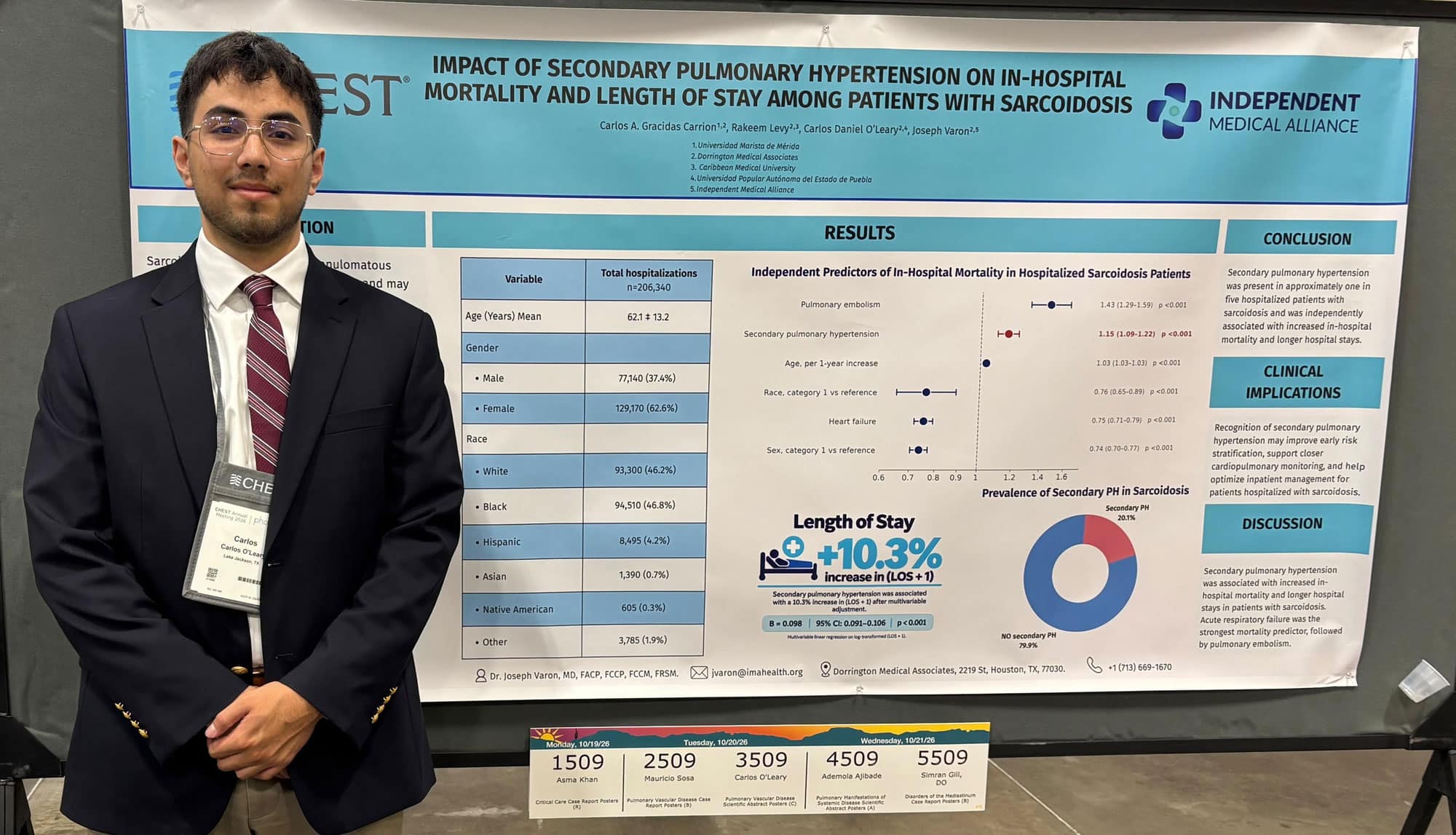
- Sarcoidosis and pulmonary hypertension: This study explored the association of pulmonary hypertension with in-hospital mortality and length of stay among patients hospitalized with sarcoidosis. Abstract: Impact of Secondary Pulmonary Hypertension on In-Hospital Mortality and Length of Stay Among Patients With Sarcoidosis

The Next Generation at Work
The team shared its work through poster sessions and rapid-fire presentations. Both formats demand clarity, preparation, and a willingness to respond to questions from specialists in the field.
For students, the experience is more than a line on a résumé. It is a chance to learn how science advances: through careful analysis, constructive criticism, and the confidence to acknowledge what a study does and does not show.
“Presenting my research at CHEST was an unforgettable experience. It gave me the opportunity to share my work with physicians and researchers from around the world and reminded me that, even as a medical student, I can contribute to advancing medicine.” — Carlos O’Leary, medical student, Universidad Popular Autónoma del Estado de Puebla, Mexico
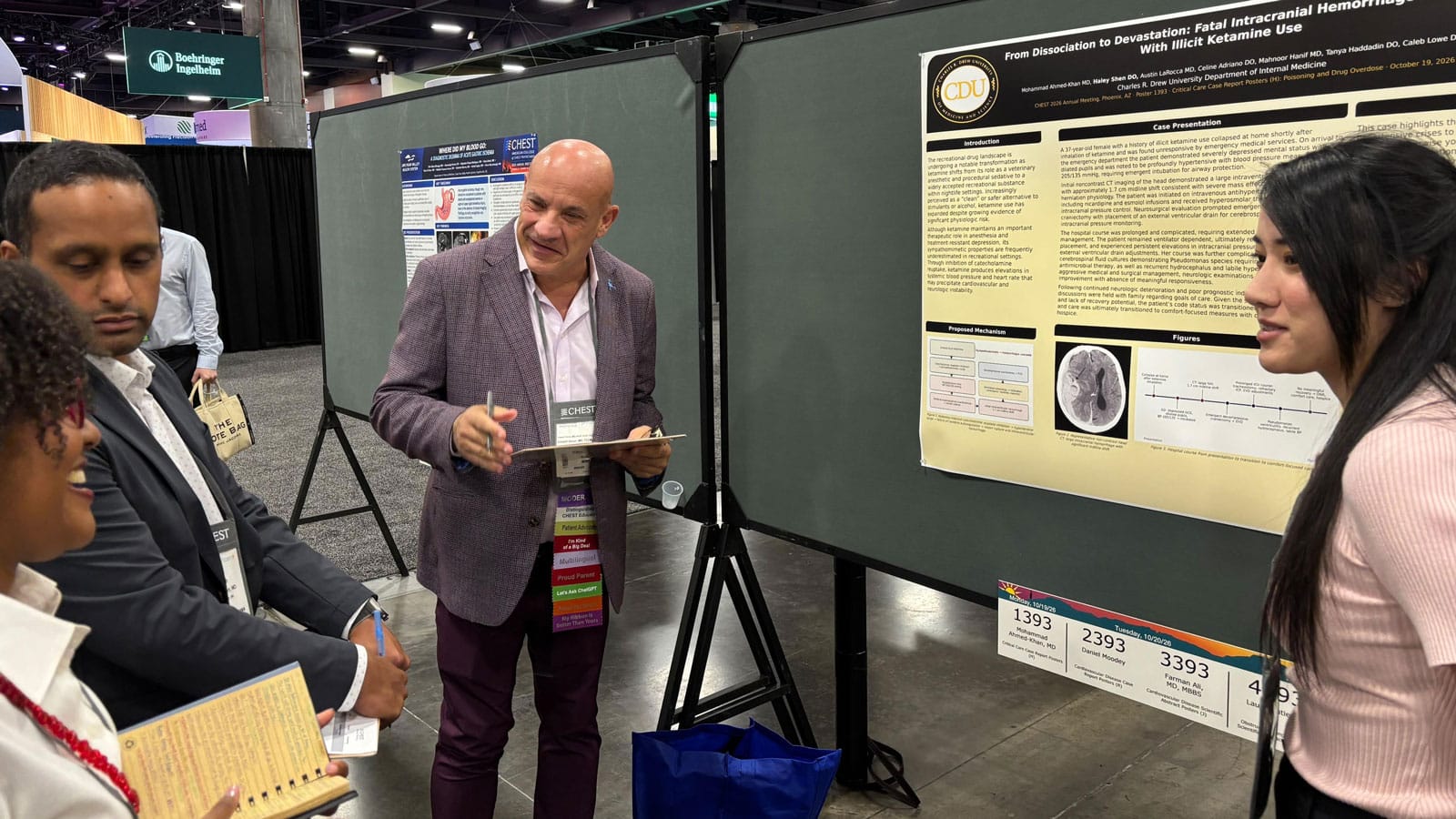
Mentorship takes time: reviewing analyses, refining presentations, rehearsing difficult questions, and encouraging students to keep going when research becomes challenging. IMA recognizes the physicians and collaborators who invested that time alongside these young investigators.
Independent inquiry begins with curiosity, but it grows through rigorous methods, open discussion, and a willingness to learn. At CHEST 2026, these students had the opportunity to practice all three. IMA looks forward to supporting their continued development and future contributions to medicine.