
Drugmakers spent $220 million on TV ads in 1996, the last time drug companies had to disclose a drug’s full risks in every broadcast ad. By 2000, three years after the FDA relaxed the requirement, TV spending had reached $1.6 billion, a sevenfold increase, according to research published in the New England Journal of Medicine. Today that number is over $10 billion.
That history is why a proposed FDA rule expected in December should sharply reduce television drug advertising, according to the Independent Medical Alliance (IMA), the nation’s largest coalition of independent physicians, researchers and clinicians. Pharmaceutical industry attorneys have also warned that full on-air disclosure will make many 30- and 60-second spots too long and too costly to run.
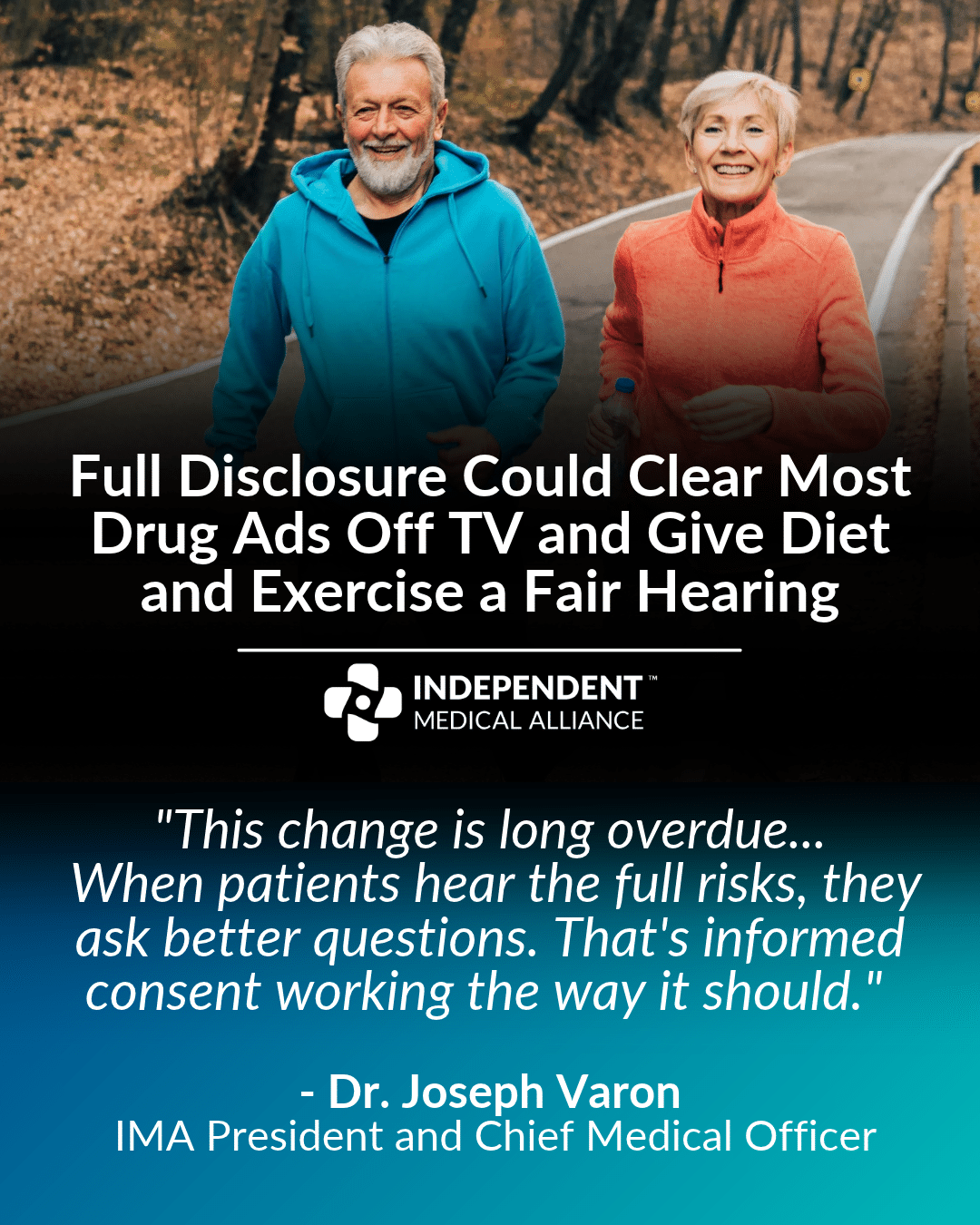
“Uncontrolled marketing of prescription drugs has given Americans the false impression that a pill is a better choice than exercise, good diet and healthy lifestyle,” said IMA President and Chief Medical Officer Dr. Joseph Varon. “Full disclosure gives patients the whole story, and it gives physicians a greater opportunity for a conversation that actually prevents disease.”
Drugmakers spent $5.96 billion on national TV advertising in 2025, up 16 percent from 2024, according to iSpot.tv. Cornell University researchers found that nearly two-thirds of TV drug ads gave no information about behavioral alternatives to medication, and many directly downplayed the value of diet and exercise.
Meanwhile, chronic disease has become more common, and shows up earlier. In 2023, 76.4 percent of U.S. adults reported at least one chronic condition, up from 72.3 percent in 2013. Among adults ages 18 to 34, the share rose from 52.5 percent to 59.5 percent, according to the CDC. A 2023 study in the journal Demography estimated that a girl born in 2019 can expect to spend 58 percent of her life taking prescription drugs, and a boy 47 percent.
The public appears ready for the change. In a September 2026 MedShadow Foundation and Siena Research Institute poll, 83 percent of Americans favored limiting prescription drug ads on television and streaming, and half supported banning them outright.
“This change is long overdue,” said Dr. Varon. “We’ve marketed American families into an unhealthy dependence on prescription drugs, and the biggest beneficiaries have been the companies selling them. When patients hear the full risks, they ask better questions. That’s informed consent working the way it should.”