
Study shows that patients who request an advertised drug by name are far more likely to leave with a prescription, research cited by HHS shows.
Turn on the evening news and there is a good chance the next commercial will be for a prescription drug. In the first half of 2026, drug advertisers spent 21.9 percent of their national TV budgets on news programming, more than on any other genre, according to iSpot.tv data reported by eMarketer. In the first five months of 2025, drug ads comprised 1-in-4 evening news commercials on ABC, CBS, CNN, Fox News, MSNBC and NBC. Live sports are the other anchor, with games accounting for 31 percent of drug advertisers’ national broadcast and cable TV spending in October 2026.
The Independent Medical Alliance (IMA), America’s largest coalition of independent doctors, clinicians, and researchers, says physicians see the results every day.
“Patients arrive with the brand name already in mind,” said IMA President and Chief Medical Officer Dr. Joseph Varon. “And too often in today’s healthcare system, writing the prescription in a 15-minute exam becomes easier than explaining why the patient may not need it. That is how advertising ends up making medical decisions.”
The research shows that drug marketing, not physical need, is often generating the prescription:
- The ads reach nearly everyone. In a January 2025 KFF poll, 97 percent of adults had seen a prescription drug ad and 53 percent saw them nearly every day. Half of those who asked a doctor about an advertised drug got a prescription for it.
- Asking works. Patients who asked physicians for an advertised drug were about 17 times more likely to receive a prescription than those who did not ask, according to research cited by HHS.
- Even when the drug isn’t indicated. In a randomized trial published in JAMA, actors portraying adjustment disorder, a condition for which antidepressants generally are not recommended, got an antidepressant 55 percent of the time when they asked for Paxil by name. Without a request, they got one 10 percent of the time.
- The wrong patients respond. Adults exposed to TV statin ads were 16 to 22 percent more likely to take the cholesterol drugs, an effect driven almost entirely by people at low risk of heart disease, a Cornell study in the Journal of General Internal Medicine found. High-risk adults showed no such increase.
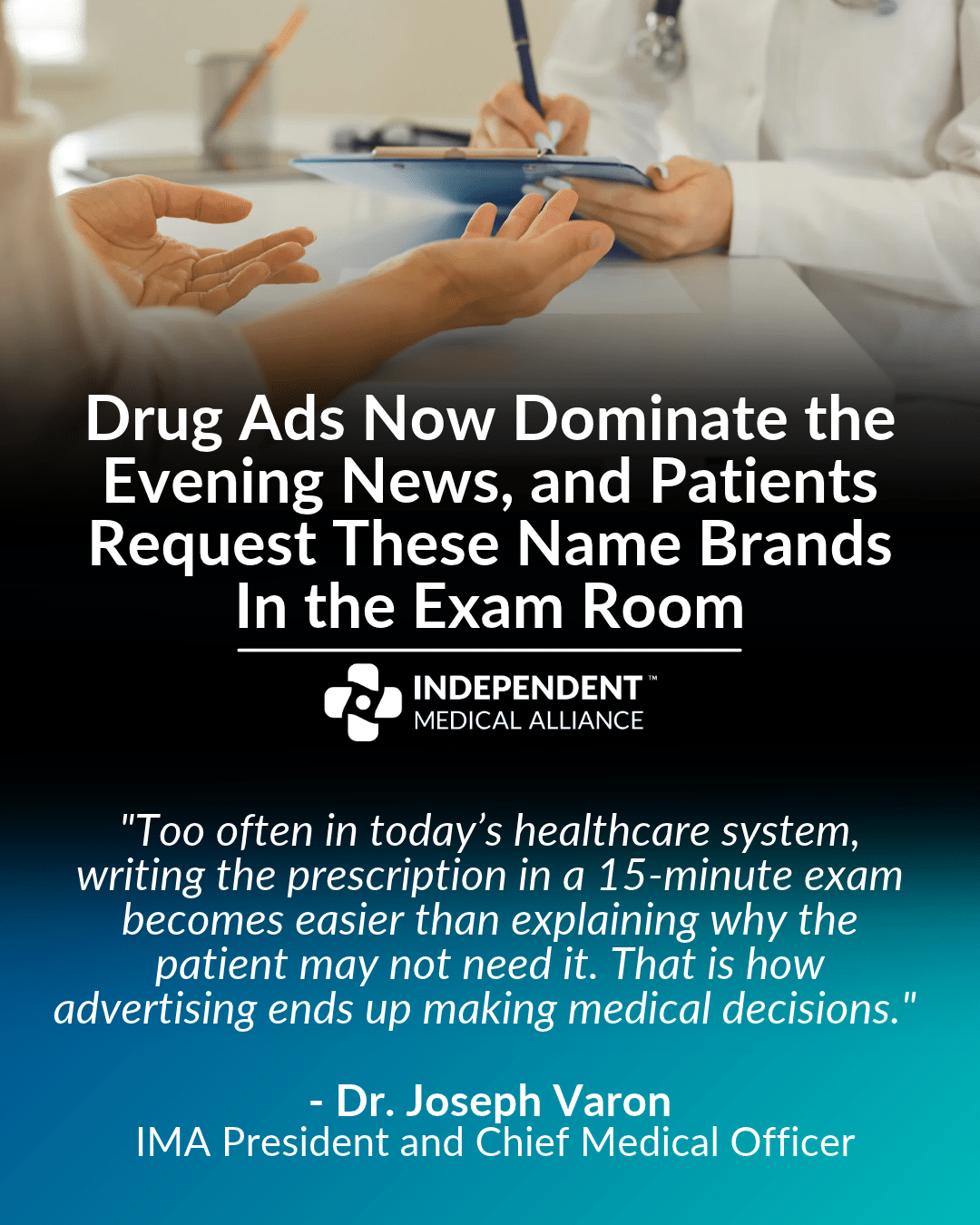
“Full disclosure will require taking valuable and expensive air time to list out the full range of risks,” said Dr. Varon. “When patients can see and understand these risks, the conversation in the exam room is certain to change.”