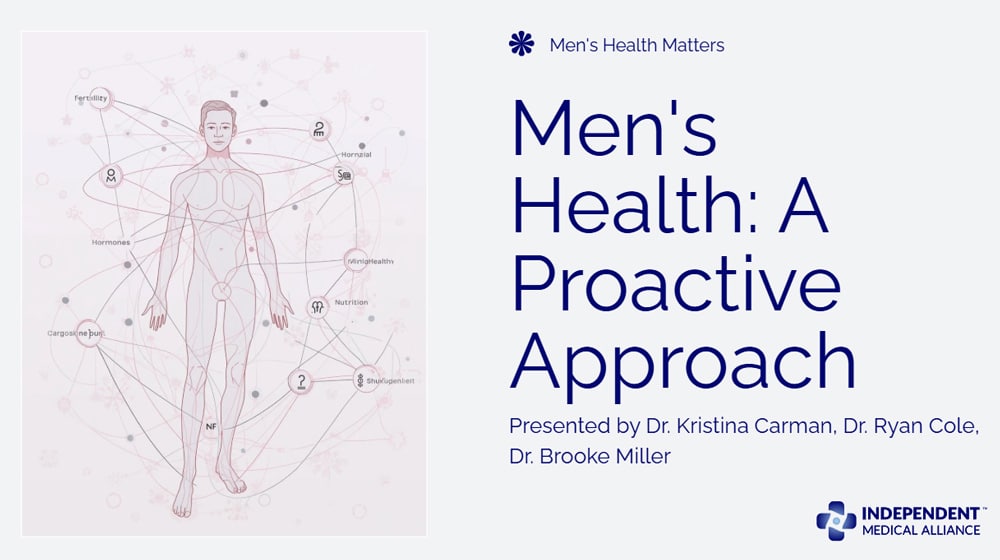
Host: Dr. Kristina Carman | Guests: Dr. Ryan Cole & Dr. Brooke Miller
Modern men face new health challenges, and new opportunities to thrive.
IMA Senior Fellow Dr. Kristina Carman hosts fellow IMA Senior Fellows Dr. Ryan Cole and Dr. Brooke Miller for a bold and practical discussion on how men can take control of their health through better testing, balanced hormones, and smarter lifestyle choices.
Together, they will explore fertility, hormones, nutrition, and metabolic wellness, diving into how comprehensive lab work and individualized care can transform outcomes. The panel will also explain how blood biomarkers reveal key insights into male health, why “optimal” levels differ from standard reference ranges, and what men can do today to support long-term vitality.
It’s no secret: men don’t like talking about their health. But maybe it’s time they did. In a world where advice on men’s wellness is more likely to come from a podcast studio than a doctor’s office, the Independent Medical Alliance thought it was time for physicians to weigh in—with science, empathy, and a clear plan for action.
In this timely discussion, IMA Senior Fellows Dr. Kristina Carman, Dr. Ryan Cole, and Dr. Brooke Miller unpack what’s really driving men’s declining vitality—from hormone disruption and environmental toxins to stress, poor sleep, and isolation. Their conversation challenges outdated assumptions, connecting the dots between metabolism, mindset, and purpose to redefine what men’s health looks like in the modern era.
Meet the Experts

IMA Senior Fellow, Nutritional and Holistic Health. Naturopathic doctor specializing in functional and integrative medicine. Her work focuses on hormone balance, detoxification, and optimizing longevity through root-cause care.

IMA Senior Fellow, Family and Emergency Medicine. Family and emergency medicine physician with a focus on prevention, men’s hormone therapy, and regenerative lifestyle strategies.
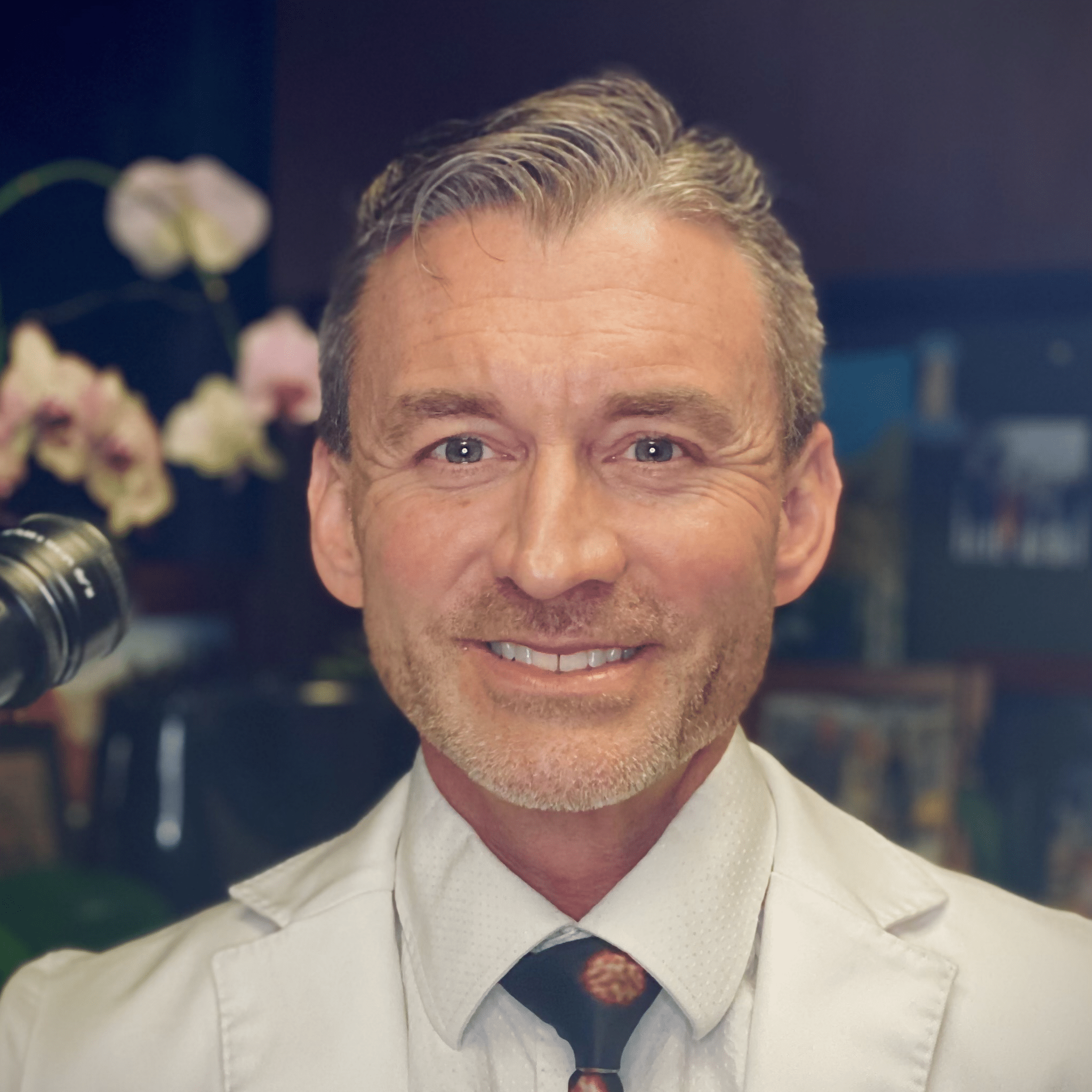
IMA Senior Fellow, Pathology. Pathologist and founder of Cole Diagnostics, known for connecting cellular pathology with metabolic and hormonal science to identify early markers of disease.
Cardiometabolic Health: The Foundation of Vitality
Insulin resistance, visceral fat, and chronic inflammation all converge to disrupt testosterone, energy, and vascular health. As Dr. Cole put it, “Cardiometabolic health is all-body health because everything is connected—the higher your blood sugar over time, the more irritation you get to the lining of your blood vessels.”
Key drivers and strategies include:
- Address insulin resistance: lower refined carbs, prioritize resistance and Zone 2 training.
- Protect vascular integrity: monitor early signs like erectile changes or hypertension.
- Lower inflammation: support sleep, stress regulation, and mitochondrial function.
- Detoxify the environment: reduce exposure to PFAS, BPA, and phthalates.
“It’s rare that I find an overweight type 2 diabetic male that isn’t low in testosterone. They pretty much go hand in hand—one feeds off the other.” —Dr. Brooke Miller
👉 Learn more: Men’s Heart Health: Markers, Myths & Strategies That Matter
Fertility and Hormones: Restoring Balance
Sperm counts have declined by more than 50 percent since the 1970s, signaling deeper dysfunction in male health. The team highlighted how metabolic, environmental, and stress factors converge to suppress fertility—and how it serves as a biomarker for total-body balance.
Practical steps discussed:
- Support natural testosterone: improve sleep, strength training, and nutrition before therapy.
- Reduce oxidative stress: eat antioxidant-rich foods, avoid toxins, and stay hydrated.
- Limit heat and chemical exposure: saunas, plastics, and pesticides all impair sperm quality.
“Fertility is not just about sperm—it’s about the whole body’s health. These systems are interconnected, and when we address the root, everything improves.” —Dr. Kristina Carman
Hormone Optimization and Individualized Care
Low testosterone is often a symptom, not a diagnosis. The doctors emphasized interpreting labs in context rather than chasing numbers.
- Use comprehensive testing—including DUTCH, micronutrient, and cardiometabolic panels.
- Recognize that “normal” isn’t always optimal; true health is how you feel and function.
- Avoid quick fixes: exogenous testosterone can suppress fertility without addressing root causes.
Dr. Miller reminded the audience, “You treat the patient—not the lab value. Labs are tools, not excuses to ignore symptoms.” And, Dr. Cole agreed: “Just because your doctor says your lab is normal doesn’t mean you’re functioning optimally. If you don’t feel normal, something needs to change.”
👉 Learn more: Men’s Hormone Health: Testosterone, Balance & the Path to Lasting Vitality
Nutrition, Hydration, and Lifestyle as Medicine
Nutrition is the body’s most direct messenger. A protein-rich, whole-food diet paired with movement and adequate sleep builds the hormonal and metabolic resilience men need to thrive.
- Prioritize: quality protein, healthy fats, omega-3s, magnesium, zinc, and vitamin D.
- Reduce: processed foods, seed oils, alcohol, and plastics.
- Train smart: combine resistance with aerobic conditioning for optimal mitochondrial health.
- Hydrate consistently: water and electrolytes regulate hormones and improve blood flow.
Dr. Carman added, “Your food is your messenger—every bite is a signal to your cells to heal or to harm.”
Mindset, Connection, and Purpose
The conversation closed on a truth often overlooked in men’s health: mental and emotional well-being drive biology. Chronic stress and social isolation raise cortisol, blunt testosterone, and shorten lifespan, while strong purpose and community restore balance.
- Build connection: friendships, mentorships, and service reduce inflammation.
- Cultivate purpose: a sense of meaning supports motivation and stress regulation.
- Practice stillness: time in nature, prayer, or mindfulness recalibrates hormonal rhythms.
Timeless advice from Dr. Miller, “Everybody has to have a purpose. If you lose your purpose, your will to live and your health go down.”
And of course, Dr. Cole concurs, “Find your purpose, engage in it, and make the world a better place—your mental well-being improves in that process.”
👉 Learn more: Men’s Mental Health: Root Causes, Resilience & Real-World Tools
Looking Ahead: A Holistic Model for Men’s Health
This conversation marks a turning point—away from symptom management and toward integrated longevity. By combining advanced diagnostics, lifestyle mastery, and purpose-driven living, men can move from survival to vitality. As the panel agreed, the goal isn’t merely to extend lifespan, it’s to expand healthspan.
Explore More IMA Resources
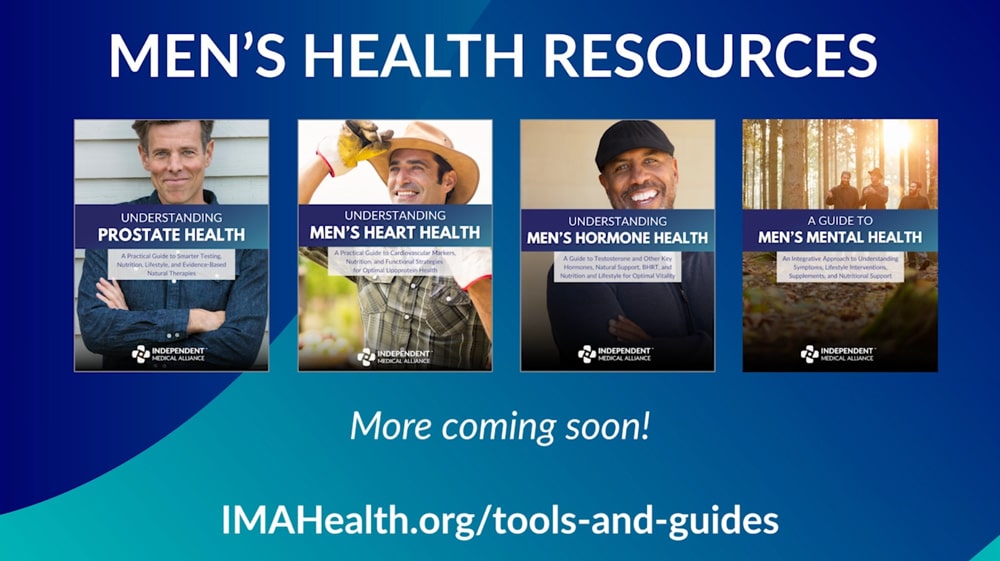
Build your own proactive approach to men’s health with these guides (with more coming soon!):