Host: Dr. Joseph Varon | Guest: Mikaël Wornoo
A second opinion used to mean another appointment and a long wait. Now a chatbot can offer an answer in seconds, whether or not it has earned your trust.
In this episode, Dr. Joseph Varon, IMA President and Chief Medical Officer, welcomes Mikaël Wornoo, co-founder of TechWolf. Mikaël shares how he brought his background in AI into his personal search for health answers, what he learned, and what he’s still working through.
More and more people are bringing AI into their medical decisions. But how trustworthy is Dr. Robot? Mikaël Wornoo, an AI-native tech company founder, found himself with nowhere else to turn when his human doctors reached a dead end. For him, the digital second opinion turned a wall into a path toward healing.
Our doctors hear stories like his every day. Many people find IMA the way he did, after years of searching for answers. What’s new in Wornoo’s story is the tool: AI gave him better questions, and those questions led him to IMA’s website and to a doctor listed in IMA’s directory.
Join host Dr. Joseph Varon as he asks how Wornoo used AI to investigate his health, how he checked what it told him, and where he thinks AI in health care is heading.
Meet the Expert
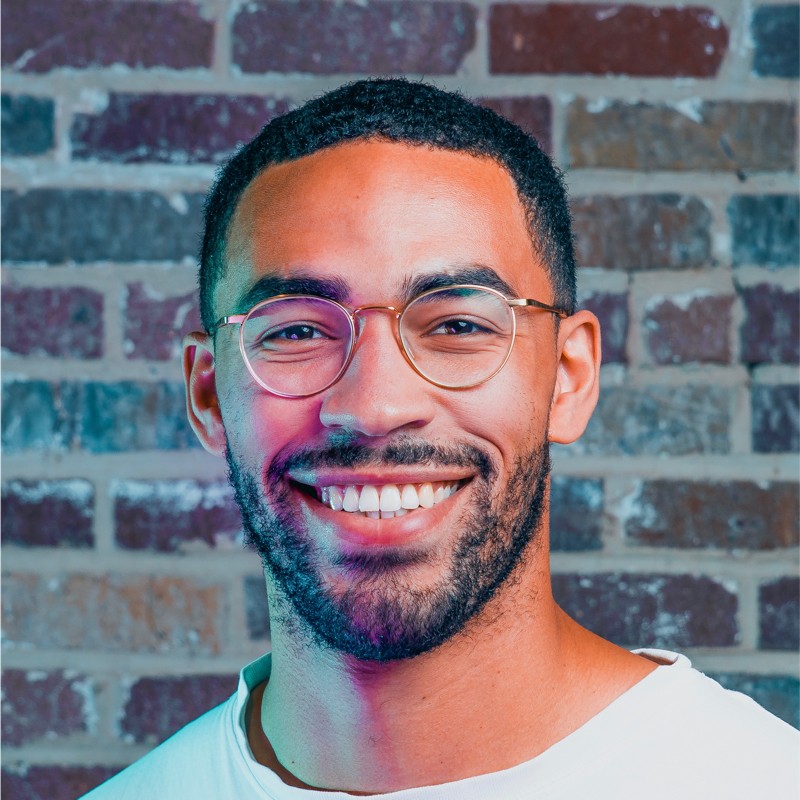
Mikaël Wornoo
Co-founder, TechWolf. An engineer by training, Wornoo co-founded TechWolf in 2018 to build AI that helps businesses understand their workforce’s skills, and in 2024 he moved to the US to lead its expansion there. He and his co-founders were named to the 2023 Forbes 30 Under 30 Europe list.
Years of Symptoms Blamed on Stress
Poor sleep was the first sign of trouble for Wornoo in 2022. Magnesium and zinc got him only as far as functioning. Over the next few years his symptoms got worse: illnesses that lingered, long-running gut trouble after a trip to India, abnormal liver values in 2024, and in 2025 a sudden chemical sensitivity.
He blamed stress, and so did his doctors. After rounds of allergy tests, he was “getting gaslit by doctors” who told him, “You’re running a company. You must be under a lot of stress.” He did the same thing to himself:
“Part of me was just, yeah, this is the price you pay for success. I kind of just gaslit myself into thinking you gotta suffer a little bit.” — Mikaël Wornoo
He held onto a rule he’d read about an Olympic coach: an athlete chasing a medal was doing well if they felt horrible only a third of the time. For Wornoo, it was two-thirds. He hid most of it, partly out of shame: some moments he was super present, and at others he disappeared.
The question that changed his search came from a functional doctor in the US: did it all start after COVID? The doctor was seeing many people Wornoo’s age with similar symptoms. Relieved that he wasn’t alone, Wornoo was also suspicious:
“My second reaction, and I remembered this vividly, was like, are you one of those guys? Because I was just so naive and COVID was highly politicized.” — Mikaël Wornoo
A second functional doctor told him the same story. Looking back, the first time he was truly sick, bedridden with brain fog, headaches, and trouble finding his words, came after a COVID-19 vaccine dose, and he’s still working out whether the vaccine or the infection is behind his illness. The process has been slow because long COVID is “not an accepted disease,” and vaccine injury is still “a little bit weird to talk about.”
The cost was steep. He has no vivid emotional memories from 2022 on, partly because of brain fog, and in 2023 he told friends he didn’t think he was “going to make it past 50.” He now sees that remark as voicing an internal state he was wrestling with.
Using AI to Build a Hypothesis
Wornoo solves hard problems for a living, and this time the problem was his own health. He started by running his DNA results through AI, and because genes act through proteins and enzymes, that led him into biochemistry and to asking about mechanisms of action. Those questions got him strikingly different answers from ChatGPT and Claude.
On sensitive topics, it’s almost as if a model tries to infer whether a question sounds like a “political conspiracy,” which gets “the canned answer that leads you away,” or like “a genuine science question.” On topics such as ivermectin, he sometimes just tells the model to drop the evasions, which has been “surprisingly effective.”
His own experiments pushed him the same way: high-dose vitamin B1 felt like his old ADHD medication, and he wanted to understand why. Google’s NotebookLM turned YouTube talks into slide decks that mapped the competing theories, and AI coding tools such as Claude Code and Codex worked through more research than he could read. But Wornoo was clear that the robots did not replace doctors entirely:
“But for me, what has been very helpful is coming up with a hypothesis with AI and then finding a doctor that can either confirm or disconfirm that hypothesis.” — Mikaël Wornoo
Low dose naltrexone (LDN) shows the method at work. It kept coming up as helpful for many people, but the Sackler family’s story made him wary of an American doctor prescribing anything opioid-related, a fear he admits is a little paranoid. He found a Belgian doctor who had just done a meta-analysis of the LDN research, and LDN has been “absolutely game changing” for his brain fog.
Stepping back from the supplements, he concluded that he probably had long COVID or a vaccine injury. That hypothesis brought him to IMA’s website, and from there to a doctor listed in IMA’s directory who could really help him.
The illness also taught him about his own body: he has folate receptor autoantibodies, and the medication he takes for them has been “life changing.” Today, he has the tools to lead a happier life.

Checking AI’s Work
Checking AI’s answers also meant questioning his own assumptions. When Dr. Varon asked how he could tell whether AI was hallucinating, Wornoo described an intuition developed through use, backed by a few habits:
- Primary sources: if AI says something works, he asks for the study and checks it in PubMed.
- Confirmation bias: the most important thing to watch, especially when you’re desperate for an answer.
- Clear instructions: a detailed instruction file tells the AI how to work with him.
- Real people: he looked for a YouTube video of someone describing the problem, then talked to doctors. The ones he found through IMA were “more critical thinkers,” and less “just following whatever the mainstream narrative is.”
The mistake he sees most often is people outsourcing their thinking to AI. He compares AI to a very smart intern:
“If you work with a very smart intern or a very smart junior person, they will do what you ask, but you have to give them a lot of context, and you have to check in on them.” — Mikaël Wornoo
Should someone ask AI instead of seeing a doctor? His answer is to do both, the way you might run a contract through AI and still talk to a lawyer before you sign. AI can help you ask more thoughtful questions, but you still need to talk to somebody with an actual degree in the field.
Dr. Varon’s own check is to have Perplexity moderate ChatGPT, Claude, and others. Wornoo describes what he wants from the technology:
“It’s a tool to sharpen my understanding of what’s going on. It’s not a tool for my own diagnosis.” — Mikaël Wornoo
A Doctor in Your Pocket?
More information can bring more anxiety, a concern Dr. Varon raised and Wornoo knew firsthand. His genetic data came back as a list of 10,000 mutations, and he had to learn how to interpret it. He thinks society is in a transition period, and that care should be built around patients who research with AI.
Looking five years ahead, he sees both promise and risk.
What He Expects
Personalized medicine is close:
- Prevention: people who know their body’s quirks can address them before they become chronic illness.
- Concierge care for everyone: Uber made a personal driver ordinary, and AI can do the same for care only the very rich have today.
- Continuous records: logs of symptoms, food, and medications would show doctors interactions that patients’ recall misses.
- Early adopters first: people who log their data have an edge now, but tools such as personal AI agents spread quickly.
His timeline for medical AI is five years:
“Software will exist that will just do this for you. And it will be very easy. And it will be a doctor in your pocket.” — Mikaël Wornoo
What Worries Him
First on the list is an accelerated K-shaped economy, with AI creating great prosperity for some and far less for others in a society already losing trust in institutions. Weaker critical thinking is another: “AI slop” is spreading, and more people accept the one answer to their one question. As AI becomes as basic as Excel, people need to think harder about what it tells them:
“I definitely think we need to be much harder critical thinkers, and not less so.” — Mikaël Wornoo
What He’d Tell His Past Self
Chronic illness gave Wornoo “a completely different relationship with patience” than startup life ever did. The body is a complex system with “no simple fix,” and understanding it takes time. His advice to himself two years ago is direct: “Don’t give up. Be very critical about what you hear.” Wornoo’s experience hints at a future where AI and medicine don’t compete, but rather, cooperate. IMA’s treatment guides for long COVID and vaccine injury, along with its directory of doctors, offer a place to continue that search.
Related Reading
- Webinar: AI and mRNA: What You Need to Know
- Webinar: Yale University Study on COVID Post-Vaccination Syndrome
- Treatment Guide: I-RECOVER: Long COVID Treatment
- Treatment Guide: I-RECOVER: Post-Vaccine Treatment