
Host: Dr Joseph Varon | Guest: Dr. Adylle Varon
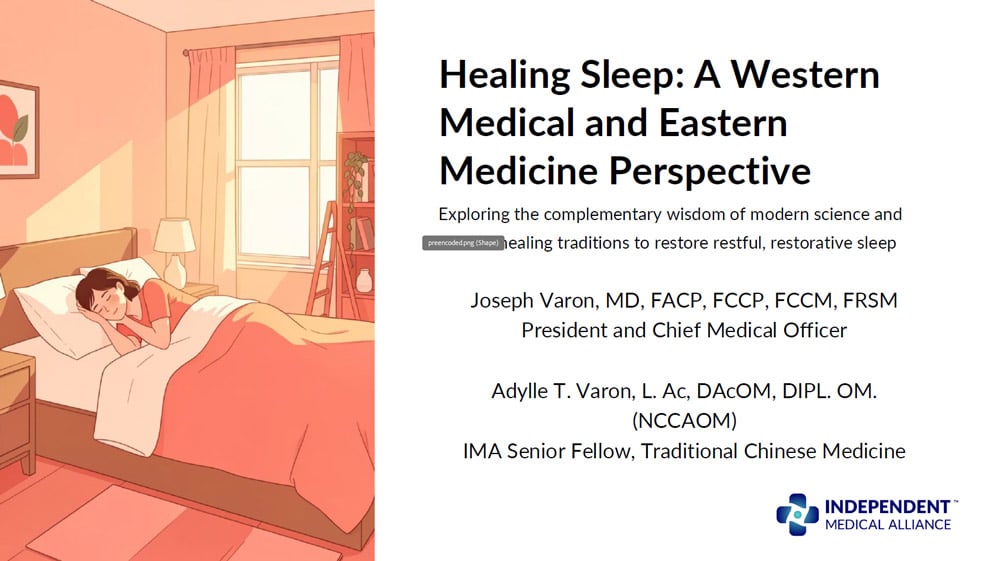
In this episode, IMA Co-Founder and Chief Medical Officer Dr. Joseph Varon will be joined by IMA Senior Fellow and Doctor of Traditional Chinese Medicine Dr. Adylle Varon for a clinical discussion on sleep health from both Western medical science and Eastern medicine perspectives.
Together, they will explore how modern research and time-tested healing traditions can complement one another to restore restful, restorative sleep and support overall health.
Sleep is no longer a lifestyle inconvenience. It’s a public health crisis.
Nearly 30% of adults worldwide suffer from insomnia, and 70 million Americans struggle with sleep disorders. Yet the medical system’s default response, reaching for the prescription pad, often trades one problem for another: side effects, dependency, and sleep that technically happens but never truly restores.
In this week’s IMA Webinar, Dr. Joseph Varon, IMA President and Chief Medical Officer, teams up with his daughter, Dr. Adylle Varon, a Doctor of Traditional Chinese Medicine and IMA Senior Fellow, to explore sleep from two distinct but complementary perspectives. What emerges is a case for integrative care where Western medical science and ancient Eastern healing traditions can address not just the symptom of sleeplessness, but its root causes.
“Sleep is no longer just a lifestyle issue, it is actually a public health crisis,” Dr. Joseph Varon said. “Millions of people are exhausted, medicated, and many of us frustrated.”
Meet the Expert
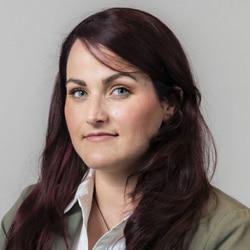
IMA Senior Fellow, Traditional Chinese Medicine. Dr. Adylle Varon is a nationally certified and Texas board-licensed acupuncturist and Doctor of Oriental Medicine. She is the founder of Ambrozia Integrative Healthcare in Houston, where she integrates Traditional Chinese Medicine, acupuncture, and herbal medicine with evidence-based wellness practices. She serves as Secretary of the Texas Association of Acupuncture and Oriental Medicine (TAAOM) and has lectured both nationally and internationally on integrative healthcare and holistic healing.
1. The Sleep Crisis: Why Pills Aren’t the Answer
Dr. Joseph Varon opens with a confession: he doesn’t sleep much himself. Years of ICU work and middle-of-the-night phone calls have trained him to function on three or four hours. But that doesn’t stop him from understanding just how critical sleep is for everyone else, and how badly Western medicine often fails to address it.
“Close to 30 percent of adults around the world suffer from insomnia,” he explains. “When you don’t sleep, that impairs your mood, that impairs your cognition, that impairs your physical health. You have an increase in cardiovascular events, you get depressed. You don’t sleep for a few days and you start catching colds.”
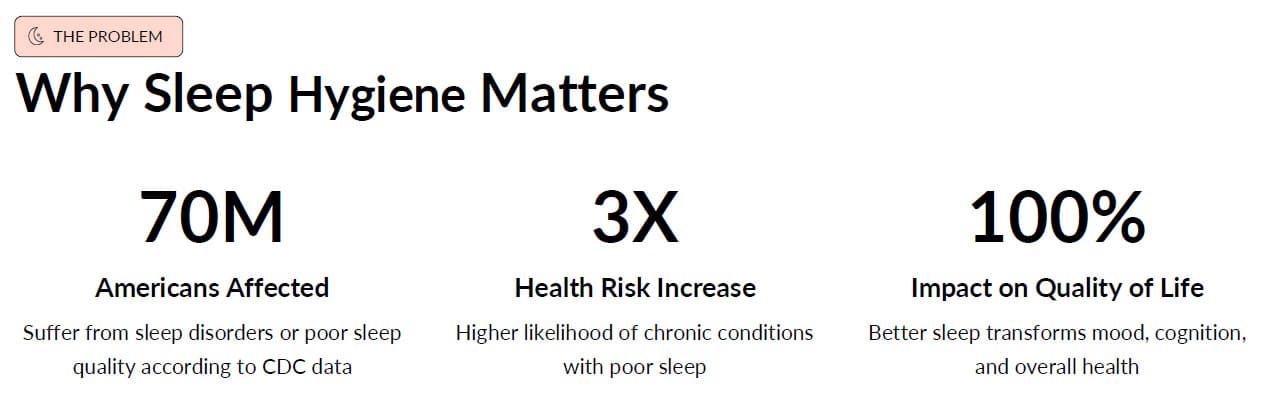
The health consequences are severe: increased risk of heart disease, diabetes, depression, and impaired memory. Yet the standard medical response often makes things worse.
“Western doctors love to give pills,” Dr. Joseph Varon says bluntly. “They’ll pill you to death if they can. What we’re trying to do, even some of us who practice Western medicine, is try to avoid getting you used to some of these pills or medications.”
The problem isn’t just side effects. Medications like Ambien and Lunesta can put you to sleep without actually giving you quality sleep. They disrupt REM cycles, affect dreaming, and create dependency. Dr. Joseph Varon recalls the tragic case of Michael Jackson, who couldn’t sleep and was given propofol, or “milk of amnesia,” with fatal consequences.
“As Western clinicians, we’re very good at putting people to sleep,” he admits. “However, it is just to get you to close your eyes and quote ‘sleep.’ What’s going on inside the sleep, that quality of sleep, that’s the part where medications just disrupt it.”
2. Sleep Hygiene: The Forgotten Foundation
Before reaching for any treatment, Western or Eastern, both doctors emphasize the importance of basic sleep hygiene. It sounds simple, but Dr. Joseph Varon believes most cases of insomnia could be fixed by getting the fundamentals right.
“Most of my colleagues don’t think that way,” he observes. “They think that a pill is a simple way to put you to sleep. But I am a big believer, even though I don’t practice it, of sleep hygiene.”
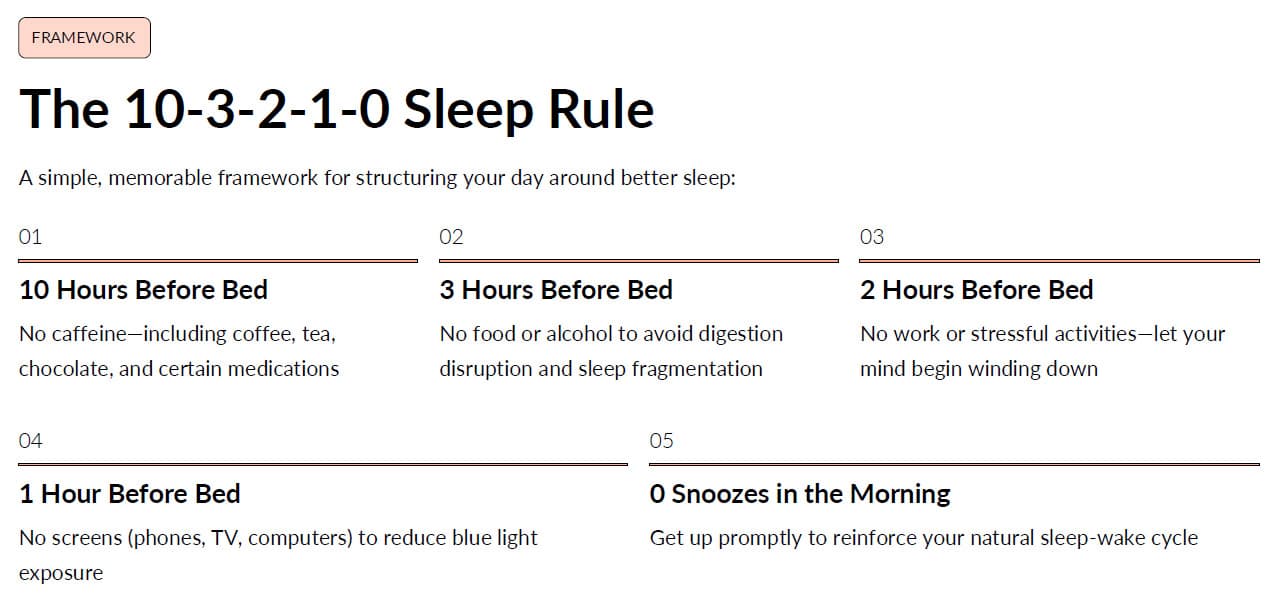
The 10-3-2-1-0 Rule
The webinar introduces a simple framework for structuring your day around better sleep:
- 10 hours before bed: No caffeine, including coffee, tea, chocolate, and certain medications
- 3 hours before bed: No food or alcohol to avoid digestion disruption and sleep fragmentation
- 2 hours before bed: No work or stressful activities; let your mind begin winding down
- 1 hour before bed: No screens (phones, TV, computers) to reduce blue light exposure
- 0 snoozes in the morning: Get up promptly to reinforce your natural sleep-wake cycle
Creating a Sleep Sanctuary
Dr. Varon walks through the environmental factors that matter most:
- Temperature: Keep the room at 67°F for optimal sleep
- Darkness: Use blackout curtains or eye masks to block all light
- Noise: Try earplugs or white noise machines, especially if you live near a freeway or in a noisy city
- Remove distractions: Clocks are a major culprit. “You’re constantly looking at what time it is and I haven’t fallen asleep. It only increases anxiety.”
The bed, he emphasizes, is for sleep only. Not eating. Not watching TV. Not scrolling your phone. When you can’t fall asleep after 20 minutes, get up and do something boring until you feel drowsy.
3. The Eastern Perspective: Asking Better Questions
When patients don’t respond to conventional medicine, Dr. Adylle Varon starts with a different question: “What questions are not being asked in your world?”
Traditional Chinese Medicine takes a systems-based approach, viewing the body as a network of channels or meridians through which energy flows. When that energy is blocked or imbalanced, symptoms like insomnia emerge.
“It’s a systems-based medicine that tries to do its best at diagnosing the entire body as a whole,” she explains. “When you see organs like heart, liver, spleen and gallbladder on our slides, know that this is referencing those channels and not your biological organs. Our job is to make sure that that is flowing, that that is moving, and that everything is in balance.”
The Three Root Causes of Insomnia
According to TCM, insomnia always traces back to three factors:
- Emotions: What are your emotions like right now? Are you angry, anxious, grieving?
- Diet: What are you eating? Is your digestive system overtaxed?
- Physical ailments: What else is going on in your body?
Dr. Adylle Varon points to the TCM body clock, a 24-hour map showing which organ systems are most active at different times. If you consistently wake up between 1 and 3 AM, for example, that corresponds to “liver time” in Chinese medicine, often linked to unprocessed anger or emotional stagnation.
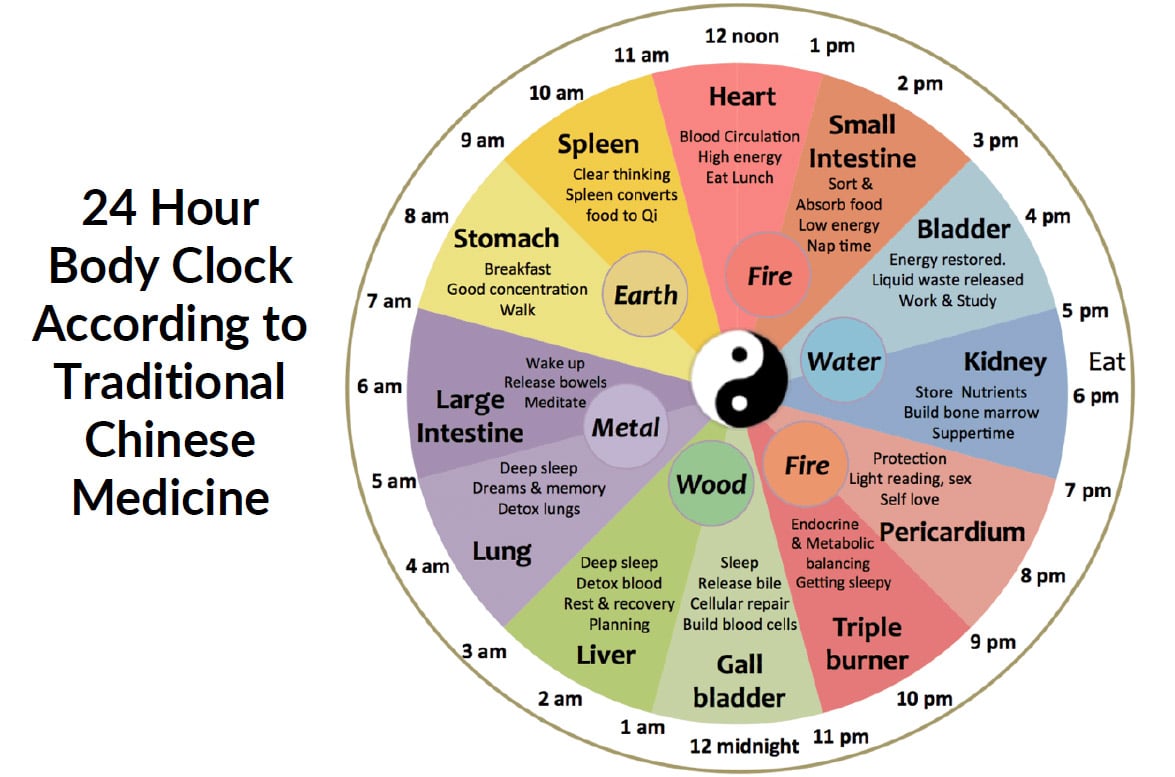
“Turn back and look at this clock and say, ‘Okay, well, that’s the liver time,'” she advises. “With acupuncture and herbal medicine, we can have answers and treatment that do not involve conventional pharmacological care.”
She mentions that nearly every patient falls asleep on her table during treatment, including her father.
“I can’t say that it’s me,” she clarifies. “It’s your body. Your body is doing it already. I’m just there to literally poke you and to trigger your response.”
4. Natural Alternatives: Herbs, Teas, and Movement
For those seeking alternatives to pharmaceutical sleep aids, Dr. Adylle introduces several Traditional Chinese Medicine formulas:
TCM Herbal Formulas for Sleep
- Suan Zao Ren Tang: Nourishes the heart and liver blood, calms the spirit; proven effective for insomnia
- Gui Pi Tang: Called “the student formula” in acupuncture school; addresses fatigue, dream-disturbed sleep, and anxiety when you’re constantly on the go
- Jia Wei Xiao Yao San: For those prone to irritability, anger, and heat in the body; helps the restless mind settle
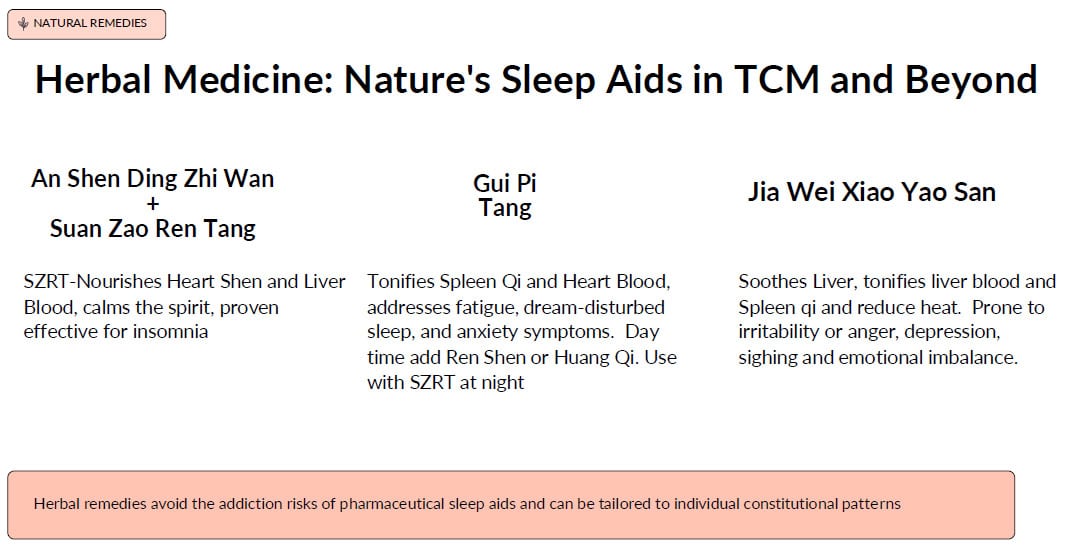
“I would consider these like your alternatives to your typical Ambien,” she explains. “Not as strong and not as quick, but the herbs and acupuncture do take time in order for the system to respond.”
A Tea Recommendation
Dr. Adylle shares one of her favorite patient recommendations: Griffo Luna Tea, which contains chamomile, mimosa bark, polygonum vine, and mint.
“I have found that my most complex patients respond very well to this tea,” she says. But she adds an important caution: “Chamomile can induce labor at high doses. Do not take this if you’re trying to get pregnant or are pregnant.”
CBD and Mushroom Gummies
When asked about CBD gummies, Dr. Adylle gives them a thumbs up, with caveats about THC content depending on your state. She’s particularly enthusiastic about medicinal mushroom formulas.
“There’s a brand called Myco Clinic, and their sleep gummies are fantastic. Reishi, cordyceps, lion’s mane. I’ve been getting a really good response from my patients.”
Movement as Medicine
Both doctors emphasize the importance of daytime movement. Not intense workouts close to bedtime, but gentle circulation throughout the day.
Dr. Adylle Varon recommends the Eight Brocades (Baduanjin), a traditional Qigong practice available on YouTube.
“Anytime someone uses the word Qigong, know that that translates to circulation exercise. It’s using the breath in order to exercise your circulation inside of you.”
She draws a simple analogy:
“Let’s think about kids four and under. If those kids are not moving during the day, they are going to sleep like crap at night. You can translate that into adulthood as well.”
5. Audience Q&A
On tapering off Ambien:
Dr. Joseph Varon: “Tapering off any of these agents needs to be gradual. Even melatonin, I would say stop slowly, don’t stop everything at once. Every time you’re going to be stopping any medication, you must do that with your trusted healthcare provider.”
On tinnitus and sleep:
Dr. Adylle Varon: “The overstimulation, the ear ringing, the insomnia, all related to the kidneys and liver, depending on whether it’s high pitch or low pitch. I would suggest trying this world first. If it doesn’t work in a couple weeks, go to conventional medicine.”
Dr. Joseph Varon adds that photobiomodulation, using near-infrared light, is showing promising results for tinnitus. A paper on this is forthcoming in the Journal of Independent Medicine.
On acupressure vs. acupuncture:
Dr. Adylle Varon: “Depending on the individual. As long as there is pressure or any sort of stimulation, I would say go for it. But yes and no. There are a lot of people that don’t like needles, so we do a lot of acupressure.”
On herbs and safety:
Dr. Adylle Varon: “Don’t let anybody tell you that natural medicine is all safe, because it’s not. If you are not working with a trained herbalist, it could be very challenging. Some teas are very safe over the counter, but if you’re on anything, please see an herbalist.”
Reclaiming Restorative Sleep
Whether you start with sleep hygiene fundamentals, explore acupuncture, or try an herbal formula, the path forward begins with asking better questions about why you’re not sleeping, not just reaching for a quick fix.
Key Takeaways
- Sleep hygiene comes first. Before any treatment, get the basics right: cool, dark room; consistent schedule; no screens before bed.
- Pills are a last resort, not a first step. Medications may help you close your eyes, but they often disrupt the quality of sleep you need.
- Root causes matter. Whether it’s unprocessed emotion, poor diet, or lifestyle imbalance, addressing why you can’t sleep matters more than forcing sleep to happen.
- TCM offers real alternatives. Acupuncture, herbal medicine, and mind-body practices like Qigong have growing research support and centuries of clinical experience.
- Seventy-five percent of insomnia is emotional. Most of the time, people do not listen to their story. There was a trauma years ago that started it, but it was blown off.
“If you are in this situation and you’re like, ‘I have tried everything for my insomnia,’ and you haven’t tried Chinese medicine, you have not tried everything,” Dr. Adylle Varon concludes. “This should be your first line of defense when it comes to these kinds of things.”
Announcements
IMA Medical Education Conference 2026 A two-day event in Texas covering the latest innovations, research, and forward-thinking practices shaping the future of healthcare. 👉 Get Tickets
MAPS Conference Medical Academy of Pediatrics and Special Needs Charlotte, NC | March 12-14, 2026 IMA Senior Fellows Dr. Elizabeth Mumper and Dr. Catherine Welch will be presenting. 👉 Register at medmaps.org | Use code IMA2026 for 20% off