

By Dr. Kat Lindley (originally published on X)
Why Free Market Healthcare Makes Sense
When people hear “free market healthcare,” many picture something cold: the sick left behind, care sold only to the highest bidder. I understand that fear. Nobody who has watched a loved one struggle with a medical bill wants a system that cares less.
But I want to make a different case. A free market in medicine isn’t about caring less. It’s about putting the two people who matter most, the patient and the doctor, back at the center of care, and taking the middlemen out of the room.
The system we have isn’t a market
Most of American healthcare isn’t a free market. It’s a maze of third parties. Insurers, government programs, pharmacy benefit managers, and large hospital systems sit between patients and the people who care for them. Prices are hidden, bills arrive weeks later, and almost no one can tell you what anything costs before it happens.
Look at what happens when the government and insurers keep “fixing” it. Average premiums in the Affordable Care Act marketplaces are expected to rise 13% next year, according to a KFF analysis. That comes after an average 26% jump this year. Open enrollment starts Nov. 1, and millions of families are about to see those numbers.
Every year we’re told the answer is more of the same: more mandates, more subsidies, more bureaucracy. Every year, families pay more.
When patients shop the price, prices behave
There are corners of medicine where patients pay directly and can compare prices. Those corners tell an interesting story.
Take LASIK. Insurance usually doesn’t cover it, so patients shop around. According to Market Scope data, the typical price in 1998 was about $4,360 for both eyes. By 2023 it was about $4,492, almost the same in dollars, even though the technology improved and decades of inflation passed.
Cosmetic surgery shows a similar pattern. A study of aesthetic procedure prices from 2007 to 2020 found that most of them weren’t driven much by inflation, and the price of liposuction actually fell about 10%. The authors suggested that supply and demand may matter more than inflation in those markets.
These aren’t perfect comparisons. Elective procedures are different from a heart attack or cancer. But they show something important: when patients see the price and have choices, providers compete on value.
Transparency in pricing
In 2009, the Surgery Center of Oklahoma did something radical. It posted all-inclusive prices for its surgeries online, with the surgeon, the anesthesiologist, and the facility rolled into one number. It’s physician-owned and still posts its prices today. A hemorrhoidectomy, for example, is listed at $4,425, covering the surgeon, facility, anesthesia, and routine follow-up. You know the price before you schedule.
That shouldn’t be revolutionary. It’s how almost everything else we buy works. Yet more than five years after the federal hospital price transparency rule took effect in January 2021, a review of 2,000 hospitals by PatientRightsAdvocate.org found that only 49.4% were fully compliant. Just 18% posted actual dollar-and-cents prices for at least half of their items and services. Many still post formulas and percentages that patients can’t use.
Hospitals that hide prices aren’t doing it for patients. Sunlight is what markets run on.
Direct primary care: the market at the front door
DPC is simple: patients pay a flat monthly membership directly to their doctor, and in return they get access to their doctor. No insurance billing for primary care, no coding games, no prior authorization for an office visit.
According to the American Academy of Family Physicians, DPC memberships usually run $50 to $100 a month for adults, $20 to $49 for children, and $100 or more for families. Nearly all DPC practices in the AAFP survey include same-day appointments, phone and text consults, and telemedicine in the membership. A recent national survey of DPC practices found an average panel of 473 patients. Smaller panels mean more time with each person.
And starting Jan. 1, 2026, federal law lets patients with high-deductible health plans use their health savings accounts to pay DPC fees, up to $150 a month for an individual and $300 for a family. That’s a small but real step toward letting patients spend their own healthcare dollars where they choose.
When the doctor works for the patient instead of for a billing department, the relationship changes. We have time to talk. We have time to explain risks and benefits so patients can make truly informed choices. That’s what informed consent is supposed to look like.
“But what about the people who can’t afford it?”
This is the most important question, and it deserves a serious answer, not a slogan. A free market doesn’t mean abandoning anyone. It means lowering the cost of care so more people can afford it, and focusing help on those who truly need it instead of routing everyone’s money through layers of administrators. Charity care, community clinics, and doctors who offer cash prices and discounts have long been part of medicine. Transparent, lower prices make it easier for families, churches, employers, and charities to help.
I understand why some people may believe a single-payer system like Medicare for All. Their concern for patients is real. I just think handing even more control to the government would make the same problems bigger: less choice, more rules, and decisions made farther away from the exam room.
What patients can do now
- Ask for the cash price. Many surgery centers, labs, and imaging centers offer cash prices that can be lower than what you’d pay through insurance. Always ask.
- Look up hospital prices. Hospitals are required to post their prices. If you can’t find them or can’t understand them, say so, and report it to CMS.
- Explore direct primary care. If you have an HSA-eligible plan, check whether you can now use your HSA for a DPC membership.
- Compare before you commit. For planned procedures, get quotes from more than one place, including physician-owned surgery centers.
- Ask your doctor questions. About costs, alternatives, and risks. A good doctor welcomes them.
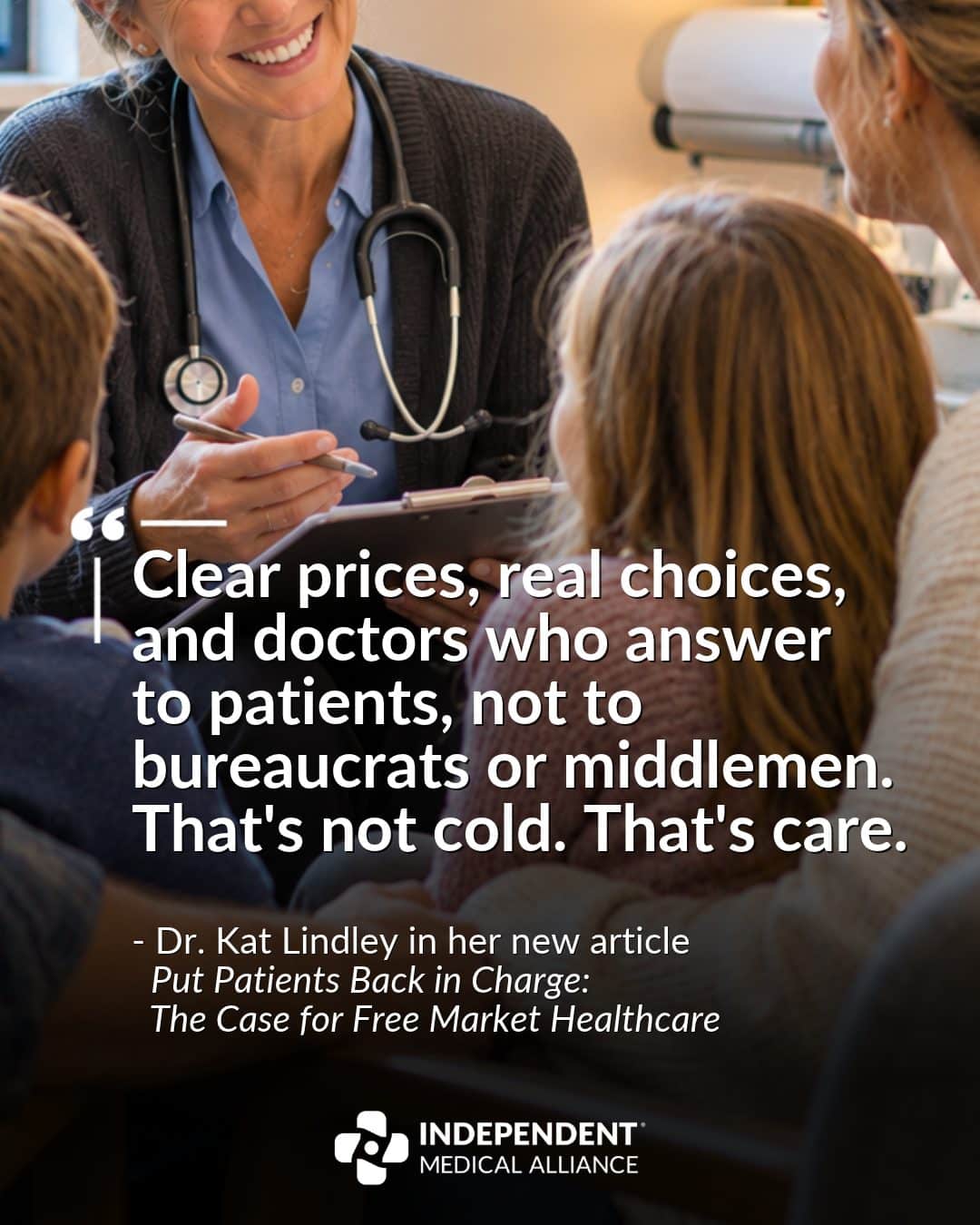
The bottom line is, free market healthcare makes sense because it puts decisions back where they belong: with patients and the doctors they trust. Clear prices, real choices, and doctors who answer to patients, not to bureaucrats or middlemen. That’s not cold. That’s care.
— Dr. Kat Lindley is a Board Certified Family Physician and Director of the International Fellowship Program at the Independent Medical Alliance.