Host: Dr. Ryan Cole | Guest: Jan Jekielek
How has one of the world’s darkest industries remained hidden in plain sight? What does that silence say about the institutions that failed to stop it?
Host Dr. Ryan Cole, IMA Head of Medical & Scientific Affairs, is joined by Jan Jekielek, author and Senior Editor with The Epoch Times, for a conversation on the evidence surrounding China’s state-directed organ harvesting system and the broader questions it raises about medical ethics, government power, and global silence.
One of the world’s largest-scale atrocities has operated in plain sight for over two decades. The state-sanctioned harvesting of organs from prisoners of conscience in China is not a rumor, not a conspiracy theory, and not ancient history. It is a functioning industry, conservatively estimated at $9 billion a year, built on the bodies of people imprisoned for their beliefs.
IMA has been covering organ donation ethics from multiple angles. IMA President Dr. Joseph Varon wrote the foreword to Killed to Order. IMA has published a comprehensive guide on organ donation, transplants, and brain death. And this is Jan Jekielek’s second appearance on the webinar series. But where the previous conversation explored organ donation ethics broadly, this one focuses squarely on China’s system and what it reveals about where medicine goes when ethics are abandoned.
The book debuted at #8 on the New York Times bestseller list the evening of this webinar. Twenty years ago, people tuned out when Jekielek tried to talk about this. Today, people couldn’t look away if they tried.
Meet the Experts

Jan Jekielek
Author of Killed to Order. Senior Editor at The Epoch Times. Host of American Thought Leaders. Jekielek has spent two decades investigating forced organ harvesting in China. His background is in evolutionary biology, and his personal connection to the Falun Gong spiritual practice began after recovering from Guillain-Barré syndrome.
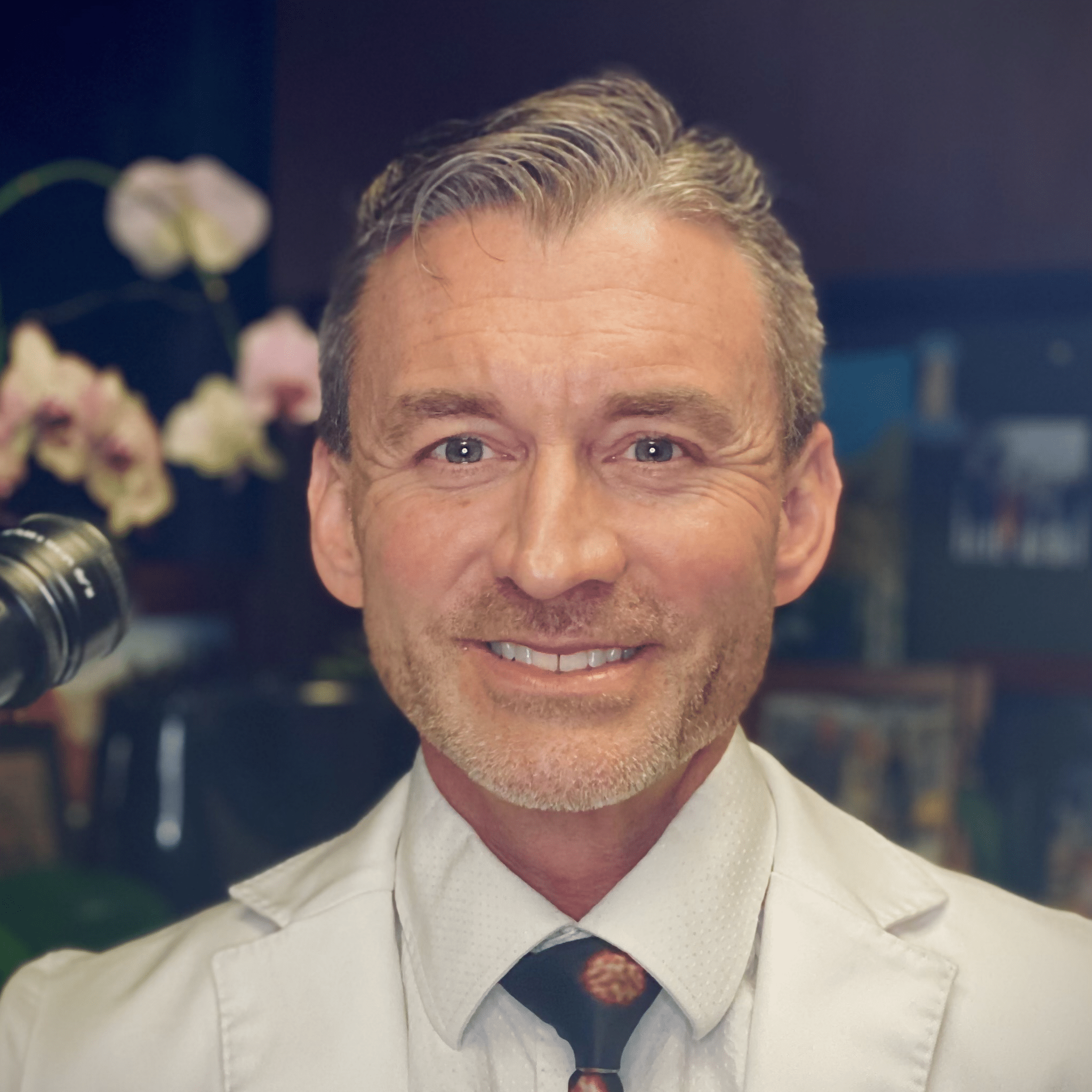
Dr. Ryan Cole
IMA Head of Medical & Scientific Affairs. Board-certified pathologist. Dr. Cole brings a cell-level understanding of tissue biology and a longstanding commitment to medical ethics. He attended the Killed to Order book launch at the Kennedy Center.
1. How Jan Jekielek Came to This Story
Jan Jekielek was studying evolutionary biology at the University of Alberta when Guillain-Barré syndrome ended his lab career. The autoimmune disorder attacked his peripheral nervous system, leaving him unable to do the fine motor work his research required. Standard medicine offered no treatment.
A friend suggested a Chinese meditation practice called Falun Gong. Within two months of daily practice, his neurologist confirmed complete remission.
That recovery set a trajectory. Jekielek began learning about the persecution of Falun Gong practitioners in China, and one encounter changed everything. A woman who had escaped a Chinese labor camp told him her story. She had been tortured. Her crime: refusing to sign a paper renouncing her beliefs and pledging loyalty to the Communist Party.
“What dawned on me as this woman was telling me her story… her crime was refusing to sign the piece of paper. There’s no justice in this.” — Jan Jekielek
That moment crystallized something about totalitarian control that Jekielek, whose parents had fled communism in the 1970s, had understood intellectually but never felt. It led to UN reporting work, then to journalism at The Epoch Times, the only media outlet at the time willing to challenge the prevailing narrative that China was liberalizing.

Photo by Madalina Kilroy/The Epoch Times — Buy the Book
2. The Mechanics of a Kill-to-Order System
Two conditions make this system possible. First, a massive propaganda apparatus that dehumanizes a targeted group. Second, the ability to incarcerate that group at enormous scale.
After June 1999, when China’s dictator Jiang Zemin ordered the eradication of Falun Gong, the state media machine demonized a population that had numbered 70 to 100 million practitioners. One to two million were incarcerated. These were people who didn’t drink, didn’t smoke, meditated daily, and were known to be unusually healthy.
Then someone realized these prisoners could serve a second purpose.
“They started blood typing, tissue typing and organ scanning them and creating a database… a living organ bank of living people, of prisoners, innocent prisoners of conscience who are known to be particularly healthy.” — Jan Jekielek
When a paying recipient needed a match, a pre-matched prisoner was killed on schedule. The recipient paid $100,000 to $300,000. The prisoner was shipped to a hospital, often built adjacent to the prison, and the organs were harvested.
The evidence is layered. A heart transplant surgeon’s patient had a transplant scheduled in China in two weeks, meaning the donor’s death was pre-arranged. A German woman received three separate liver transplants in China while continuing to drink heavily. And a survivor, missing part of his liver and part of his lung with a 14-inch scar, escaped to Thailand and was eventually rescued by Bob Destro, then the US Assistant Secretary of State for Democracy, Rights and Labor.
“The crime scene is an operating room, which is scrubbed clean every time.” — Jan Jekielek
The book catalogs 33 distinct pieces of evidence. No single piece proves the case alone. Together, they form a picture that is difficult to dismiss.
3. The Scale No One Talks About
Conservative estimates place the number of forced organ harvesting transplants at 60,000 to 90,000 per year. Researcher Ethan Gutman, who defended these figures under oath before Congress, based his analysis on 146 known transplant hospitals. That number has since grown.
One hospital alone delivered 5,000 transplants in a single year. The estimates are calculated from the minimum plausible utilization of transplant infrastructure: beds, surgical teams, operating rooms. They assume these hospitals are doing the least amount of work imaginable while having stood up full transplant capacity. The real numbers are almost certainly higher.
“It’s not just nine billion dollars a year. It’s unlimited access to organs on demand if you’re a super elite.” — Jan Jekielek
The introduction of ECMO technology around 2012 expanded the system’s capacity further. ECMO machines can keep a body’s blood circulating after organs have been removed, allowing multiple organs to be harvested from a single person.
4. Western Complicity and the Ethical Warning
The United States trains Chinese transplant surgeons. It supplies ECMO machines, anti-rejection drugs, and surgical materials. The World Health Organization took the CCP’s claims about its transplant system at face value. The financial incentive to look away has been enormous.
Jekielek frames this as a feature of the CCP’s strategy: making other nations complicit so they have less motivation to object. The result is a global silence that has persisted for more than two decades.
But the warning extends beyond China. In Canada, medical assistance in dying has become a billing code. In the Netherlands, euthanasia eligibility is expanding to include depression. When healthcare systems are strained, media is financially dependent on government, and utilitarian bioethics replaces Hippocratic principles, the conditions for abuse begin to converge.
Jekielek is not equating Western euthanasia programs to China’s forced harvesting. He is drawing a through-line from the erosion of medical ethics to its logical extreme.
“You want to see where utilitarian bioethics ends up, that’s where it ends up.” — Jan Jekielek

5. What’s Happening Now
Two federal bills are currently in the Senate. The Falun Gong and Victims of Forced Organ Harvesting Protection Act, introduced with bipartisan support by Senators Cruz and Merkley, would sanction individuals involved in forced organ harvesting and formally establish it as an atrocity under US law. The Stop Forced Organ Harvesting Act addresses the issue more broadly. Both passed the House near-unanimously. If they reach the Senate floor, passage is expected.
At the state level, six states have enacted legislation blocking Medicaid, Medicare, and insurance payments for transplants performed in China. Forty-four states remain.
At the grassroots level, a Rotary satellite club has been created specifically to end forced organ harvesting. The State Department’s Freedom.gov initiative and efforts to break through China’s Great Firewall are expanding the reach of free information to Chinese citizens who may not know the full scope of what their government is doing.
The book itself is a tool. Proceeds are being donated to The Epoch Times.
“This is an issue where awareness changes things.” — Jan Jekielek
Related Reading
📣 March 2026: The Journal of Independent Medicine releases Volume 2, Issue 2, continuing its second year as a peer-reviewed platform dedicated to transparent, conflict-free scientific inquiry.