
✍️ By Jenna Mccarthy
I was writing recently about HHS’s new dietary guidelines—you know, the ones that emphasize actual food, full-fat dairy, lots of protein, and fewer lab-grown Franken-gredients—when a subscriber left a long, passionate comment explaining why none of it mattered.
Not some of it. Not most of it. None of it.
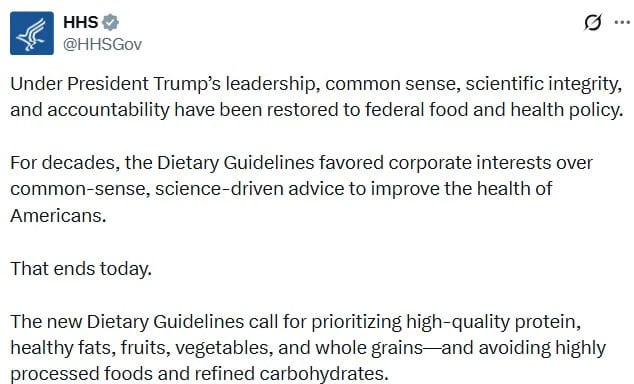
Her gist was this: Guidelines won’t change behavior. Poor people can’t afford better food. Diet isn’t the problem. The real elephant in the room is vaccines.
Which, first of all: ambitious range.
Second: this exchange crystallized something I’ve been circling for a while. Whether we’re talking about public health or border enforcement, we have officially entered the Age of Never Enough. You could eradicate cancer tomorrow and someone would still be furious you hadn’t cured scurvy, too.
To be clear: this commenter is a regular reader of my Substack who routinely brings thoughtful and positive analysis. She’s not argumentative, malicious, or unserious. Quite the opposite. The concern was sincere. The frustration real. The skepticism earned. I don’t doubt for a second that it came from a place of wanting people—especially kids—to be healthier.
But somewhere along the way, that instinct curdled into this belief that if a policy doesn’t fix everything immediately, it’s either useless or a PSYOP.
And I’m not buying that.
Here’s the thing about the new food guidelines: no one is claiming they’re a magic wand. They’re not promising to single-handedly reverse autism, chronic disease, poverty, food deserts, corporate capture, and the entire American healthcare disaster in one fell swoop. They’re doing something far more boring—and far more important: they’re changing the defaults.
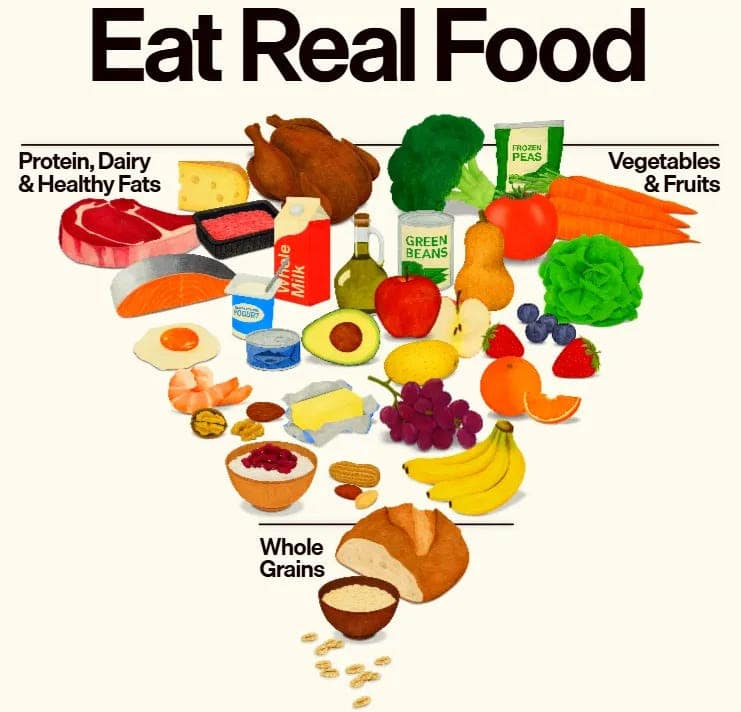
Guidelines aren’t inspirational posters. They’re the wiring behind the scenes. They determine what gets reimbursed, subsidized, stocked, served, normalized. Schools. SNAP. WIC. Hospitals. Prisons. Military food contracts. If the government says this is food, money follows that definition.
For decades, that money followed cereal mascots and tubs of imitation butter.
So yes—putting better food into institutions doesn’t automatically mean everyone goes home and feasts on grass-fed ribeye for the rest of ever. But pretending defaults don’t matter is like arguing that seatbelts haven’t saved lives because people still die in car crashes.
Also, I need to pause on one sentence from the comment that made me blink like a cartoon deer:
“The poor health issue with Americans has absolutely nothing to do with the types of food they are consuming.”
Nothing? I mean, that’s a bold stance to take. Because food isn’t a side hobby. It’s not a lifestyle accessory. It’s a daily biological input. Three times a day. For decades. Saying it doesn’t matter is like saying air quality doesn’t affect your lungs or putting molasses into your gas tank won’t impact your engine.

This is where nuance enters the chat—because yes, vaccines are part of the chronic illness debate. A real one. A complicated one. A big one. One that has been ignored, minimized, and mishandled for years. But here’s the inconvenient truth for folks on every side: A world fed garbage will be sicker than a world fed whole, unprocessed, nutrient-dense fare—regardless of what you do or don’t inject into your veins. Food might not be everything, but it’s hardly nothing.
Kennedy knows that. He also knows vaccines are poison. He’s working on both, diligently, as far as I can see. And yet I’ve watched even his own supporters refuse to acknowledge progress because it doesn’t check every box simultaneously. Banning petroleum-based synthetic food dyes? “Bigger fish to fry.” Institutional change? “Won’t work.” Revised vaccine schedules? “Not enough.”
The irony is, this administration is the first in my lifetime to even acknowledge the elephant. Not whisper around it. Not outsource it to a blue-ribbon panel. Not bury it in a PDF. Actually point at it and say: something is wrong.
Does that mean we’re “there”? Hardly. Does it mean everything they float will work? Also no. Does it mean corruption will vanish overnight? Please. But groundwork is critical. Frameworks matter. When you build a house, there’s a reason the foundation comes first. Nobody skips that step and expects the walls to support themselves.
I keep hearing, “Why celebrate crumbs?” The answer: Because sometimes crumbs are how you know someone is actually in the kitchen.
We’ve spent years screaming that the system is rigged, that institutions are captured, that no one listens. Now something shifts—and the immediate reaction is, Cool, but why isn’t it perfect?
Kennedy just cut the childhood vaccine schedule down to a fraction of what it was. That won’t eliminate chronic illness, but it does directly contradict the idea that “no one wants to talk about it” or that “nothing ever changes.” I’ll take imperfect movement over immaculate stagnation any day.
Maybe the new food guidance moves the needle in a big way. Maybe it doesn’t. But it’s definitely changing the conversation. And I refuse to live in a world where the only acceptable reaction to incremental sanity is scorn.
A small win is still a win. And any win—especially after the last few disastrous years—is something to celebrate.
What do you think about Kennedy’s progress in general and the revised dietary guidelines in particular? Share your thoughts in the comments on Substack!