
Host: Dr. Mollie James | Guests: Robert Long & Dr. Hans Vink
In this week’s show, we’re asking a critical question about heart health. Most people focus on cholesterol and blood pressure. But what if those numbers don’t tell the full story?
Join Senior Fellow Dr. Mollie James, along with Robert Long, President of the Glycocalyx Research Institute, and Dr. Hans Vink, Professor of Circulatory Physics, University of Amsterdam, as they explore what it truly means to “know your numbers” in 2026.
The conversation will go beyond traditional labs to examine vascular integrity, endothelial function, and the often-overlooked endothelial glycocalyx.
Most people think they know their cardiovascular numbers. Cholesterol, blood pressure, blood sugar. But what if those markers are missing the bigger picture?
In a study of 600 healthy individuals screened for classical risk factors and followed for six years, 40% of those who suffered a heart attack or stroke had low-risk profiles that failed to predict what was coming. That’s nearly half of all serious cardiac events, invisible to the standard screening toolkit.
This week on the IMA Weekly Show, Dr. Mollie James sat down with Robert “Bob” Long and Dr. Hans Vink to explore a layer of cardiovascular health that most patients have never heard of: the endothelial glycocalyx.
Meet the Experts

IMA Senior Fellow. Dr. James is the Founder of the James Clinic, where she has integrated advanced functional testing including glycocalyx assessment into clinical practice.

Robert “Bob” Long
CEO and Co-Founder, Genesis Health Sciences; President, Glycocalyx Research Institute. Bob has spent more than a decade translating endothelial glycocalyx research into clinical tools, and is the original formulator of Arterosil, Endocalyx, and ReVasca.

Dr. Hans Vink
Chief Scientific Officer, Glycocalyx Research Institute. Dr. Vink has been researching the endothelial glycocalyx since the mid-1980s and has published more than 100 scientific papers. He developed the GlycoCheck diagnostic system, now used in over 150 peer-reviewed studies and placed in more than 140 hospitals and research institutions worldwide.
What Is the Glycocalyx… and Why Haven’t You Heard of It?
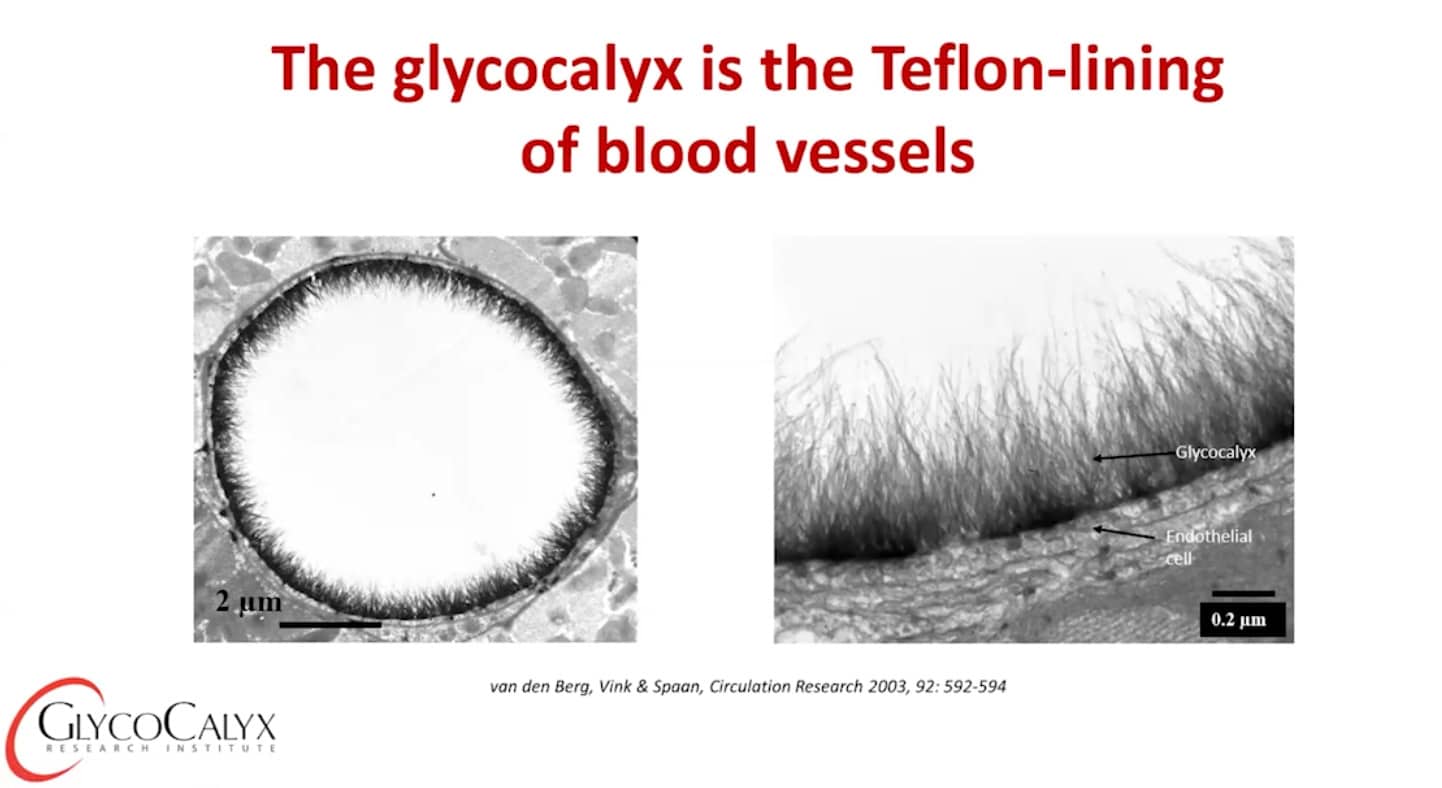
The glycocalyx is a dense, bush-like layer of polysaccharides lining the inside of every blood vessel. Using high-powered microscopy, Dr. Vink showed that these structures occupy more than two-thirds of the total volume inside tiny capillaries and control multiple critical functions:
- Blood flow regulation: triggers nitric oxide production
- Antioxidant defense: binds enzymes like superoxide dismutase to scavenge oxygen radicals
- Barrier protection: prevents cholesterol and proteins from leaking through vessel walls
- Anti-clotting and anti-inflammatory shielding: physically blocks platelets and inflammatory cells from contacting the endothelium
When the glycocalyx is damaged, those protective functions collapse. Known risk factors include:
- High glucose levels
- Smoking and vaping
- Chronic stress
- Aging
- High cholesterol
- Poor diet and lack of exercise
- Air pollution
- Viral infections (including COVID)
Bob Long came to this science after a personal scare over 20 years ago. He was experiencing chest angina, but a catheterization found no blockages and his cardiologist had no explanation.
“What it made me mad about was that was the best medical treatment and medical science had to offer when I went in. And I got thinking, gosh, if this has happened to me, this has got to be happening to millions of other people around the world.”
That frustration led him to Dr. Vink’s glycocalyx research. Together, they spent 15 years building the evidence base and developing clinical tools. The integrative medicine community adopted the science first; mainstream medicine has been slower to follow.
What COVID Revealed About Vascular Damage
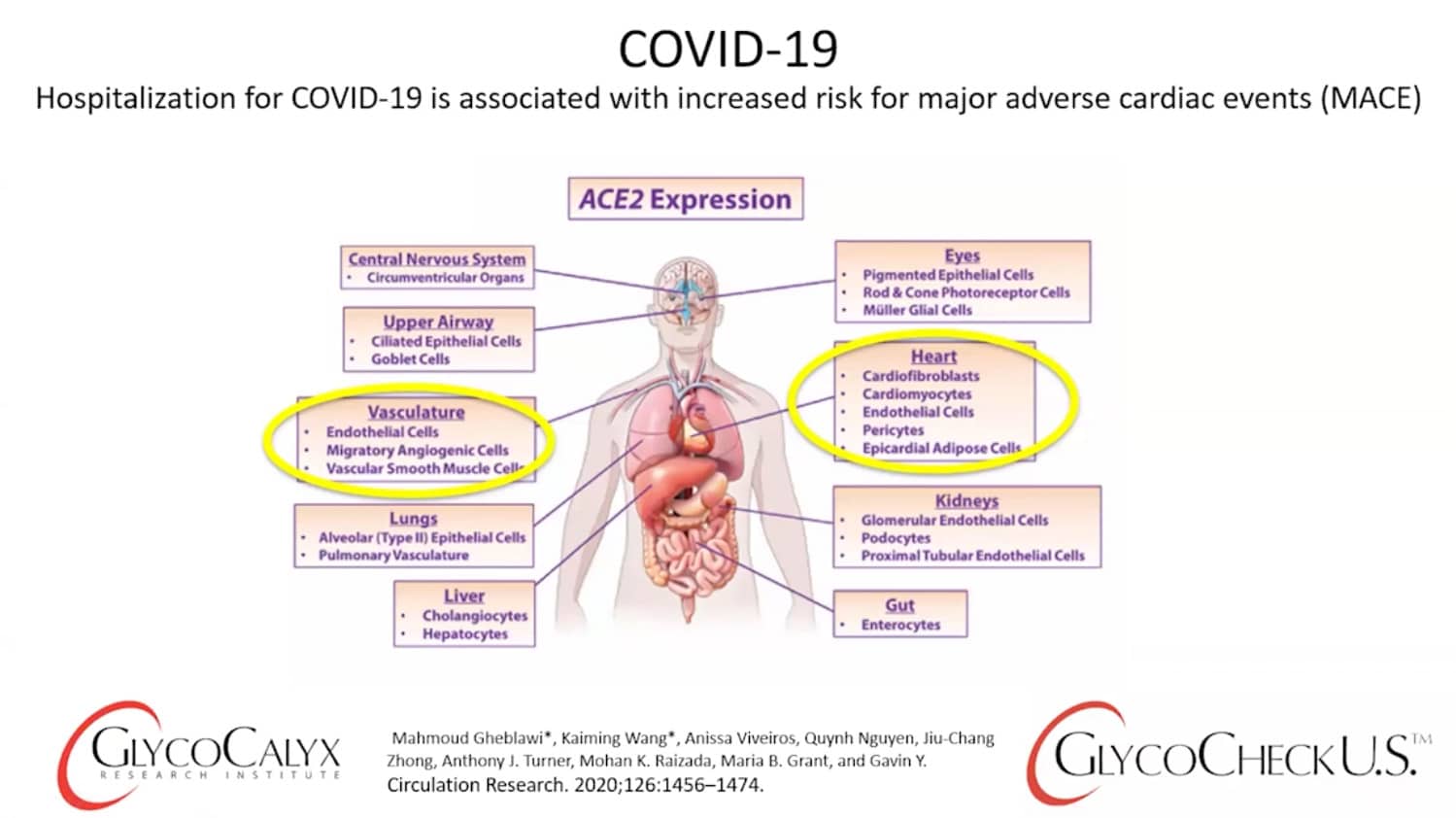
When the pandemic hit, the GlycoCheck system was already deployed in over 150 academic research hospitals and ICUs for sepsis research. The connection to glycocalyx damage was immediate, and the data was striking. COVID patients on mechanical ventilation lost up to 90% of their smallest capillaries.
As Dr. Vink explained:
“If you lose up to 90% of your capillaries, it’s virtually impossible to get food to all the cells in your organs, and your organs will be damaged and start to fail if this is not resolved in a matter of hours or days.”
Survival data told an equally stark story. COVID patients with healthy glycocalyx scores all survived their ICU stays. Those with compromised glycocalyx had only a 20–30% survival rate past one month. Follow-up studies showed persistent microvascular damage two to three years after infection, even in people whose initial illness wasn’t severe.
Dr. James noted that the damage pattern is likely similar for those with COVID vaccine injury, and that glycocalyx assessment is a reasonable starting point for anyone still dealing with spike-related issues.
Beyond the Heart: Kidneys, Cognition, and Early Warning Signs
The kidney was one of the first areas where glycocalyx research gained traction. Kidney capillaries contain large pores designed for filtration, but those pores are filled with glycocalyx, which prevents proteins from leaking through. When risk factors damage that glycocalyx, proteins escape into the urinary space, surrounding cells are damaged, and filtration capacity declines.
What surprised even the researchers was that repairing the glycocalyx could reverse the damage. Dr. Vink described patients with GFR values of 20–25 (near dialysis territory) improving to 60, 70, even 80 after glycocalyx restoration. Bob shared the case of a patient on dialysis for 13 years whose vascular health improved enough that the VA funded a second kidney transplant, nearly unheard of given that average life expectancy on dialysis is six to seven years.
Bob identified several early warning signs of microvascular dysfunction:
- Hair thinning
- Neuropathy
- Erectile dysfunction
- Sexual dysfunction in women
Dr. James agreed, noting that her clinical priorities for glycocalyx testing include patients with renal issues, cognitive decline, and erectile dysfunction. As Bob put it:
“It’s all about blood flow.”
Rethinking Cholesterol: What a Healthy Glycocalyx Protects
Dr. Vink’s research showed that cholesterol accumulation doesn’t happen uniformly in large arteries. At sites with thick glycocalyx, cholesterol gets trapped in the protective layer and never reaches the vessel wall. At sites with thin glycocalyx, it leaks through within minutes, accumulates, and triggers the inflammatory cascade leading to atherosclerosis. As Dr. Vink summarized:
“In our biased perspective, cholesterol itself is not the bad agent causing all these issues.”
Dr. James emphasized that anyone being prescribed a statin should first have an advanced lipid panel or NMR lipoprofile (about $40 through LabCorp). Total cholesterol concentration alone is not the meaningful risk factor. Her approach:
- Optimize diet first
- Address thyroid function: the majority of her patients with lipid issues see improvement when thyroid is optimized
- Then consider statins: reserved for patients with persistent elevated LDLP and small particle size after other factors are addressed

Testing and Treatment: What You Can Do Now
The GlycoCheck system is a handheld video microscope placed under the tongue that images thousands of capillaries in real time. It measures glycocalyx penetration depth (indicating damage) and capillary density, combining both into an overall microvascular health score. The test takes three to five minutes.
Dr. James has tested about 100 patients since implementing it at her clinic. The test costs $375, with follow-up every three to four months for abnormal results. The system is currently in integrative and regenerative clinics, with new locations adding monthly. A clinic finder is available on the Glycocalyx Research Institute website, and Bob noted they are working to get the screening covered by Medicare.
For those without access to the test, the panel offered several actionable steps:
- Manage stress: Bob demonstrated measurable glycocalyx improvement from just 10–15 minutes of deep breathing
- Exercise regularly and implement a walking program
- Control blood sugar: high glucose is a direct assault on the glycocalyx
- Stop smoking and vaping: Bob shared that his own grandson’s GlycoCheck results showed visible damage from vaping
- Consider glycocalyx-targeted supplementation: seaweed-derived sulfated polysaccharides can support repair even without baseline testing
Dr. Vink also referenced a proteomics study identifying blood protein signatures that correlate with glycocalyx health, though these panels aren’t yet standard in most clinics.
“This has been transformational in our practice just in the short time we’ve implemented it. It gets to the root cause and really finding out what the risk factors are and treating it at the root.” — Dr. Mollie James
COVID Justice Resolution

IMA has joined with Brownstone Institute, Children’s Health Defense Fund, Health Freedom Defense Fund, Stand for Health Freedom, and Autism Action Network to support the COVID Justice Resolution. Review and sign at covidjustice.org.
Related Reading
- Guide: Men’s Heart Health: Markers, Myths & Strategies That Matter
- Guide: The Science of Elderberry: A Powerful Ally for Immunity, Heart Health, and Inflammation
- Post: The Daily Pill Against Cancer, Heart Disease, and Dementia — And Scores of Other Diseases
- Post: Children’s Heart Health Post COVID
- Link: Glycocalyx Research Institute Website / Clinic Finder