
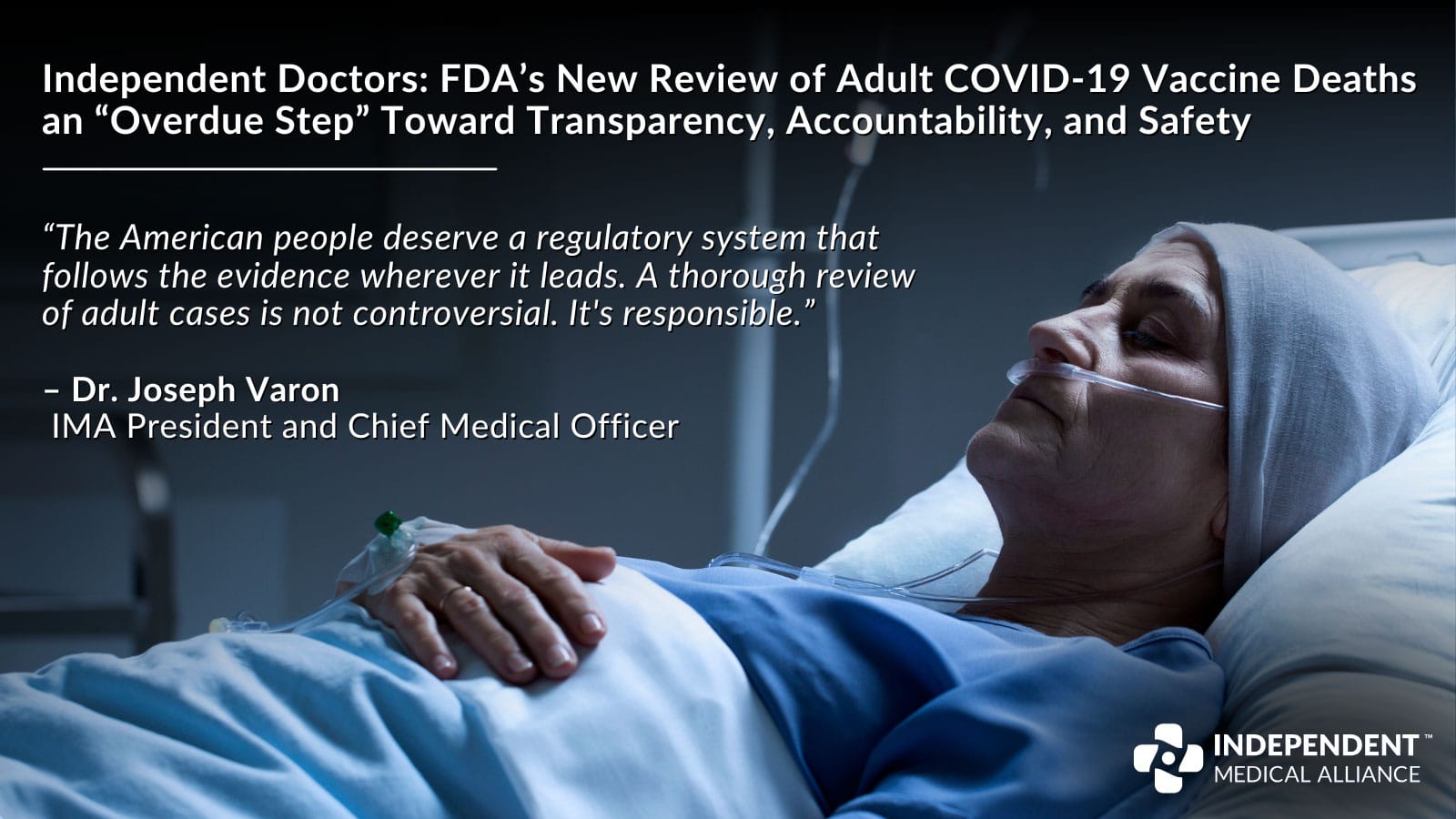
“For too long, legitimate safety questions have been brushed aside rather than openly evaluated.” – Dr. Joseph Varon
The Independent Medical Alliance (IMA), a national coalition of physicians, healthcare providers, and medical researchers, today welcomed the Food and Drug Administration’s decision to expand its internal review of potential COVID-19 vaccine–related deaths to include adults. The FDA action follows months of heightened scrutiny from the Department of Health and Human Services (HHS) and growing bipartisan concern about how federal agencies have monitored, communicated, and responded to reported vaccine injuries.
According to reporting from The New York Times and Becker’s Hospital Review, the FDA’s expanded inquiry builds on an internal review that initially focused on pediatric cases. The shift to include adults comes in the wake of a November memo by the agency’s top vaccine official, Vinay Prasad, MD, identifying specific COVID vaccine-related fatalities among children.
IMA physicians said today’s decision reflects what frontline doctors have been urging for years: a rigorous, unfiltered examination of patient outcomes, free from political pressure and industry influence.
“For too long, legitimate safety questions have been brushed aside rather than openly evaluated,” said Dr. Joseph Varon, IMA President and Chief Medical Officer. “Our position has always been consistent: follow the evidence, investigate credible signals, and be honest with the American public. If the FDA is now willing to review adult cases with the seriousness they deserve, that is a welcome and necessary development.”
The White House’s recent directive to compare the U.S. childhood vaccine schedule with those of peer nations, along with major ACIP votes reconsidering blanket recommendations, reflects a broader government scrutiny of vaccine policy, oversight, and risk-benefit assessment – moves that the IMA has been urging for several years.
“Our message has been consistent: science only works when agencies confront data honestly,” continued Dr. Varon. “The FDA owes the public a clear accounting of what it knows, what it does not yet know, and what steps it will take to strengthen vaccine surveillance and safety moving forward.”
IMA noted that criticism from Pharma-funded trade associations and legacy institutions, including claims that questions alone “erode public trust,” ignores the reality that public trust is strengthened when regulators investigate, not when they avoid uncomfortable findings.
“Trust comes from transparency, not from talking points,” Dr. Varon added. “The American people deserve a regulatory system that follows the evidence wherever it leads. A thorough review of adult cases is not controversial. It’s responsible.”