Host: Dr. Ryan Cole | Guests: Dr. Katherine Welch, Jennifer Lahl, RN, and Forrest Smith
“Detransition” is not a word the medical system recognizes. It does not appear in diagnostic codes, treatment guidelines, or medical dictionaries. But the patients are real, the consequences are lifelong, and their numbers are growing.
“It’s not even a thing. It’s not recognized. It’s like you type in a Word document. It doesn’t recognize the words, not the dictionaries, not medical codes, not anything.” — Dr. Katherine Welch
This week’s IMA Weekly Show brought together three people working on different sides of the same problem. Dr. Katherine Welch is an IMA Senior Fellow in Pediatrics and a clinician with the Resilience Health Network, where she provides medical care for patients navigating life after gender-related interventions. Jennifer Lahl is a pediatric critical care nurse and founder of the Center for Bioethics and Culture Network, who has spent years documenting detransitioners’ stories through film and research. And Forrest Smith is a detransitioner who spent roughly six years in medical transition before detransitioning in 2021 and now serves as an ambassador for the Resilience Health Network.
What emerged is a picture of a system that created a class of patients it has no infrastructure to serve, and a small but determined network of clinicians and advocates building that infrastructure from scratch.
Meet the Experts

Dr. Katherine Welch, MD
IMA Senior Fellow in Pediatrics. Advisor and clinician with the Resilience Health Network, where she assists individuals who have undergone masculinizing or feminizing medical interventions to achieve the best health outcomes possible.
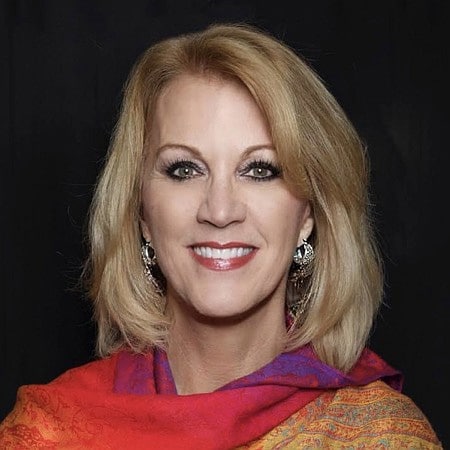
Jennifer Lahl, RN, MA
Pediatric critical care nurse; founder, Center for Bioethics and Culture Network. Filmmaker behind three documentaries on gender medicine, including The Lost Boys: Searching for Manhood. Co-authored a paper on fertility preservation for dysphoric youth in Frontiers in Endocrinology.
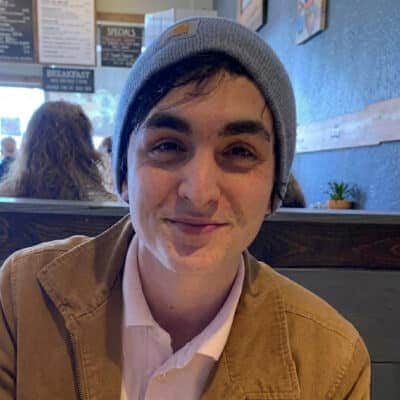
Forrest Smith
Detransitioner and Resilience Health Network ambassador. Spent roughly six years in medical transition before detransitioning in January 2021. Currently writing To Be Seen.
1. How Patients Get Drawn In
Dr. Welch argued that gender dysphoria, as currently defined, is broad enough to capture the ordinary discomfort of puberty. Puberty is not a pathology, she said. Yet an entire medical infrastructure has been built to treat it as one.
The panel described a pipeline with multiple entry points:
- Social media and algorithms: The rise of ROGD (rapid onset gender dysphoria) tracks directly with smartphones, social media, and the COVID lockdowns that left young people isolated and online for hours
- Comorbidities bypassed: Anxiety, depression, autism spectrum traits, and trauma are the rule among these patients, not the exception. Rather than being treated as root causes, they are sidelined in favor of gender-affirming intervention
- Pornography and online exposure: Children are encountering material that shapes their understanding of their own bodies well before they have the capacity to process it
- Diverse pathways in: ROGD among adolescent girls is a different phenomenon from longer-brewing psychosexual issues in adult males. Forrest Smith made the distinction himself. The causes are individual, and the failure to treat them as such is part of how the system fails
Jennifer Lahl drew a comparison to anorexia. When severely anorexic children arrived in the pediatric ICU where she worked, the clinical team did not affirm their self-perception. They recognized distress and redirected toward health.
“We didn’t put a mirror in her room and say, yes, you’re fat, you’re disgustingly fat.” — Jennifer Lahl
2. The Medical Consequences No One Prepared Them For
Sex hormones interact with virtually every system in the body. When those hormones are blocked or replaced, the consequences reach far beyond reproduction.
What transition does to the body:
- Bone and brain development: Puberty blockers interfere with bone density and the executive functioning that develops during adolescence. Most patients who begin blockers proceed to cross-sex hormones.
- Surgical damage: Mastectomy for gender dysphoria involves bone shaving, nipple repositioning, and contouring that causes permanent nerve damage. Women who detransition face blocked ducts, pain, and inability to breastfeed.
- Irreversible hormonal effects: Testosterone permanently deepens women’s voices. Estrogen produces feminizing changes in men that do not fully reverse.
- Fertility as false promise: Jennifer Lahl called fertility preservation a “fool’s errand.” Freezing reproductive tissue for 15 or 20 years and expecting a viable pregnancy is false hope dressed as informed consent.
“A patient should be able to trust if their doctor’s offering them something that it’s being offered because it’s good and helpful and beneficial, not just more of a money grab or false hope.” — Jennifer Lahl
Detransitioners who seek medical care will not go back to the providers they hold responsible. The Resilience Health Network was built to fill this void, recruiting clinicians willing to provide care. But the work is, as Dr. Welch put it, “experimental on top of experimental.”
The original interventions lacked long-term evidence. Now clinicians must manage the consequences without guidelines. Forrest Smith lives with the daily reality: a bilateral orchiectomy that left him with chronic nerve pain, worsened insomnia, and lifetime testosterone replacement.
“It’s been called a medical leash. It’s something that I have to factor into every life choice.” — Forrest Smith
3. The Psychological Reckoning — and What Rebuilding Looks Like
The medical consequences are only part of the picture. Detransition also means losing the community that formed around a trans identity.
Jennifer Lahl described a sort of “community trap” that develops around transition. When someone embraces a trans identity, they are love-bombed by a new community. When they detransition, that community vanishes. They are shunned, dismissed as grifters, or told they were never really trans. One mother Lahl works with has had no contact with her son for five years.
Dr. Welch went further, arguing that this instability is structural, not incidental. If patients are always unstable, they are always seeking the next intervention, the next community, the next fix.
“The whole transition lie is inherently destabilization. And they want to keep you there, because if you’re unstable, you will continue to seek that glitter family, that medication.” — Dr. Katherine Welch
But when detransitioners do come home, they come back to the people who never lied to them. Forrest Smith described rebuilding through faith, family, and work: reconnection with extended family, physical labor at a cannery where his parents had met, and a forensic psychologist who asked grounding questions rather than affirming an identity. His is one path. The panel emphasized that the routes out are as varied as the routes in.
4. Informed Consent Was Never Real
The panel’s most pointed criticism was reserved for the consent process itself. Jennifer Lahl did not mince words: medicine has no business performing these interventions at all. Her argument, shared by the full panel, is that meaningful consent is impossible when the diagnosis is loosely defined, the evidence base is thin, and the procedures carry permanent consequences.
The failures are systemic:
- Coercion disguised as care: Parents are told, “Do you want a dead daughter or a live son?” The panel called this emotional manipulation, not informed consent.
- WPATH built on pseudoscience: The original standards of care had no long-term follow-up studies. Dr. Welch called the transition guidelines “made up and false.” Guidelines for detransition care are nonexistent.
- The conveyor belt: Once on a waitlist, patients hide their doubts from surgeons who meet them for 15 minutes and move on.
Forrest Smith’s medical records illustrate the point. He repeatedly told providers he feared losing his fertility, telling a counselor in words that were recorded verbatim that he would never be happy without biological children. Rather than pausing treatment, the counselor asked whether adoptive parents were any less valid. He asked for a more critical therapist. That request is also in his records. He never found one until after he detransitioned.
“I repeatedly told them that I was afraid of losing my fertility. I said verbatim that I was afraid that if I wasn’t able to raise biological children that I would never be happy. That was recorded verbatim by a counselor.” — Forrest Smith
5. The Legal Tide Is Turning
For years, detransitioners who sought legal recourse found few options. The Fox v. Vanderbilt case broke the dam, and the momentum is building:
- Federal tort reform: Advocates are pushing to extend statutes of limitations so detransitioners can sue the providers who performed their procedures
- Colorado Supreme Court ruling: Therapists who offer non-affirmative care can no longer be delicensed for it
- FTC investigation: Trans medicine is being investigated for fraud and abuse
- The Florida model: Rather than legislating how to practice medicine, Florida told its medical societies to self-regulate. They responded by declining to perform the procedures. Jennifer Lahl called this the ideal path forward.
- Financial pressure: The CMS ruling against covering transition procedures removes a significant incentive. Dr. Welch was blunt: when gender medicine becomes a liability, providers will stop.
What Comes Next
The legal and regulatory landscape is shifting, but the patients who need care right now cannot wait for lawsuits to settle or policies to change. The Resilience Health Network, where all three of this week’s panelists are involved, is working to build the clinical infrastructure that the system never created: recruiting physicians, developing protocols where none exist, and providing medical homes for patients who have nowhere else to turn.

Related Reading
- Resource: Resilience Health Network
- Film: The Lost Boys: Searching for Manhood (YouTube, free)
- Film: Detransition Diaries: Saving Our Sisters (YouTube, free)
- Webinar: The Medical Case Against Transitioning Minors
- Conference Talk: The Medical Case Against Transitioning Children
- Research: Society for Evidence-Based Gender Medicine (SEGM)
More on: Detransitioning | Dr. Katherine Welch | Dr. Ryan Cole | Forrest Smith | Gender Affirming Care | Jennifer Lahl