
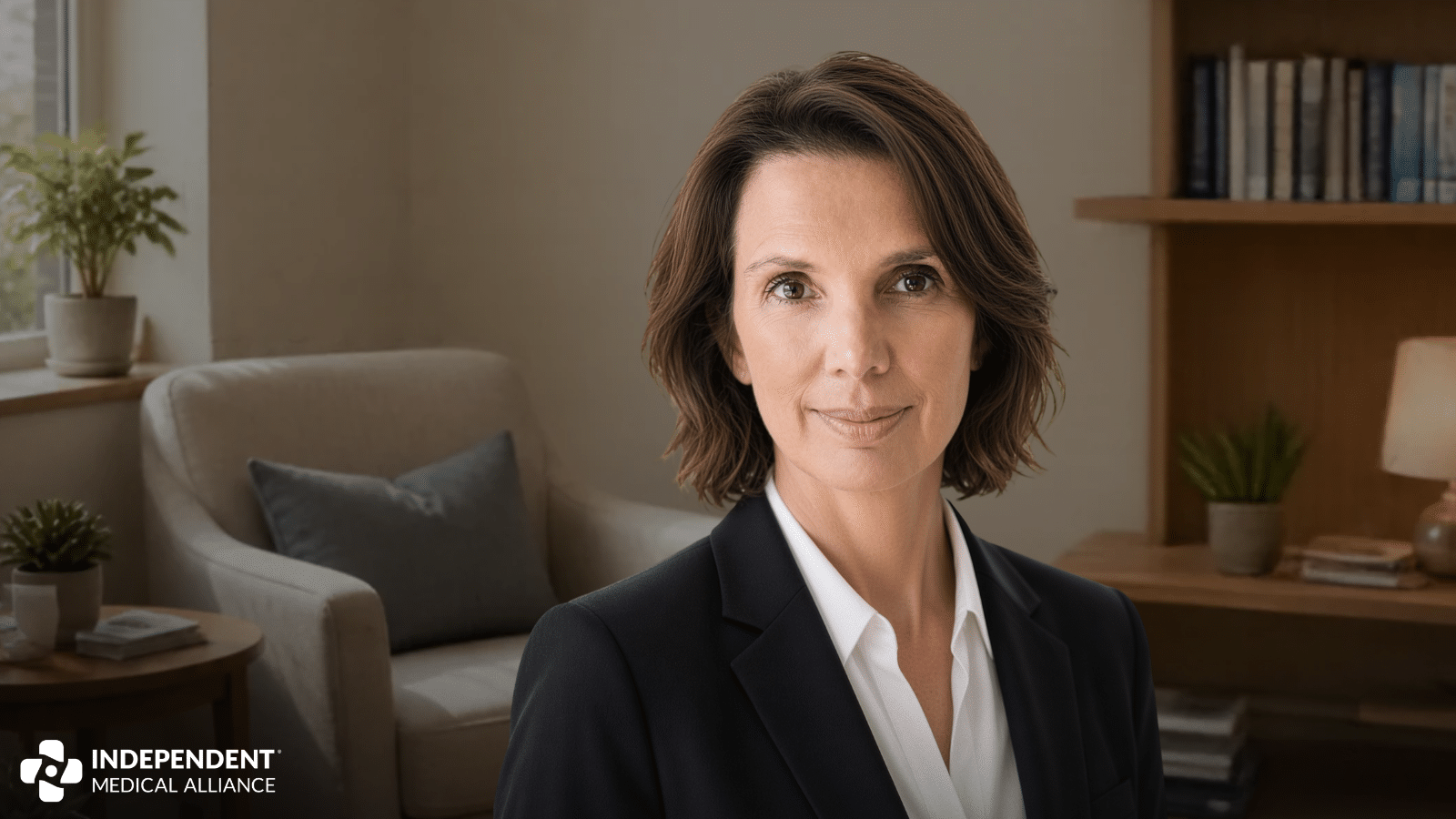
By Dr. Kat Lindley (originally published on X)
When was the last time your doctor had time to really listen to you?
Not to type while you talked. Not to rush you out the door because the schedule was double-booked. Not to tell you “insurance won’t cover that” before you even finished your question.
If you have to think hard about it, you are not alone. And it is not because doctors stopped caring. Most of us went into medicine to take care of people. Somewhere along the way, the system got between us.
I want to talk about what we lost, why we lost it, and how we get it back.
What Medicine Used to Be
There was a time when your doctor knew your name, your parents, and probably your kids. Care was personal, continuous, and built on relationships. A family doctor knew a patient and their family from the cradle to the grave, and often saw them in their own home.
That doctor was not perfect, and the science of the time was not perfect. But the relationship was the foundation. You trusted your doctor because you knew them, and they knew you. When something went wrong, you called them, not a 1-800 number.
What was once the art of medicine, a personal, bedside bond between healer and patient, has become a bureaucratic, industrialized system of health care.
What We Lost
We gained a lot of science over the last century. That is not what went missing. What got lost was the thing that used to hold the science in place: a doctor who knew you, and the time to use that knowledge.
Medicine became “healthcare.” A calling became a bureaucracy, and the bond between doctor and patient got squeezed out.
Why We Lost It
It did not happen overnight, and there is no single villain. It happened one rule, one form, and one middleman at a time.
Standardized protocols, CMS health measures, coding and billing, health insurance, salaries based on RVUs, electronic medical records, and much more have killed the medicine. Government-run healthcare and current CMS policies are not the answer. AI is not the answer. The only answer is the independent practice of medicine: patient and physician, with no third party in the room.
Think about what a typical visit looks like now. The physician is often employed by a hospital system or a corporation. Their pay can be tied to RVUs, which means volume. Their screen is built for billing, not for you. Their treatment choices are shaped by protocols written by people who have never met you, and by insurers who decide what gets paid.
Then there is prior authorization, the paperwork maze where your doctor has to beg a stranger for permission to give you what you need. It is one of the dirty little games insurance companies like to play. It is real, it harms patients, and it wastes everyone’s time.
We have been told that having an insurance card is the same as having a doctor. It is not. Health insurance coverage is not care.
And the past few years made it worse. During COVID, many physicians were told what they could say, what they could prescribe, and what they had to push, regardless of the patient sitting in front of them. Patients noticed. Trust broke. I have written about informed consent many times, and it all comes back to the same truth: when someone outside the exam room makes the decision, it stops being your care.
Why Independent Practice Matters
I left the system in 2017 and never looked back.
I did not leave because I stopped loving medicine. I left because I loved it too much to keep practicing it the way the system wanted me to. When you work for yourself and your patients, the question changes from “What will the system allow?” to “What does this patient need?”
The independent physician has no allegiance to anyone except the patient. That is why we are a rare breed. We are accountable to the person in front of us, not to a shareholder, not to an administrator’s dashboard, not to an insurer’s algorithm. Independent practice means I answer to you, not to a system that treats you like a chart number. Trust is built face to face, and that relationship is the medicine.
How We Make It Better
The good news is that this is fixable. Here is what I have seen work, in my own practice and in the doctors I train.
- Independent practice models where physician and patient make the medical decisions together without the third party in the room.
- Transparent prices. You should know what something costs before you buy it, and that should be normal in medicine too. Did you know you can pay cash for your blood work and radiology testing, and that it is sometimes cheaper than using your insurance? Always ask for the cash price.
- Time. Time is the most important medicine I have. When I am not rushing to hit a quota, I can listen, ask the second question, and catch the thing a rushed visit misses.
- Get the middlemen out of the exam room. Fewer forms, less prior authorization, fewer layers between a patient and their doctor. Every layer we remove gives time and trust back to the relationship.
- More doctors stepping out. This one is on us, the physicians. To restore trust in medicine, we need more physicians to step out of the system and practice independently. I know it is scary to leave a paycheck and a system you trained in. But patients are hungry for a doctor who will actually be their doctor.
What You Can Do
If you are a patient: look for a direct primary care or independent doctor in your area. Ask for cash prices. Ask your doctor who they answer to. Your choices as a patient are what keep independent practices open.
If you are a physician: you do not have to stay on the treadmill. Talk to colleagues who have made the jump. It is hard work, and it is worth it.
If you are a policymaker: make it easier, not harder, for doctors to practice independently and for patients to pay their doctor directly.
Despite everything, I still love this profession. Despite the hardships of the past several years, there is nothing else I would rather be doing. It is an honor to help my patients and to be a small part of their health journey.
Medicine was never meant to be a factory. It was meant to be a relationship between two people: a patient and a physician, in a room, making decisions together.
Let’s bring that back.
Omnia Pro Aegroto. Everything for the patient.
Dr. Kat Lindley is a board-certified family physician and director of the IMA Fellowship Program.