


Public Forum
Default group for all members. Biological family sometimes get you down? Come join your logical family!
Organizers:
- Organized by
-
-


Nattokinase and Cholesterol
-
Nattokinase and Cholesterol
Clinical Evidence on Nattokinase and Cholesterol1. Ren et al., 2017 (China, Randomized Trial)
- Population: 82 patients with hyperlipidemia
- Intervention: Nattokinase 2,000 FU/day for 26 weeks
- Findings: Significant reductions in total cholesterol, LDL, and triglycerides, with modest increases in HDL.
- Reference: Ren, S. et al. Clin Appl Thromb Hemost. 2017;23(8):958–965.
2. Huang et al., 2009 (China, Open-Label Trial)
- Population: 45 subjects with cardiovascular risk factors
- Intervention: Nattokinase 6,000 FU/day for 2 months
- Findings: Lowered total cholesterol and LDL, improved blood pressure and fibrinolytic activity.
- Reference: Huang, Y. et al. Nutr Res. 2009;29(3):190–196.
3. Zhang et al., 2022 (Systematic Review & Meta-analysis)
- Population: 546 participants across 6 randomized controlled trials
- Findings: Nattokinase supplementation showed reductions in blood pressure and some lipid improvements, though cholesterol effects were dose-dependent and inconsistent.
- Reference: Li, X. et al. Rev Cardiovasc Med. 2023;24(8):234.
Link
4. Wei et al., 2025 (Review, MDPI Nutrients)
- Summary: Reviews clinical and mechanistic evidence that nattokinase can activate lipases, inhibit HMG-CoA reductase, and reduce atherosclerotic plaque area in human studies.
- Reference: Wei, C. et al. Nutrients. 2025;17(11):1784.
Link
5. Large Chinese Cohort Trial (2025, >1,000 Participants)
- Population: Adults with mild atherosclerosis and hyperlipidemia
- Intervention: High-dose nattokinase (10,800 FU/day) for 12 months
- Findings: LDL and triglycerides decreased significantly, and carotid plaque size reduced by ~36%.
- Reference: Reported in NAD.com summary of trial (2025).
Link
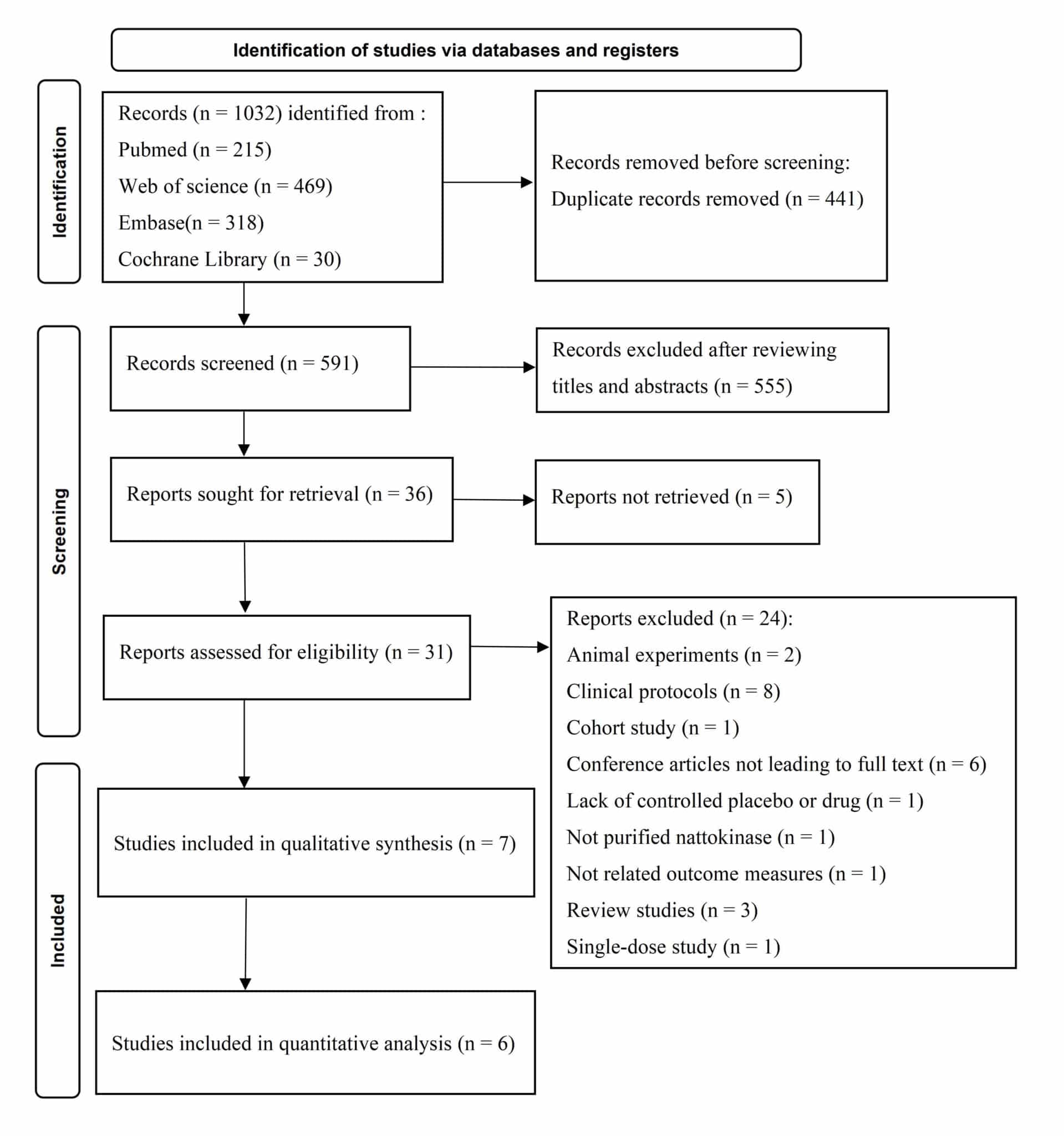
imrpress.com
Background: As a fibrinolytic enzyme from fermented soybean, nattokinase has been shown to be potentially beneficial for cardiovascular health, but current clinical evidences regarding the nattokinase supplementation on cardiovascular risk factors are various. This study aims to evaluate the cardiovascular … Continue reading

Sorry, there were no replies found.
Log in to reply.