

Why Are There Fewer Insects? 🐞🚗

Tagged: 

  • Why Are There Fewer Insects? 🐞🚗

    Posted by IMA-HelenT on January 26, 2026 at 12:57 pm EST

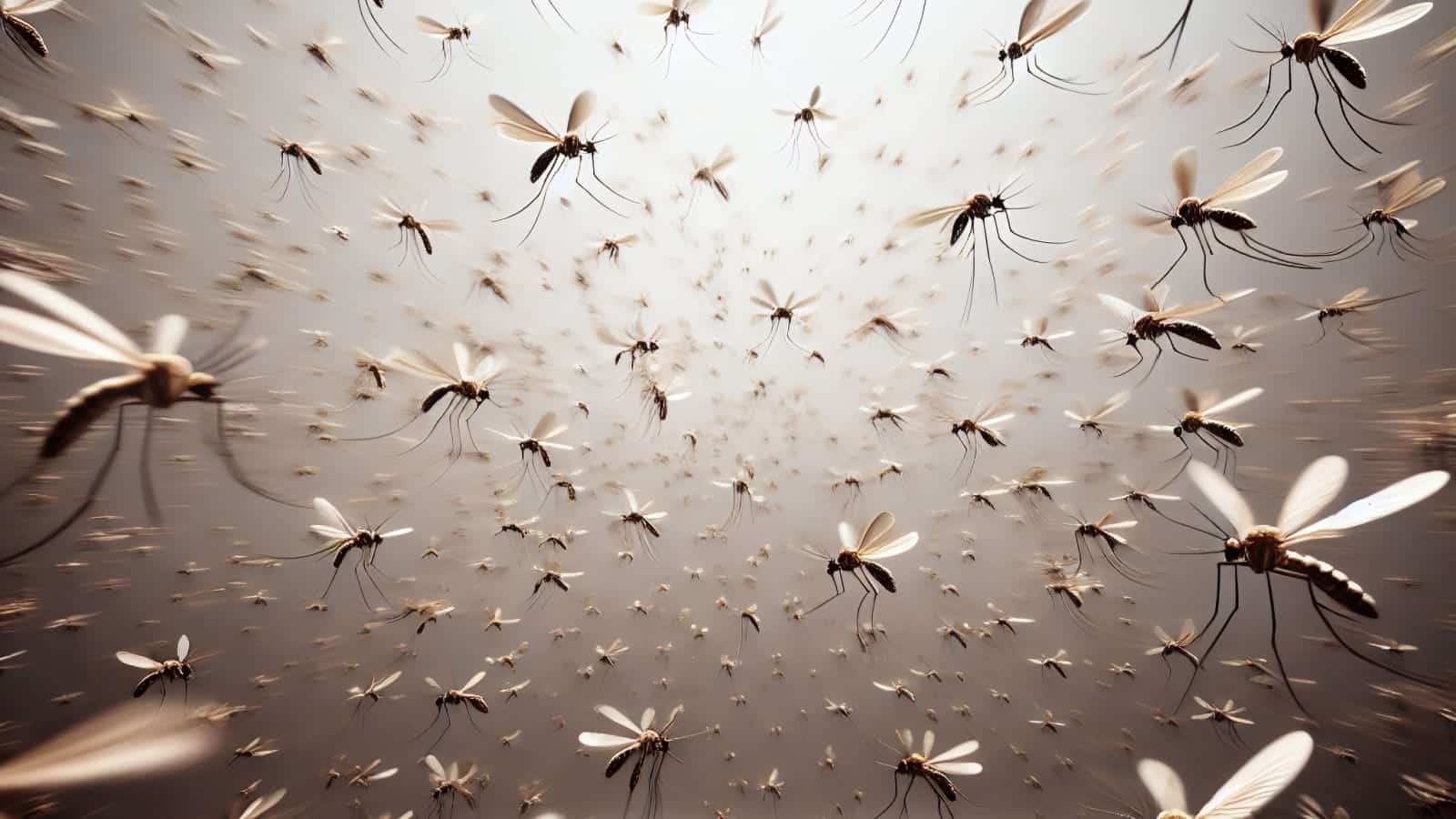
    “Insects are disappearing across vast regions globally. This is not a modest decline or a simple geographic shift, but a rapid vanishing of beetles, butterflies, moths, flies, mosquitoes, bees, and entire functional groups.” Dr. Varon

    That line really got me thinking about all the times I used to scrape bugs off the windshield on long drives as a kid. And everyone I speak to says that these days that’s a rare occurrence.

    Dr. Varon, in his latest Brownstone article, asks if this loss is more than just “quiet nature,” like it might be an early warning that something bigger is wrong with our environment.

    Have you seen a drop in bug activity where you live?

    What insects do you miss most (pollinators? fireflies? beetles?) 🤔

    👉 Read the full article here if you want more context and data: https://brownstone.org/articles/insect-loss-as-an-early-warning-of-systemic-biological-failure/
    IMA-HelenT replied 1 week, 5 days ago 8 Members · 11 Replies
  • 11 Replies
  • cattlerancher

    Member
    January 26, 2026 at 3:30 pm EST

    It is not only insects, it is trees and other biological creatures. I refer everyone reading this to go to http://www.geoengineeringwatch.org which address tree loss, chemical spraying in the atmosphere which contains Aluminum and other metals

    • cattlerancher

      Member
      January 26, 2026 at 5:20 pm EST

      It is not just insects that is being effected, it is wildlife, farming, and trees and vegetation. When insects are affected, then other biological species are being affected.

      Here is a movie put on by geoengineeringwatch.org called “The Dimming” here is a link to the movie. IF you really want to know what is going on you might want to watch this movie. If you what to know who and what is behind the loss of trees, insects, wildlife reduction, why high levels of aluminum are in the atmosphere along with other heavy metals.

      https://youtu.be/rf78rEAJvhY

  • wsred

    Member
    January 26, 2026 at 6:25 pm EST

    Helen, thanks for the Brownstone link; lots of good information there!

    Excellent to see light pollution listed.

    For those wanting to learn more about this:

    https://darksky.org/

    Indeed, there are far fewer insects now than when I was younger.

    Except in a few places.

    My favorite camping spot in the North Carolina mountains is at 5500′(1676 meters) elevation. In the 1970s, ’80s and up to around 1990 there were no flying insects there, just a few bugs under rocks. It was just too cold for them. Then flies started showing up, and then, about 1995, mosquitos. This historically very boggy area has largely dried out, from consistently much warmer temperatures and many more hours of bright sun, where there used to be so many cloudy days.

    Here’s a good overview of the history of several different environmental boundaries:

    https://www.stockholmresilience.org/research/planetary-boundaries.html

    We are all responsible:

    I ride a bicycle. I drive a little Mitsubishi I-MiEV electric car, and a diesel pickup truck.

    https://www.footprintnetwork.org/2023/01/18/dont-reduce-your-footprint/

    Thanks and good health, Weogo

  • aaronaf

    Member
    January 26, 2026 at 6:27 pm EST

    Oh wow! Yes, I remember when I would drive between Indianola, MS to Greenwood, MS, over 60 years ago, while I was dating my girlfriend (now my wife), my dad’s front windshield would become splattered with bugs as I drove between cotton and soybean fields on the left and right of Highway 82 in the Mississippi Delta. I wonder if abundant flying insects would be gone nowadays during the same time of day? I’ll ask some of my friends and family who still live there about that. If that phenomenon is not still occurring, it might not be because of a change in the insect population!

    Might this apparent loss of insect population be because of a change in car light technology? The kind of light being emitted by today’s car headlights might be quite different – the kind that does not attract insects to it.

    The most commonly used headlight type in today’s domestic cars and trucks is halogen headlights. These headlights still account for nearly 80% of vehicles on the road, despite the growing popularity of newer technologies (like the brighter LED lights which would probably attract more insects).

    See below for what I found from Duck.ai about halogen lights and their effect on flying insects.

    Car headlights vary in their design and light spectrum, which affects their attraction to insects. The main types include:

    • Halogen Headlights: Traditional and emit a warm
      light, generally less attractive to insects.
    • LED Headlights: Often cooler and brighter, these
      can attract more insects due to their blue light spectrum.


  • Paul Barbara

    Member
    January 26, 2026 at 8:33 pm EST

    I live in the UK, and have definitely noticed the drastic reduction in insects and birds (birds eat insects, so less insects means less available food). Also there are increasing deaths of birds by wind turbine rotors, microwave transmission (also greatly affects insects), Chemtrail spraying, and of course herbicide and pesticide use.

    Then there is the deliberate culling of masses of farm animals as a direct attack on the food supply for humans, based on the totally ‘unfit for purpose’ PCR test (which as the inventor, Kary Mullis, explained from the outset was NOT a diagnostic tool. He ‘died’ just before the Covid Bioweapon jab was rolled out (a VERY convenient death for the PTB).

    Make no mistake – ‘our’ puppet governments want most of us dead – they and their puppet-masters see us as useless eaters – no longer needed for labour, as robots and AI can do most of the work.

    • IMA-GregT

      Member
      January 28, 2026 at 1:16 pm EST

      @outsider Helen and I lived in the UK and Ireland for many years, now based in Spain. But that bug reduction thing is very noticeable, and it’s noticeable here as well. Without the bugs and worms the soil isn’t as alive as it needs to be to sustain us. I do love that RFK JR is turning the focus to the soil. And hopefully with that comes a focus on what they’re doing that’s impacting the insect life so obviously.

  • Paul Barbara

    Member
    January 28, 2026 at 1:29 pm EST

    Indeed, Glyphosate in particular kills worms and other soil insects, as well as harming us. But that fits in perfectly with the literally Demonic Globalist/Zionist Sterility/Depopulation Agenda 20/30.

    These soul-sold husks of people gain their immense wealth, power and success on the Devil, the ‘Prince of this world’.

    • IMA-GregT

      Member
      February 2, 2026 at 10:35 am EST

      @outsider I’m hoping a little Honest Medicine is all that’s needed to make folks a little healthier, so they can think more clearly, and be able to see one by one that they need to follow a different path. ‘Cognitive dissonance and mass formation’ still my 5 words of the last 5/6 years. Every time an IMA tools and/or guide, cancer care is shared, is to me one of the ‘one by one’ opportunities.

  • vegandan

    Member
    February 2, 2026 at 2:26 pm EST

    One of the three pillars of the vegan lifestyle is environmental stewardship. This degradation of the environment has been going on for a very long time and it is something that we as humans are totally responsible for. There is a sector of the population that believes that we can do a better job of managing our planet than God. There is an intelligent design for the universe and people somehow believe that we can tinker with this perfection and make it better. Learning to work with nature to make intelligent decisions for our future to benefit the planet and all of life upon it should be our goal. Unfortunately money and power always seem to be the goal instead. Hopefully we will eventually learn to do the right thing collectively, before we end up annihilating all life on the planet.

  • Sharon Miles

    Member
    February 2, 2026 at 5:55 pm EST

    We live in northwest Iowa surrounded by fields of corn and soybeans. Massive fields. Gone are the small farms that once dotted our beautiful countryside. The farms are planted with glyphosate ready seed, sprayed with chemicals many times through the growing season, and finally sprayed at harvest time with glyphosate yet again.

    We are on the way to nowhere which begs the question of why we have jets circling our rural area daily. We’re told to ignore our lying eyes as these jets spray long white trails that expand and block our sun. The clear blue skies of Iowa are a rarity. Mostly fuzzy white skies full of trails. I’m not certain as to what is in the spray but it has a silver or aluminum component to reflect the sun back into the atmosphere.

    Our property is full of prarie flowers and natural habitat for the wildlife and pollinators. We used to have honeybees everywhere and lots of butterflies. Last season we did not see any honeybees and just a few butterflies.

    I believe the assault on life is coming from many directions. Chemicals, heavy metals, plastics, etc. When our birds, bugs, and pollinators start to disappear we need to take notice and do what we can to raise awareness., Not an easy task with so many entrenched mindsets. We can help each other one conversation at a time!

    • IMA-HelenT

      Organizer
      February 3, 2026 at 6:49 am EST

      It must be sad when you live in nature and start seeing changes in the insect population season on season. Agree one conversation at a time. How do you start these conversations?

Log in to reply.